 Mathtrace
Every step, made clear
Take a photo of a math problem or type it in. Mathtrace solves it and shows the whole working the way it is done at school – step by step, with explanations and graphs.
Coming soon to Google Play and the App Store
Why Mathtrace
Most math apps today are built on an AI language model. It writes a solution much like a person would – and, like a person, it can make a mistake without noticing. Mathtrace works differently.
It calculates, it doesn't guess
Every result is computed by a symbolic math library – the same kind of tool mathematicians and engineers use. The result is exact, such as √3/3, not roughly 0.577.
Results checked
For many problems Mathtrace checks its own result: it substitutes the roots back into the equation, differentiates the result of an integral, plugs the solution into the differential equation.
AI only reads the problem
We use AI only to read the problem from a photo. You see the recognized problem and can correct it before anything is calculated.
Results you can read
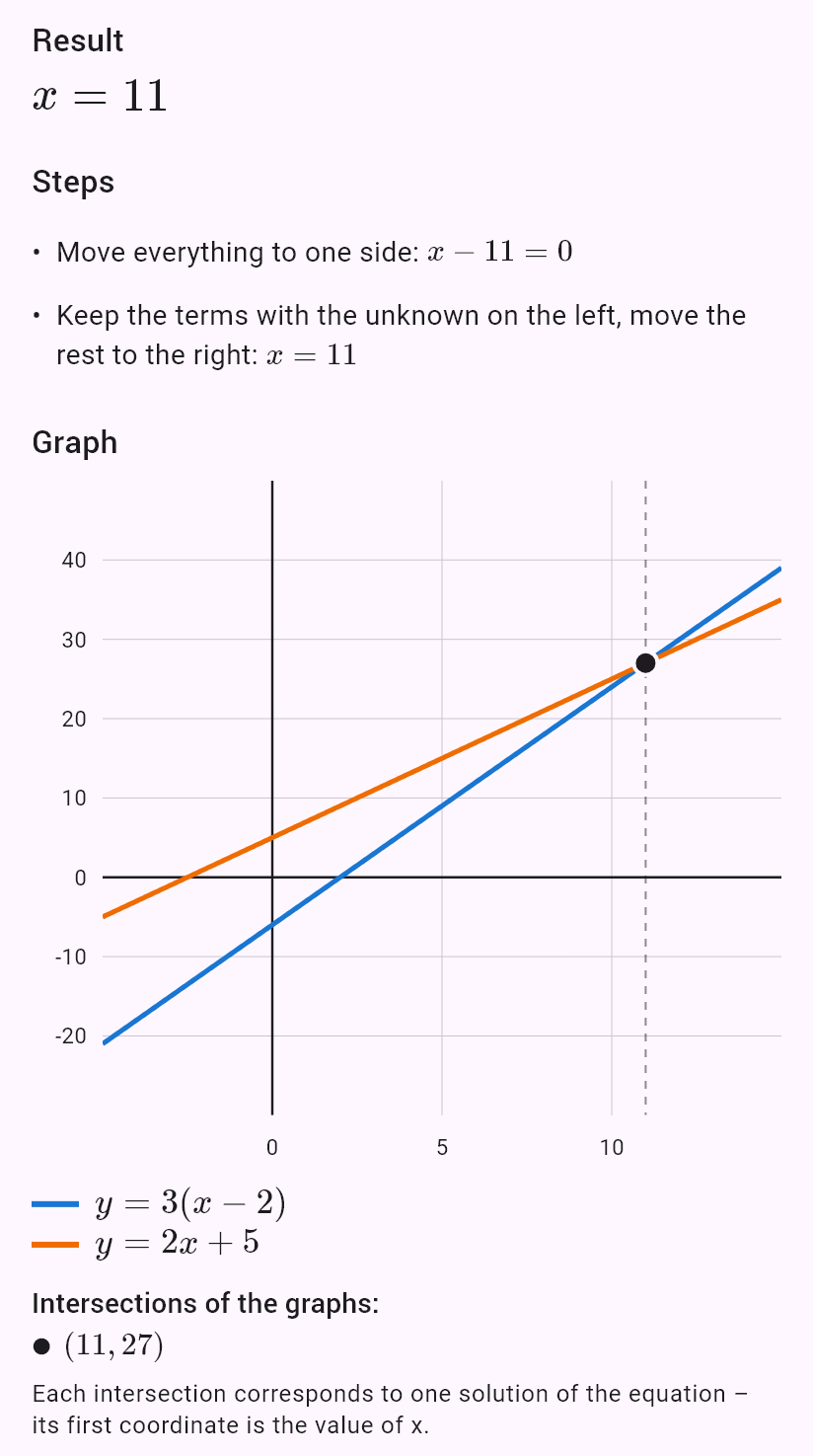
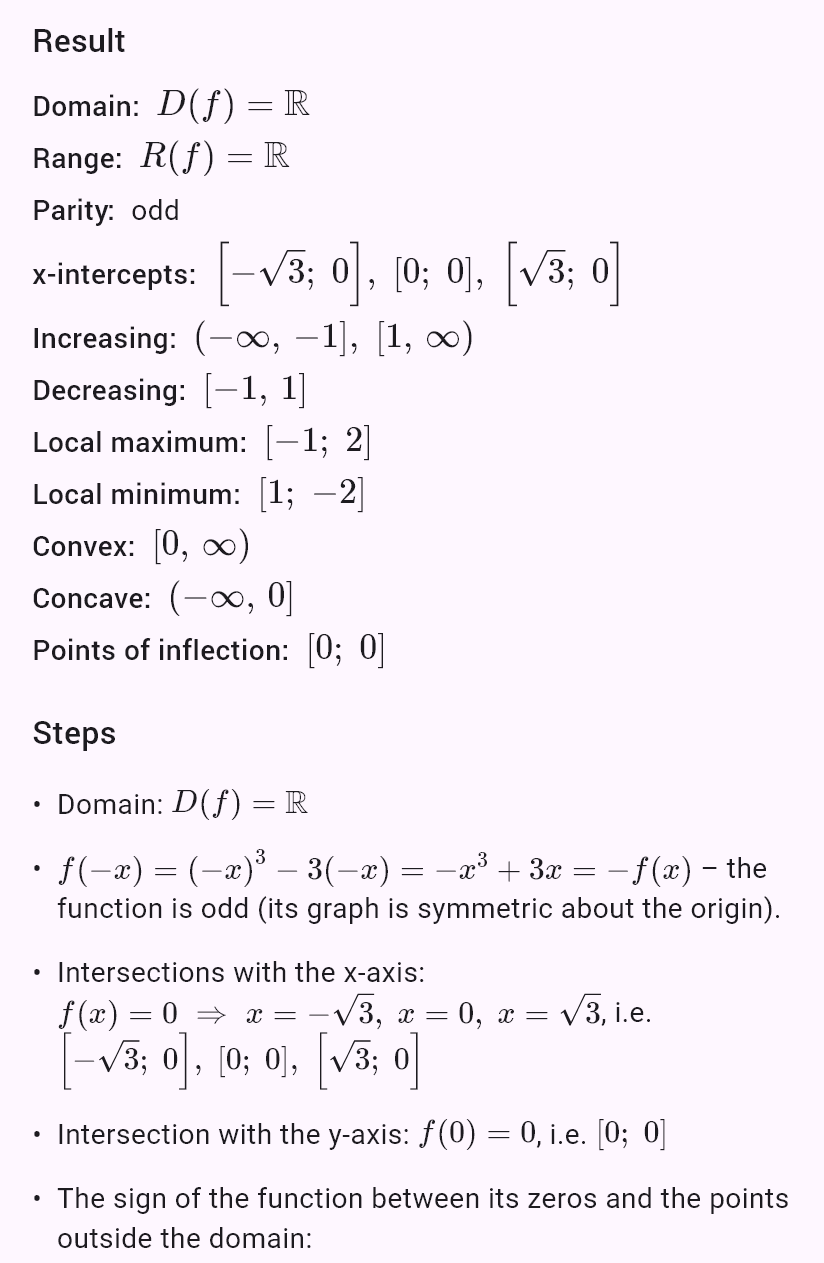
Typeset formulas, graphs, sign tables and the notation used at school – no raw machine text or cryptic symbols.
Much of it free
Symbolic computation is cheap – we don't pay a language model for every answer. That's why much of the app can be free.
How it works
Photo or keyboard
Snap a printed or handwritten problem, or type it in. You can check and fix the recognized problem before solving.
Every step explained
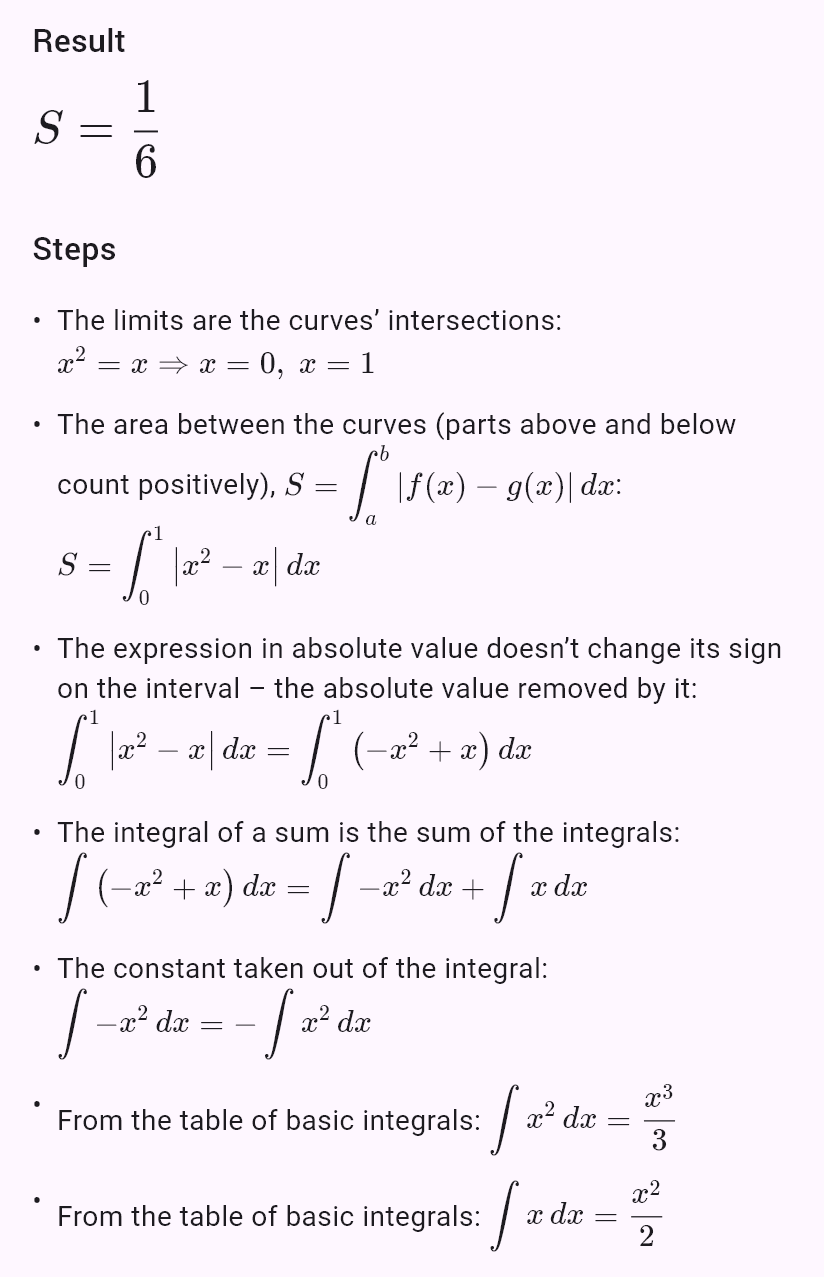
Not just the answer – the full working with a short explanation of each step, written the way teachers expect.
Graphs that make sense
Where it helps, a graph shows what is going on: intersections, extremes, the area under a curve.
What it can solve
From primary school to university mathematics:
- Linear, quadratic and higher-degree equations
- Rational, radical, exponential and logarithmic equations
- Absolute value and trigonometric equations
- Inequalities and systems of equations and inequalities
- Equations with a parameter
- Simplifying expressions
- Limits and derivatives
- Function analysis with a graph
- Taylor polynomials
- Indefinite, definite and improper integrals and their applications
- Functions of several variables, double, triple, line and surface integrals, vector calculus
- Infinite series and Fourier series
- Differential equations and recurrences
- Complex numbers
- Number theory: divisibility, GCD and LCM, primes
- Logic and sets
- Combinatorics, sequences and the binomial theorem
- Conic sections, analytic geometry, constructions and sections of solids
- Linear algebra: matrices, determinants, systems, vectors
- Numerical methods: roots of equations, integrals, derivatives, differential equations and systems
- Statistics and probability
- Maths in practice: chemistry, electronics, biology and medicine, economics and finance, logistics, physics and astronomy
What the result looks like
Try it yourself
Interactive demos of what can be calculated – each one explains the mathematics behind it.
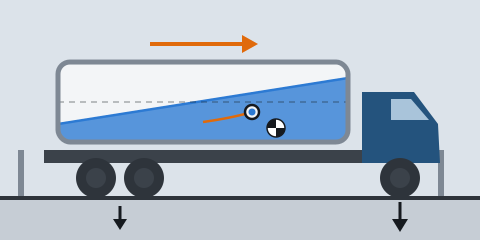
Tanker in motion
A partly filled tanker when accelerating, braking and cornering: how the liquid sloshes, where the centre of gravity moves and when it may roll over.
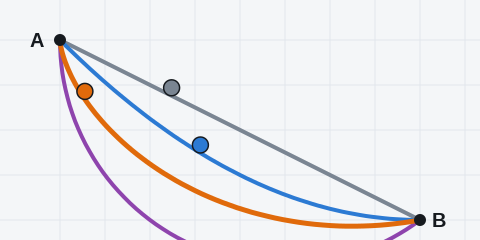
Brachistochrone
A race of balls from A to B along a line, a parabola, an arc and a cycloid – and along a path you draw yourself. Which one is the fastest?
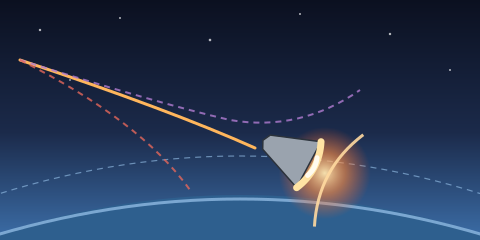
Atmospheric entry
A deorbit burn, the entry corridor and banking the lift in flight: will you land, skip back into space, or will the g-load and the heat break the limits?

Fractals in the complex plane
The Mandelbrot and Julia sets and Newton's basins: pan, zoom and tap to follow where the iteration leads.
User guide
The guide describes every type of problem: what the solution includes, how to enter the problem and examples of real output from the app.
PDF downloads by part: