II. Linear algebra and geometry
24. Construction problems
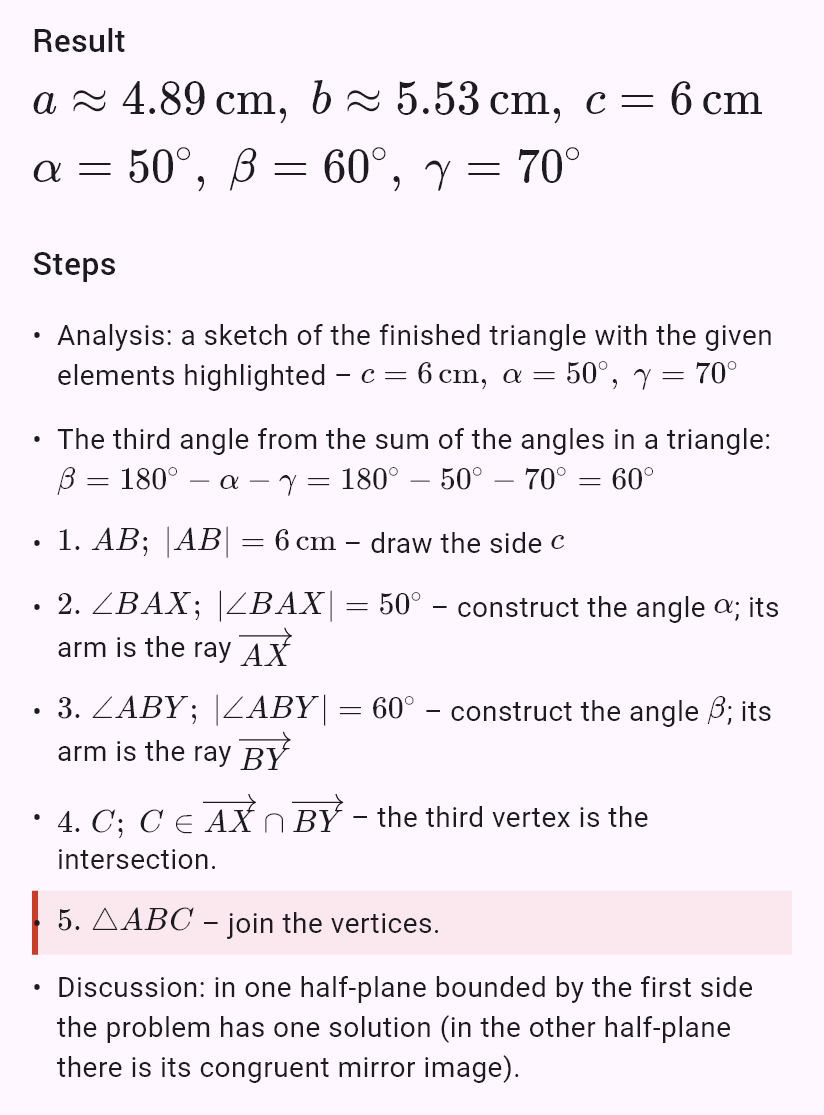
Construction problems are entered in a form – in the “Applications” section of the home screen, the Geometry field (the “Construction problems” form). The basic task is a triangle ABC from three elements: three sides (SSS), two sides and the angle between them (SAS), a side and two angles (ASA – the third angle is computed from the sum of 180°), or two sides and the angle opposite one of them (SSA). Lengths are in centimetres, angles in degrees.
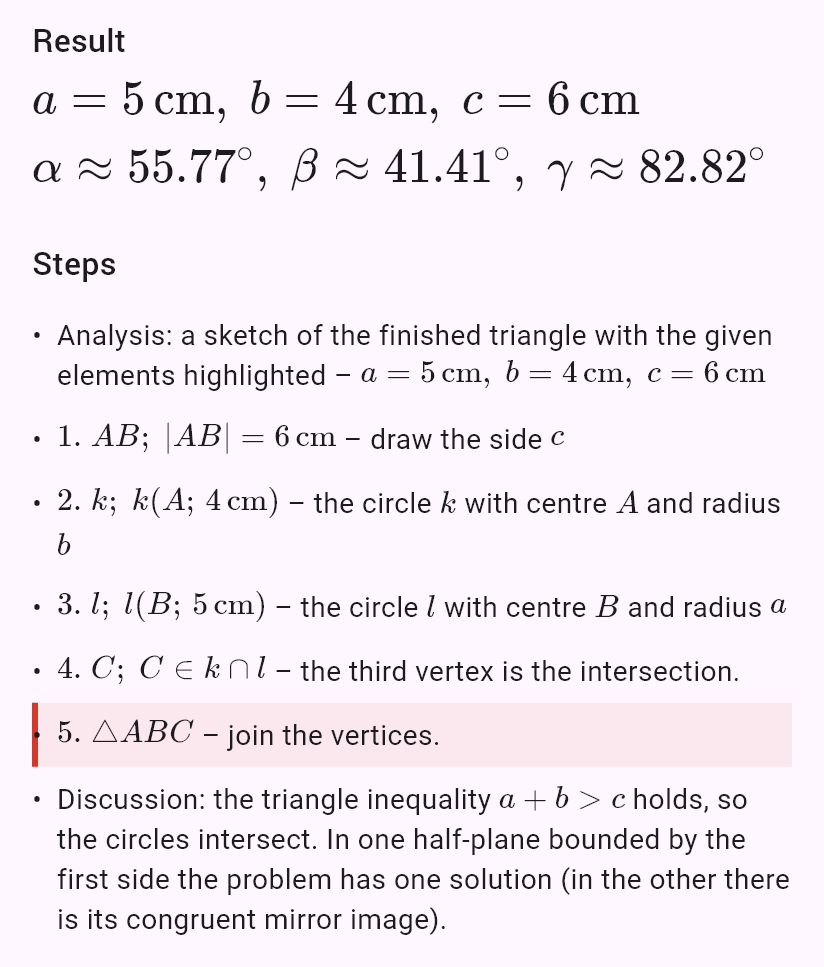
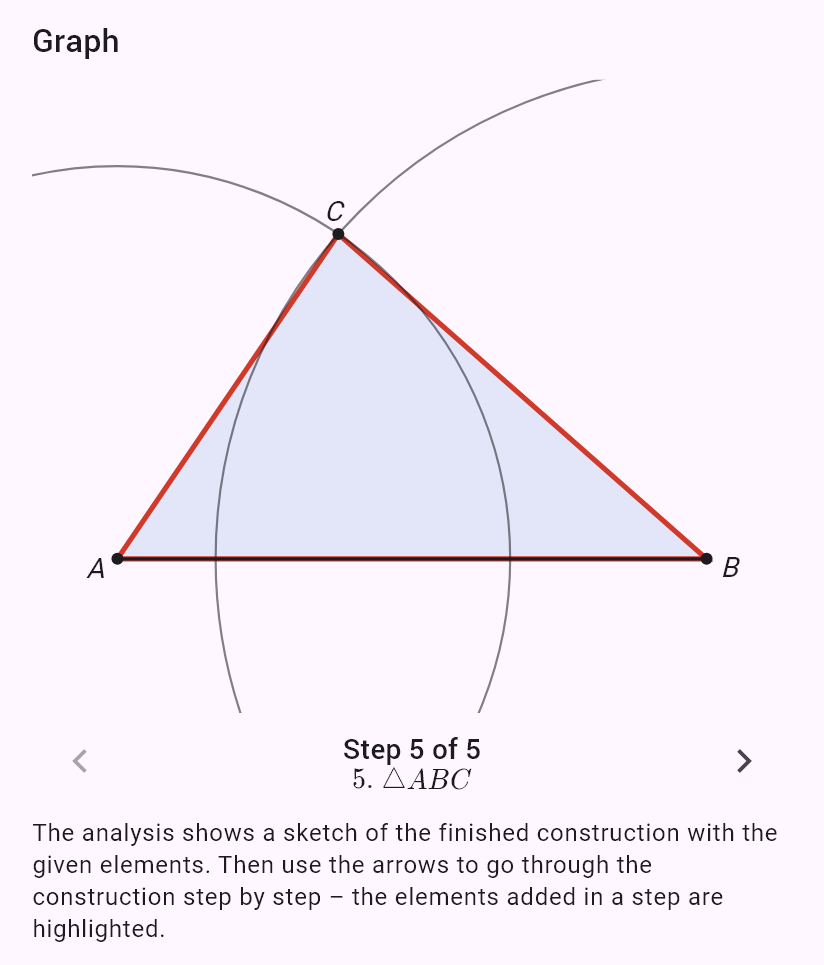
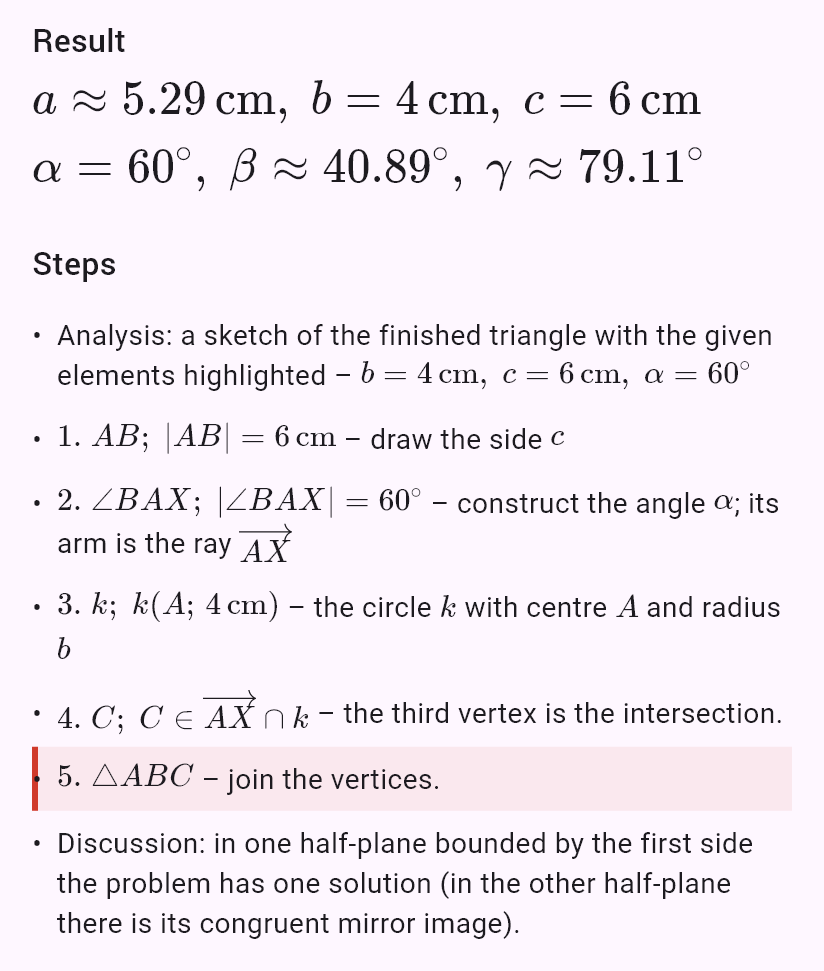
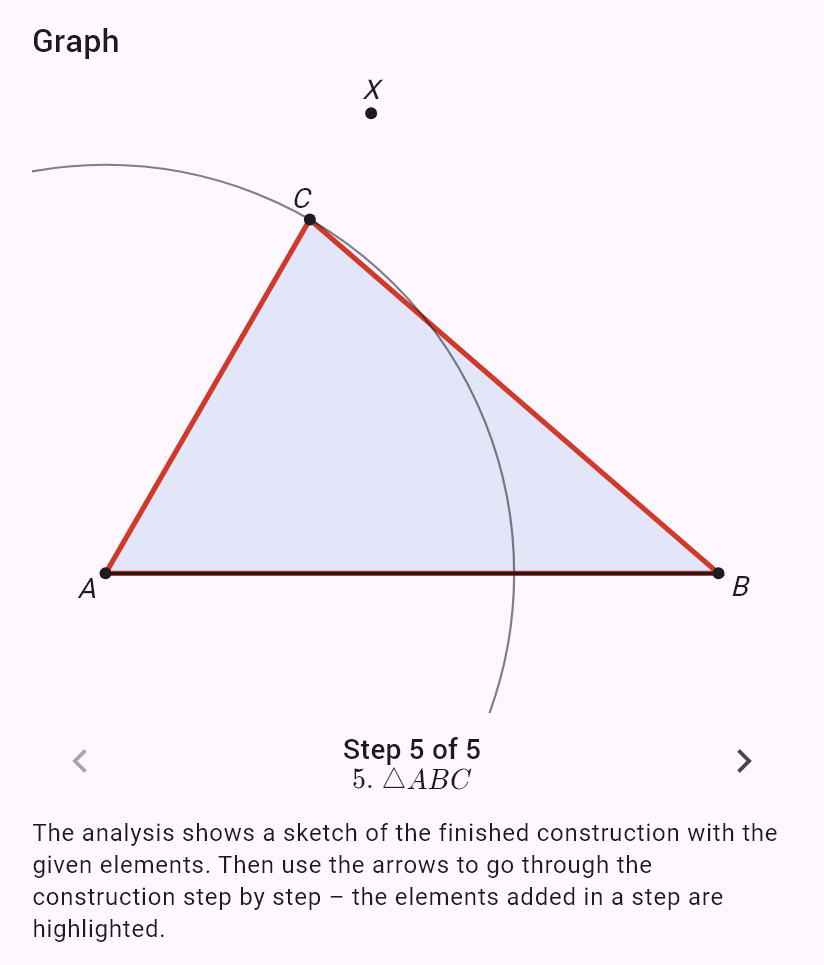
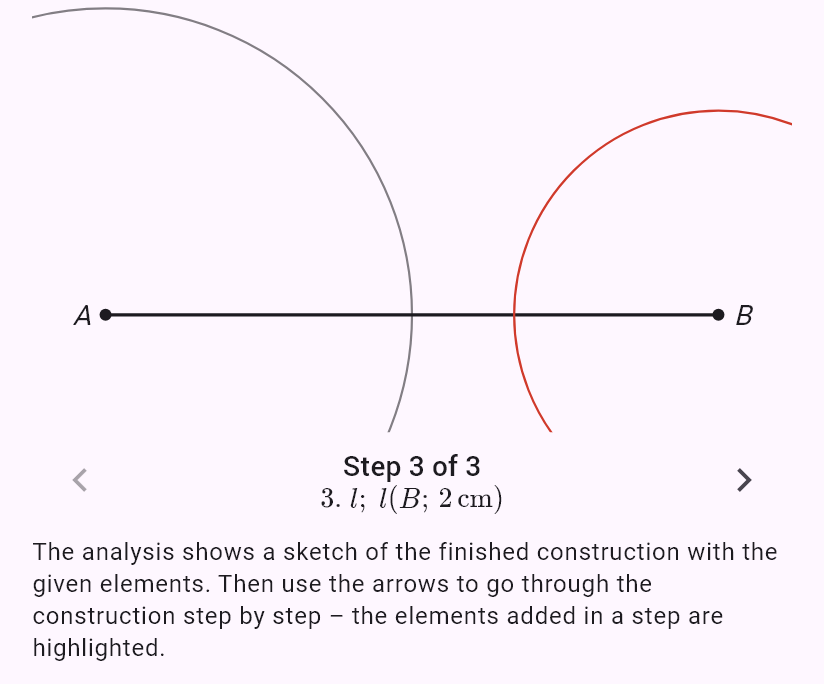
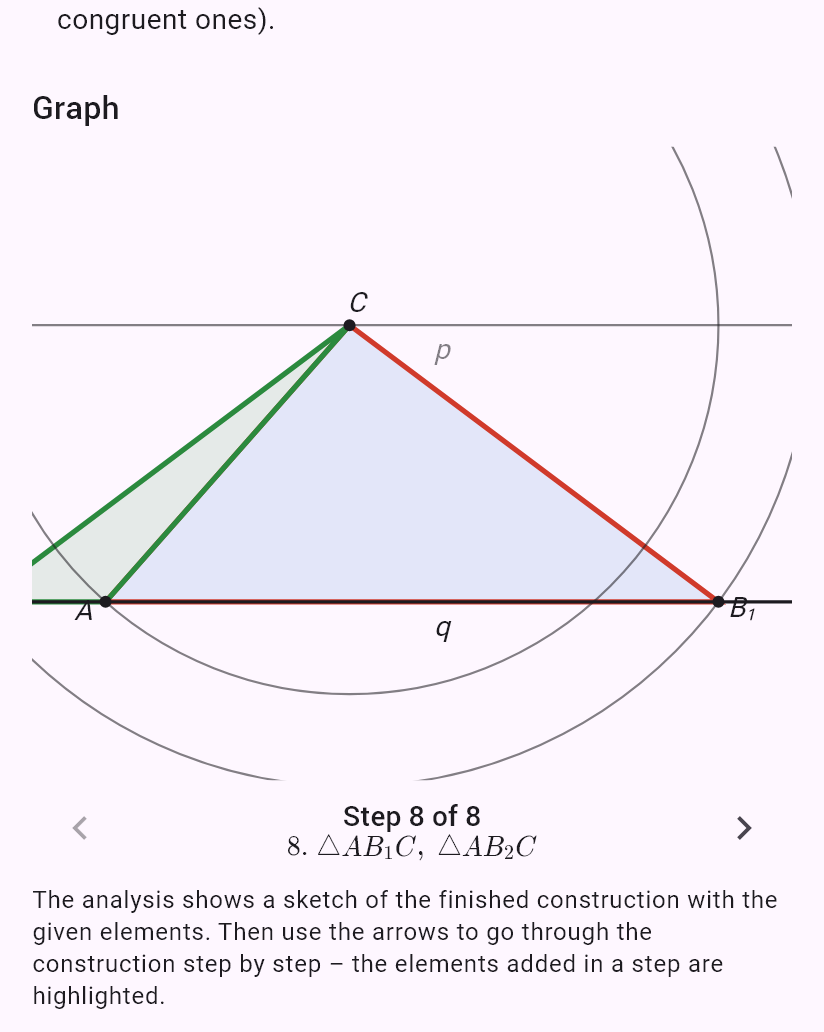
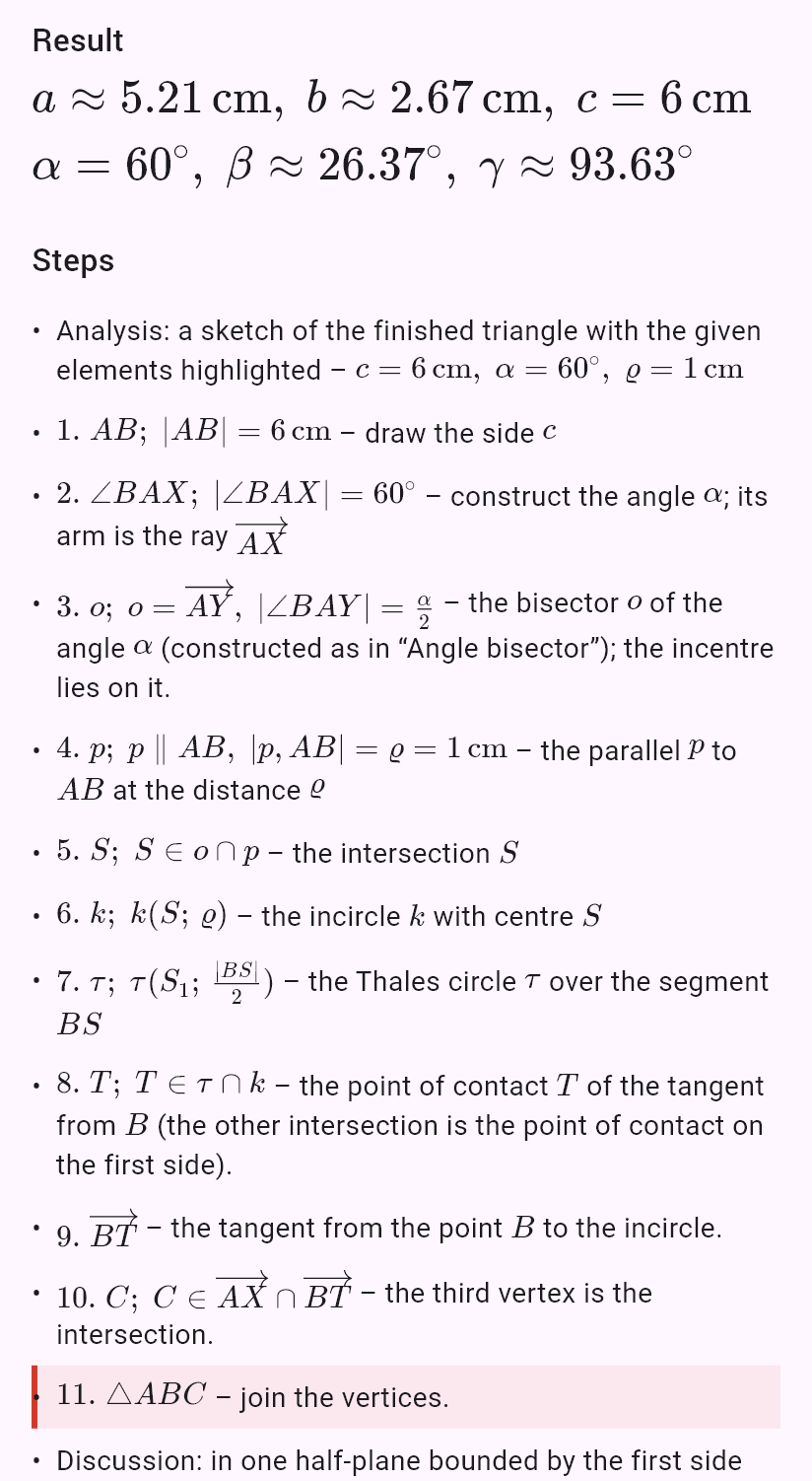
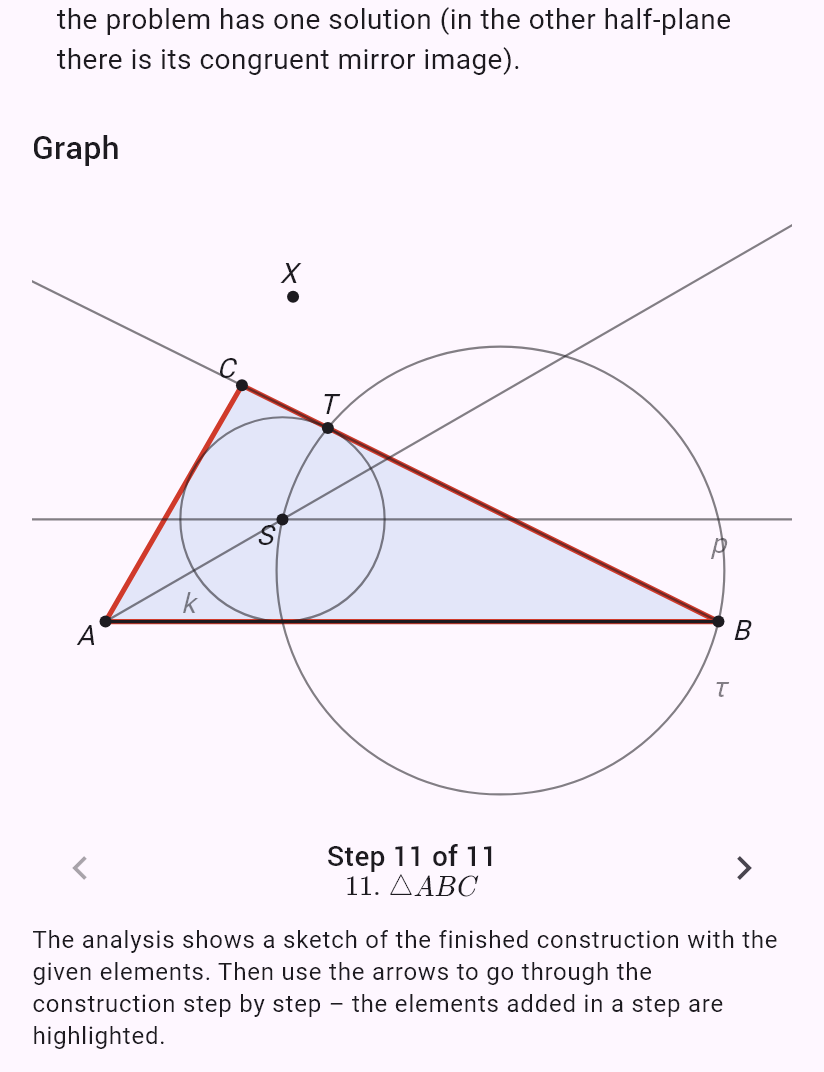
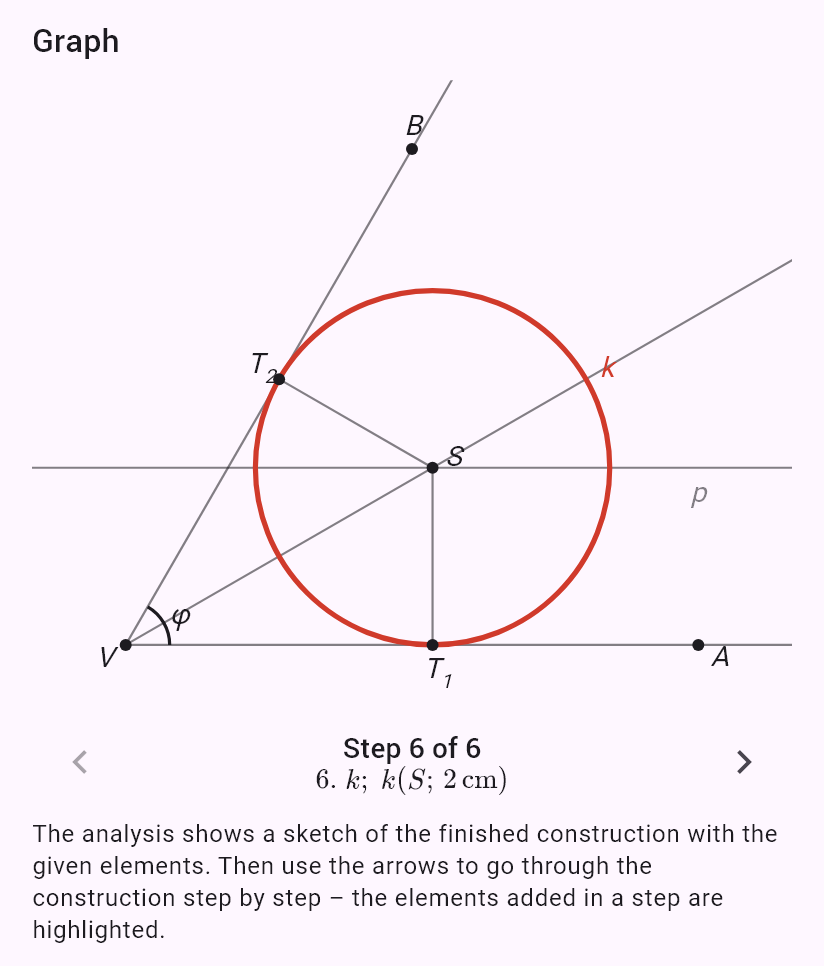
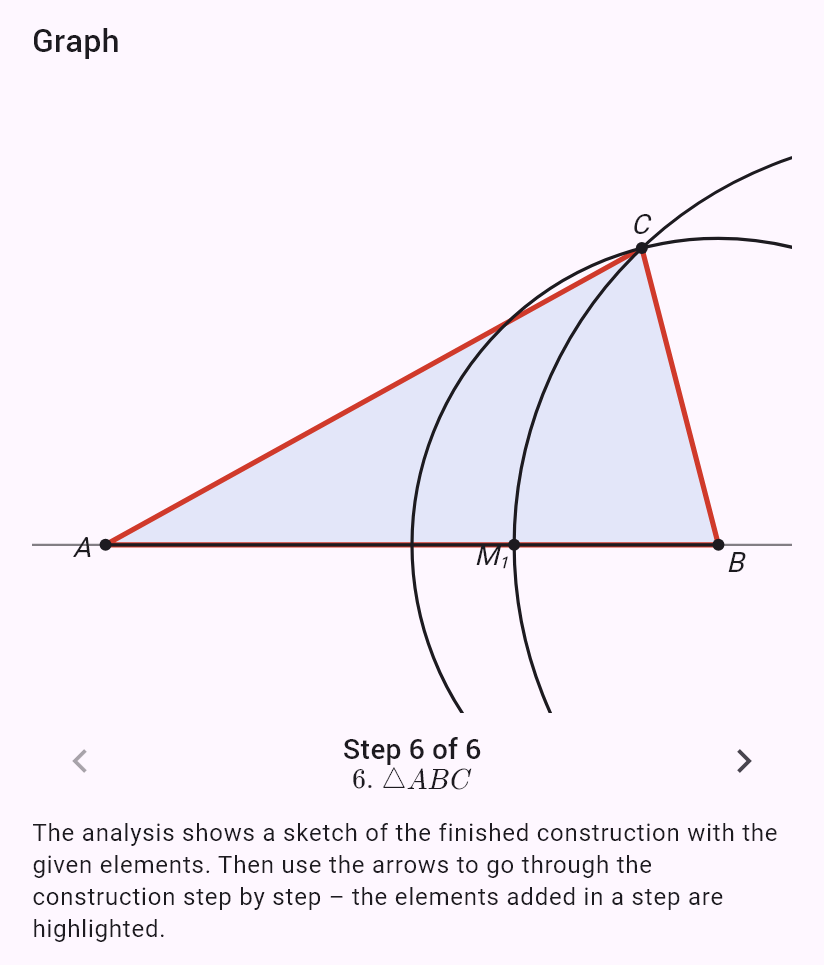
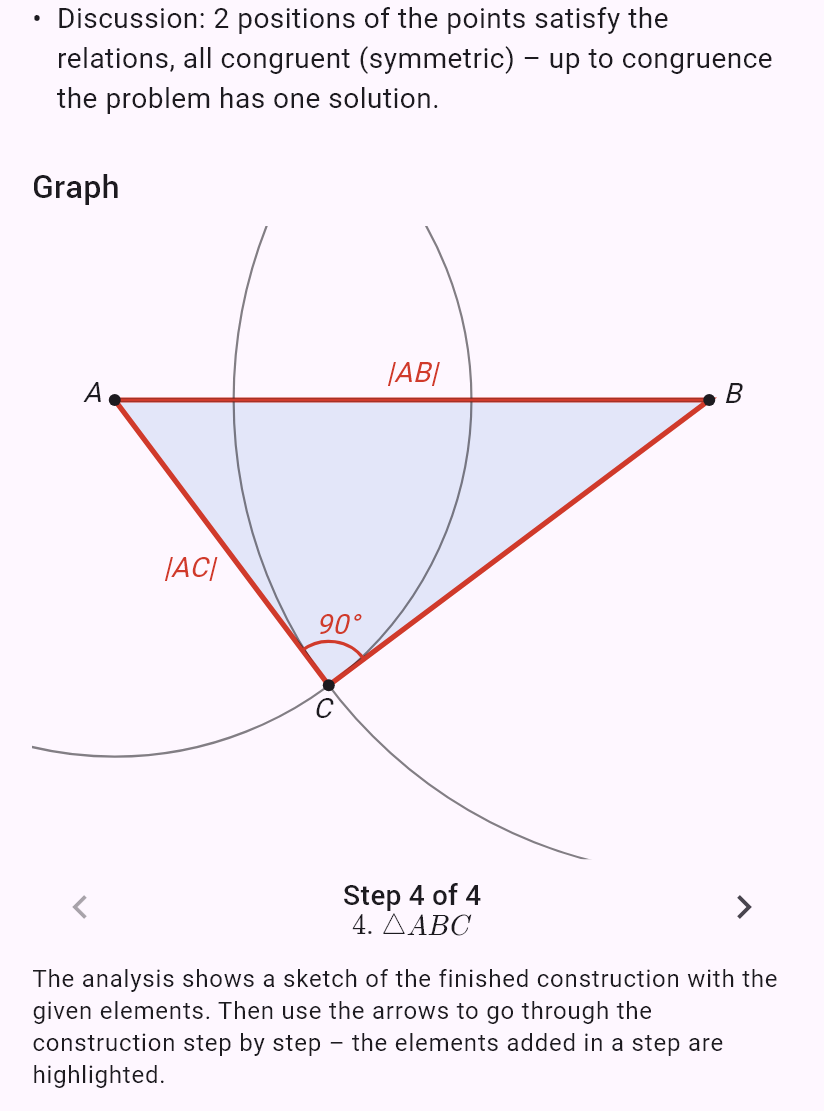
The solution follows school practice: the analysis (a sketch of the finished triangle with the given elements highlighted), the construction steps in symbolic notation (1. AB; |AB| = 6 cm, 2. k; k(A; 4 cm), 3. C; C ∈ k ∩ l …) and a discussion of the number of solutions. The picture under the result pages through the construction step by step with the arrows – the elements added in a step are highlighted in colour. The result also lists the computed sides and angles, so you can check your drawing.
The discussion explains why a problem has no solution (the triangle inequality, the sum of angles, a circle that doesn’t reach the ray) or why it has two (SSA with the angle opposite the shorter side).
A triangle can also be given by an altitude, a median, the circumradius or the inradius. A side is drawn first and the third vertex lies where two loci meet: a parallel at the altitude’s distance, a circle around the side’s midpoint with the median as radius, a circle around an end point, an angle’s arm, the arc of an angle over the side or the circumcircles. With two sides and the altitude from their common vertex, the altitude comes first; with the inradius, a side and an angle at it, the incircle and the tangent to it are constructed.
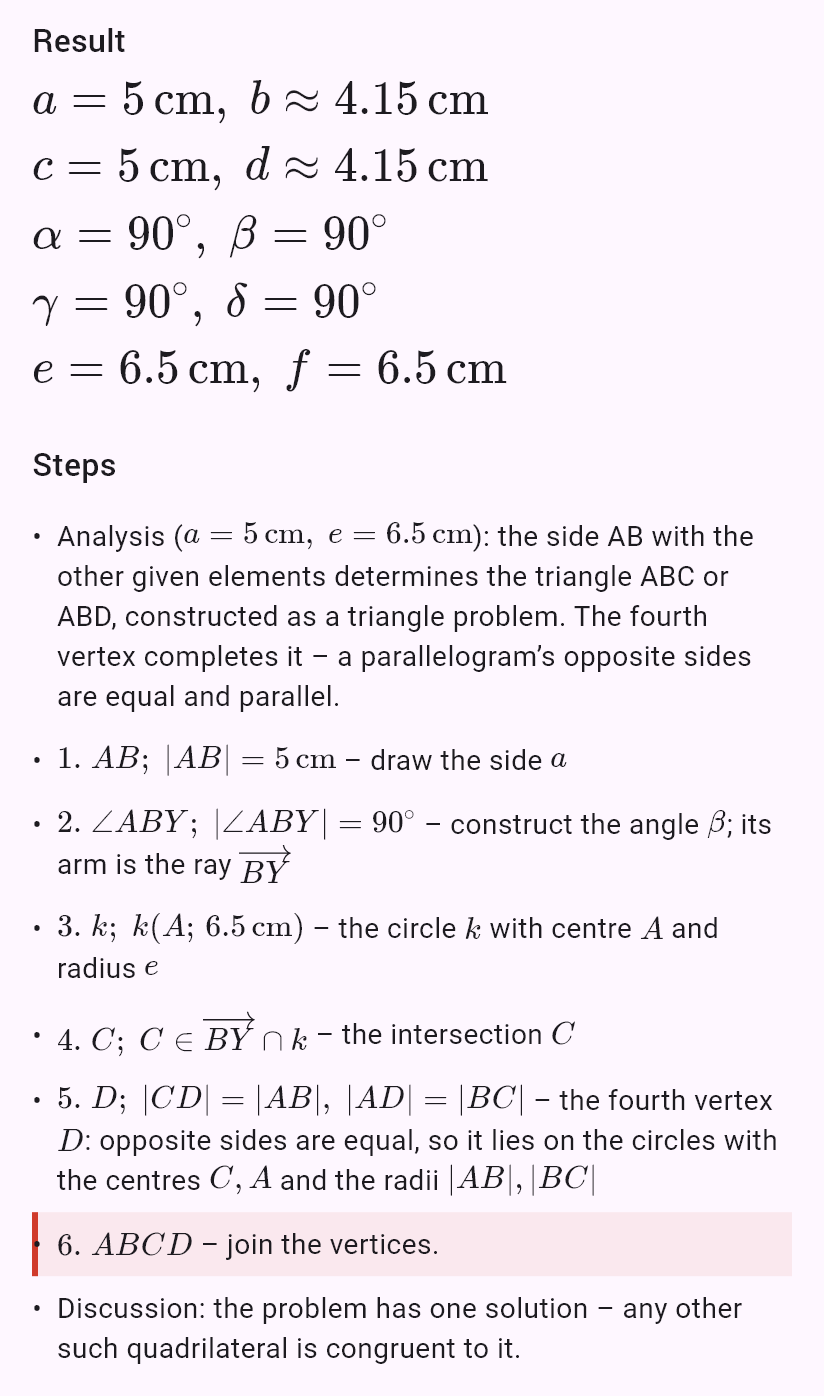
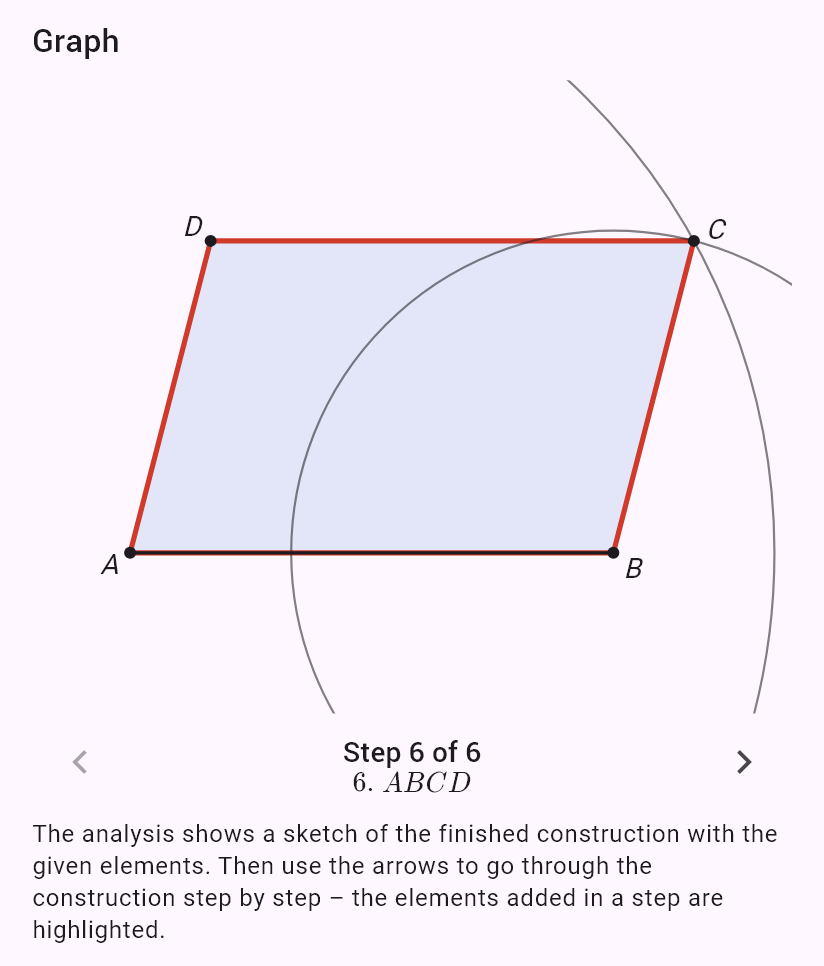
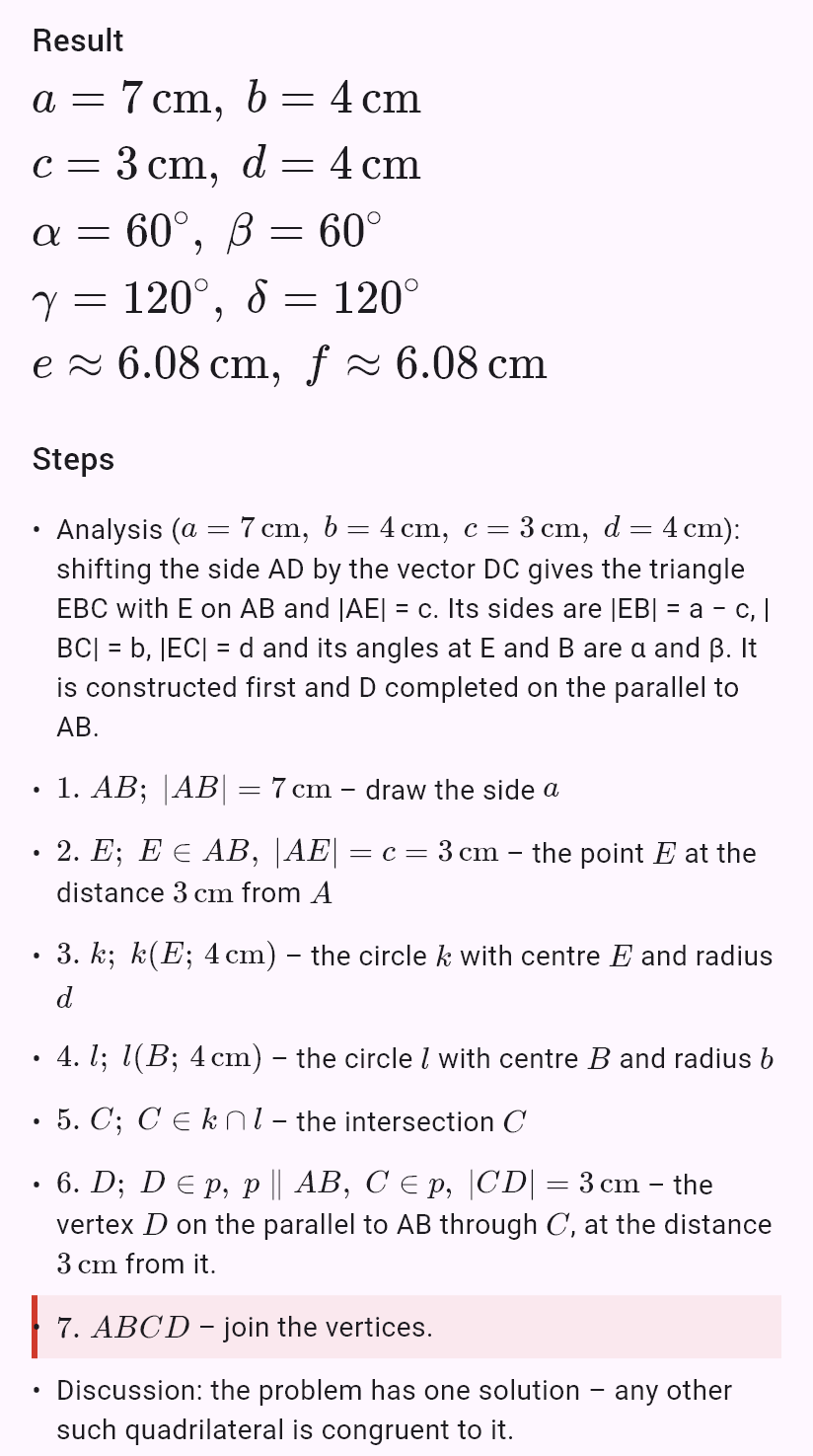
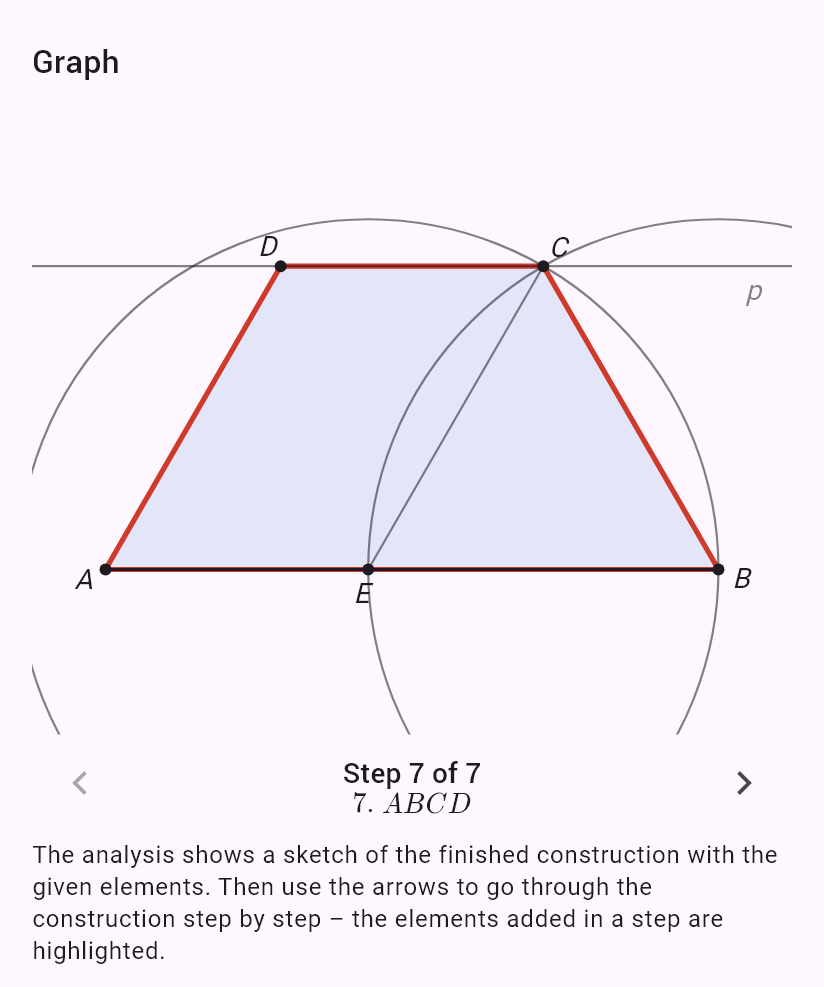
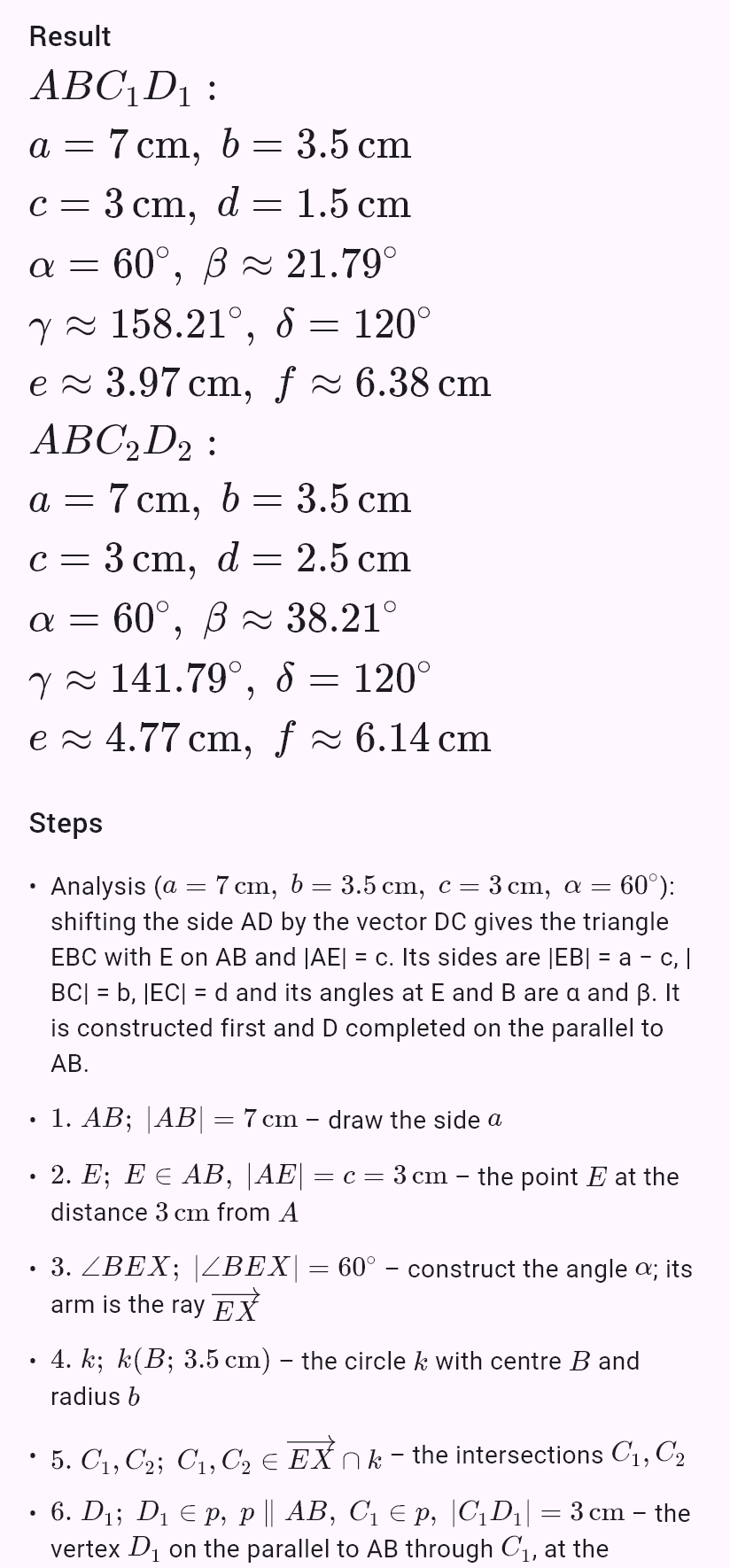
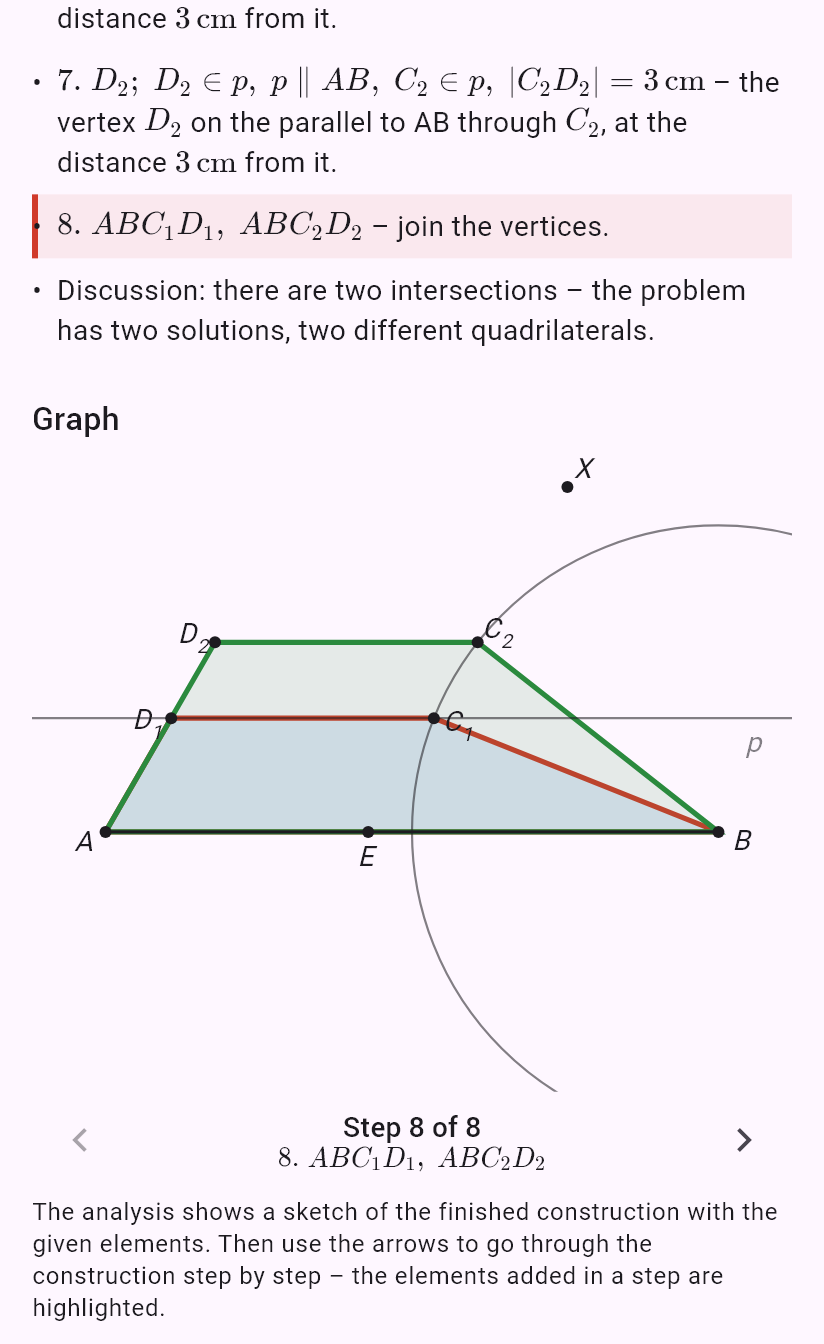
Quadrilaterals: a square, a rectangle, a rhombus, a parallelogram and a trapezoid (AB ∥ CD) from the sides a, b, c, d, the diagonals e, f, the angles α, β and the height v – the elements are picked in rows as for a triangle. Mostly the triangle ABC or ABD comes first and the fourth vertex completes it; otherwise the diagonals halving each other (perpendicular in a rhombus), the parallel at the height’s distance or, for a trapezoid, a helper triangle from shifting the side AD or the diagonal BD by the vector DC.
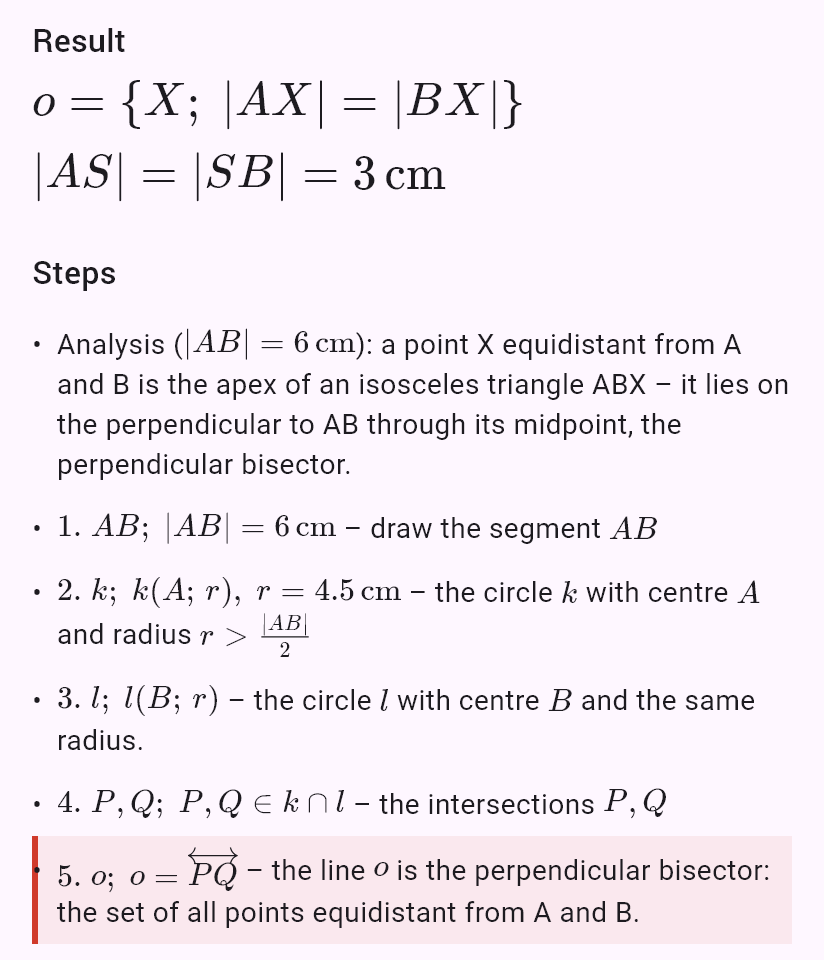
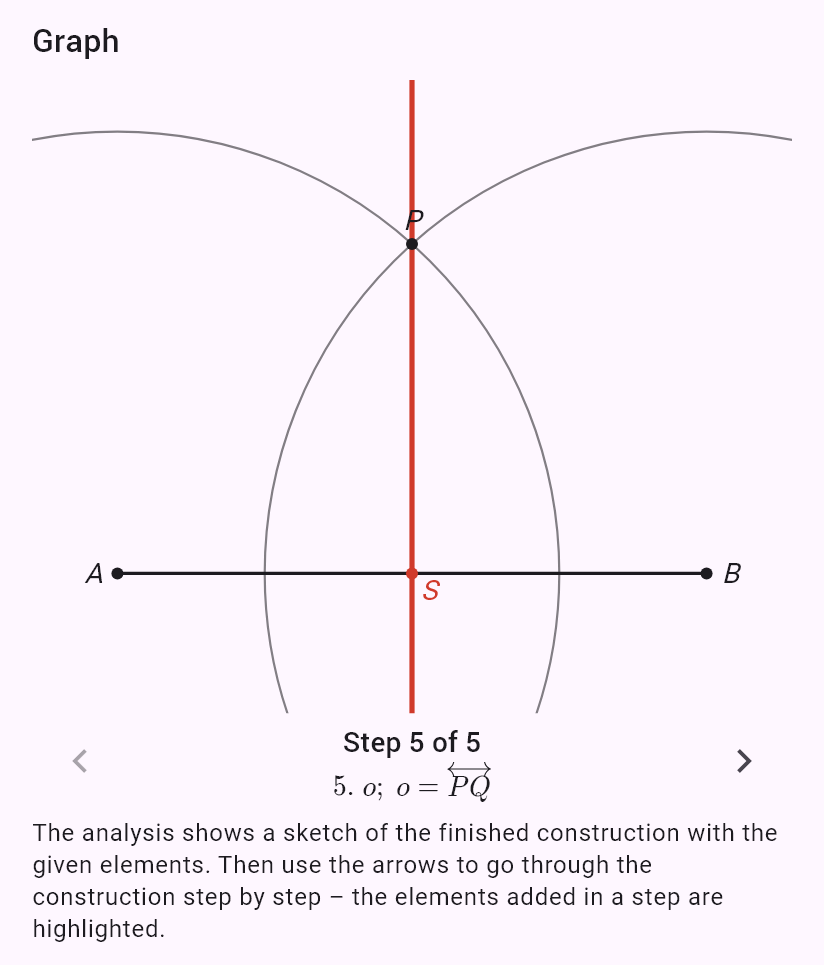
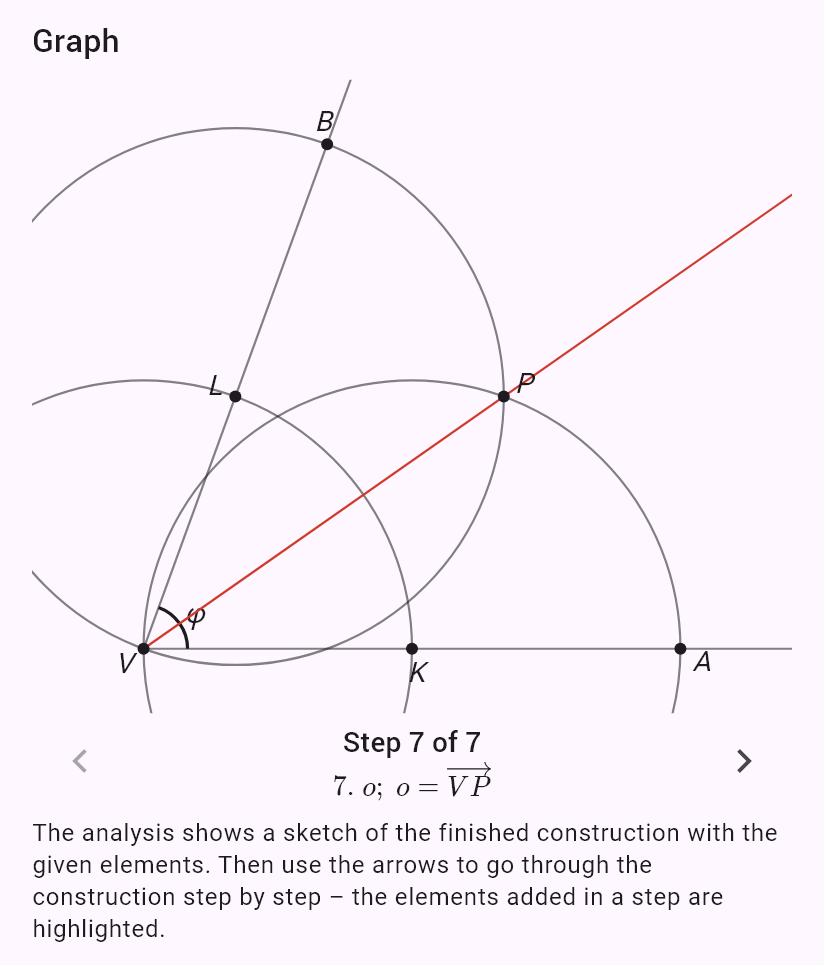
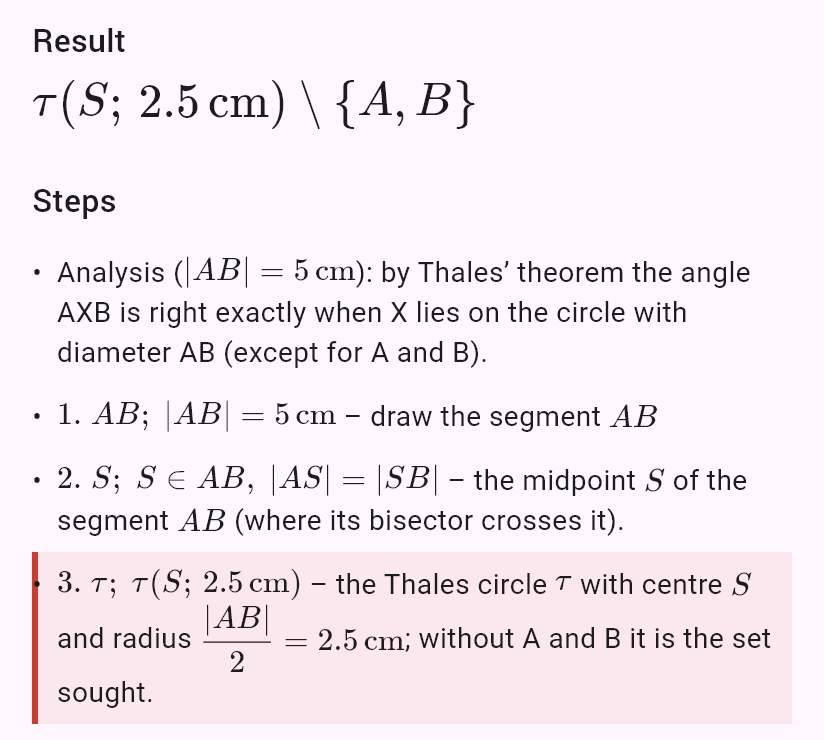
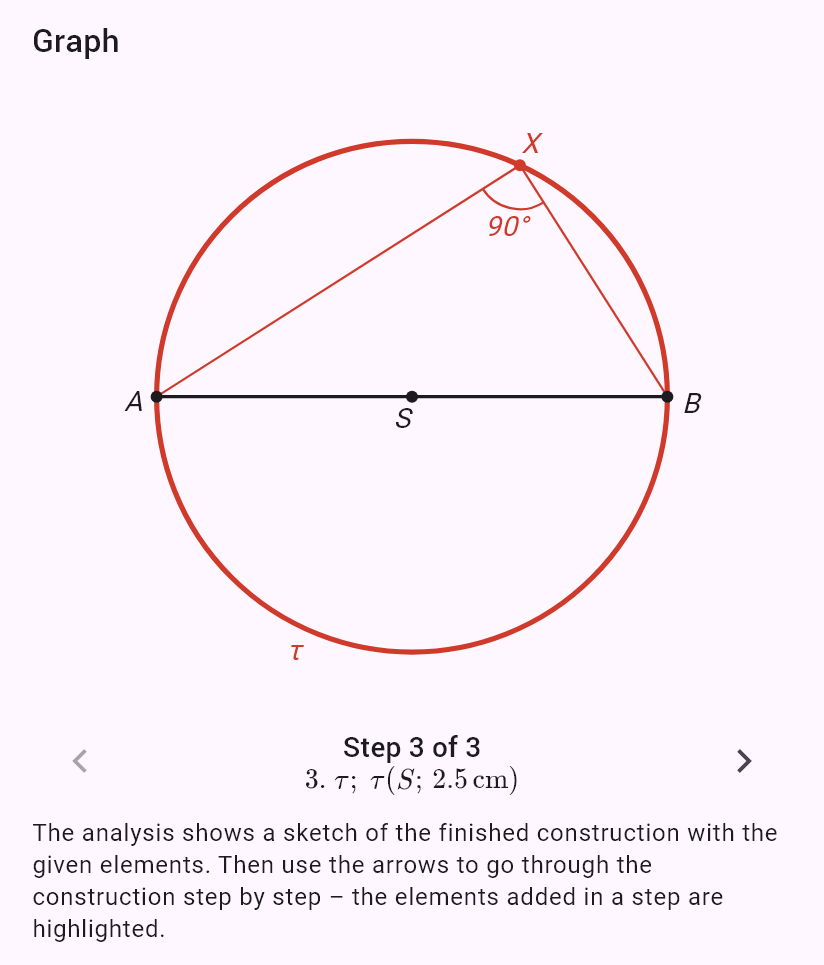
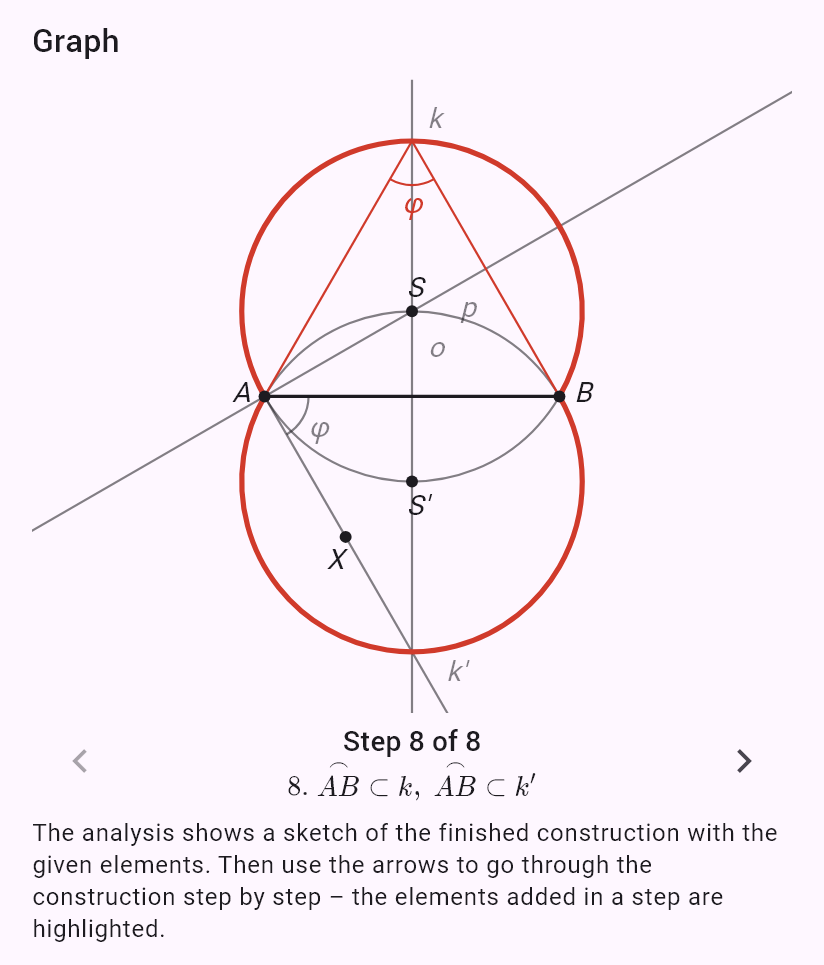
Loci are in the same form: the perpendicular bisector of a segment, the angle bisector, the Thales circle and the arcs from which a segment is seen at a given angle (two arcs symmetric about the segment). Each is constructed with compasses and a ruler step by step; the analysis explains why the points lie exactly there.
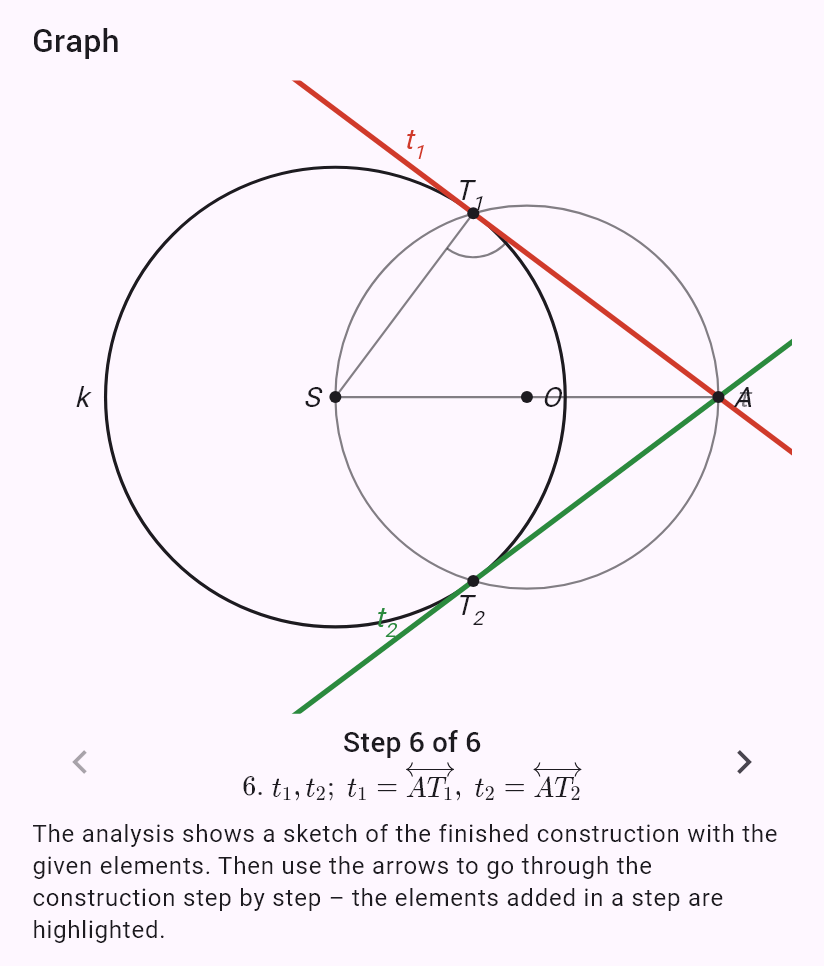
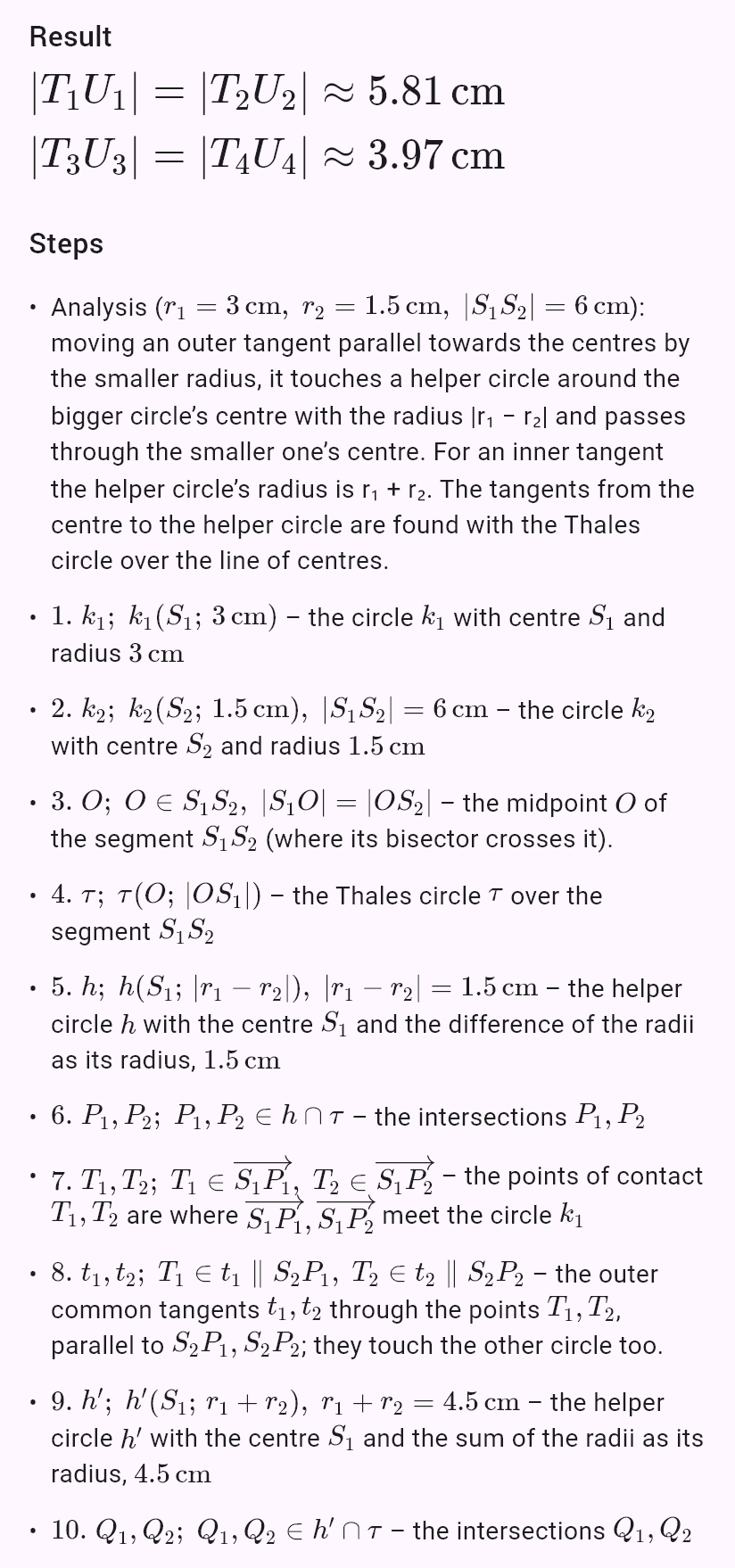
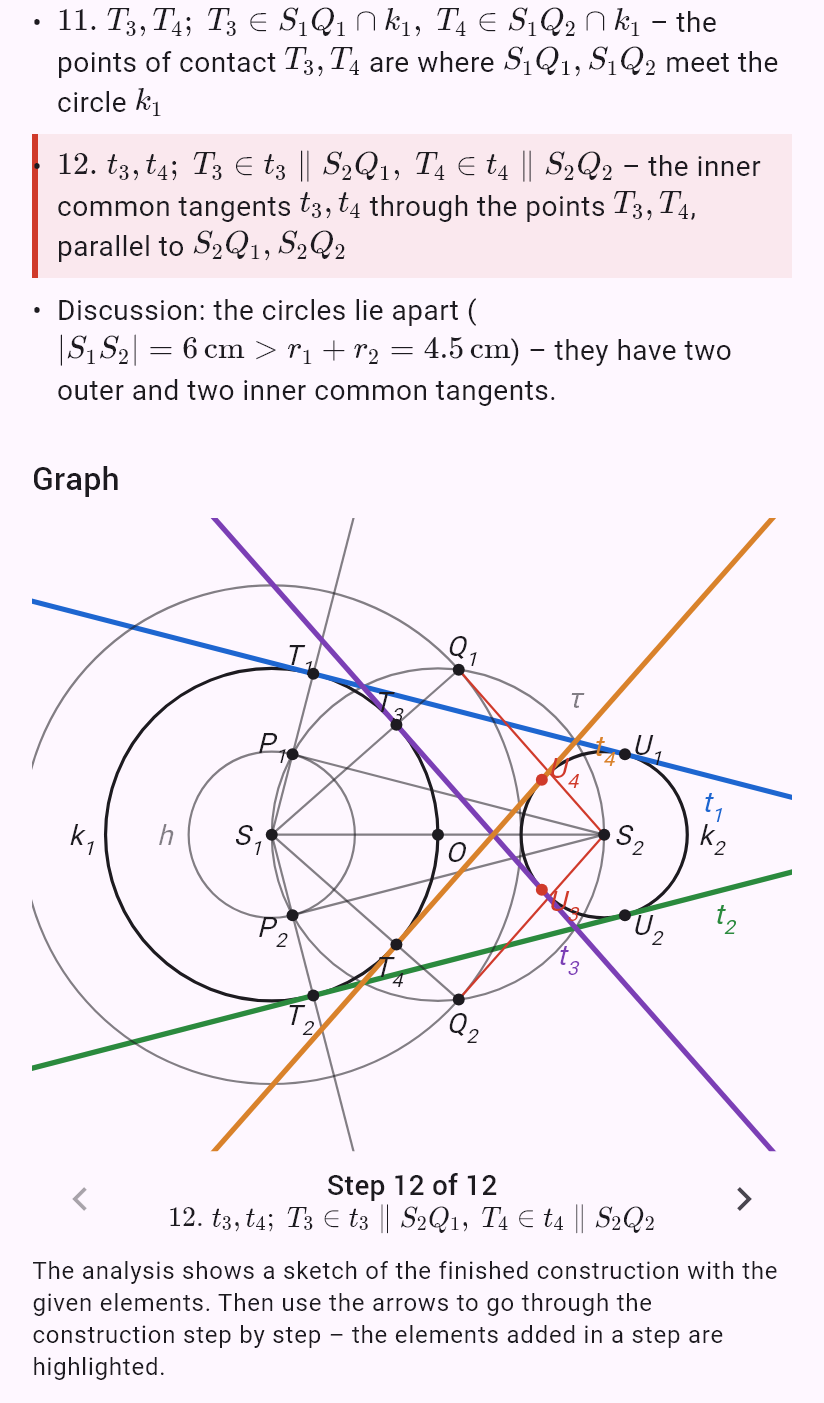
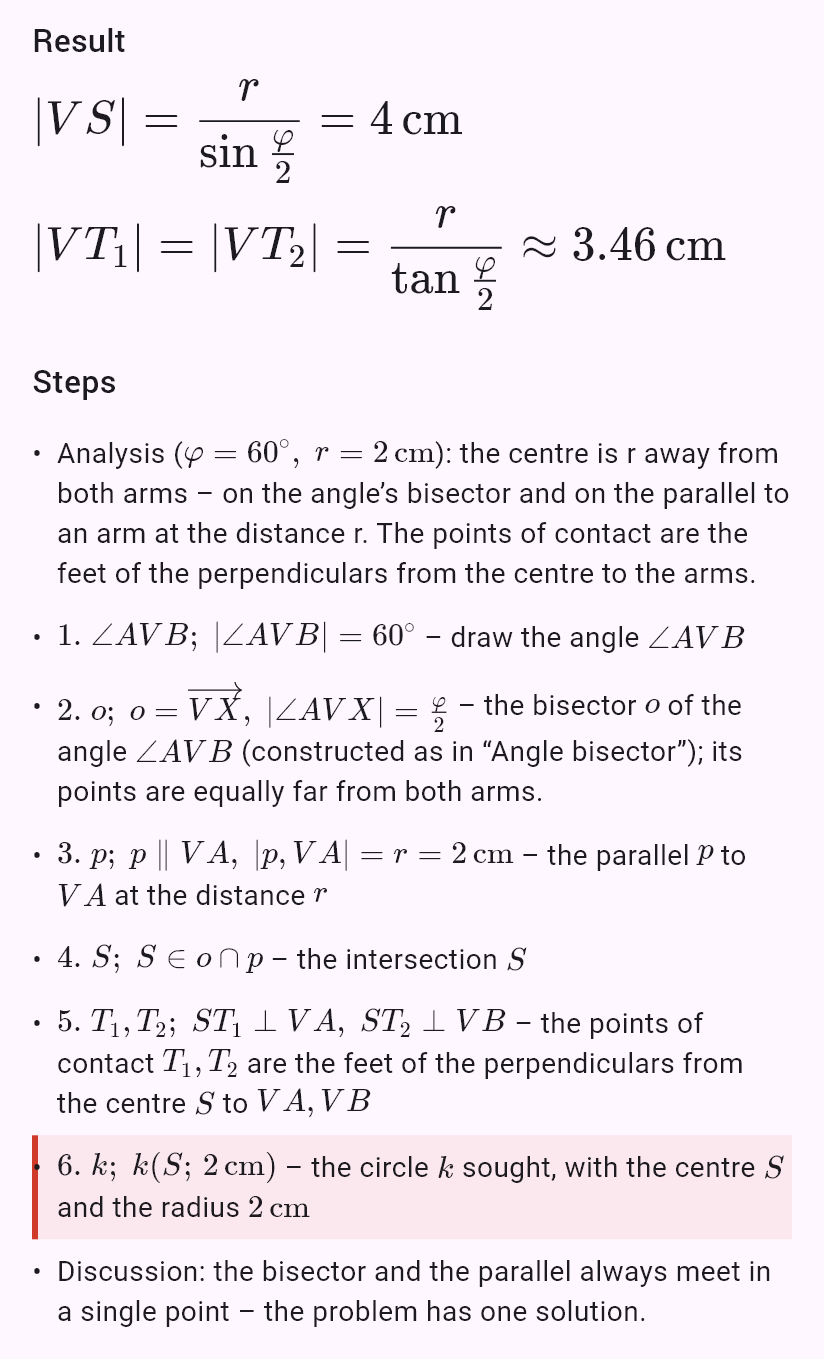
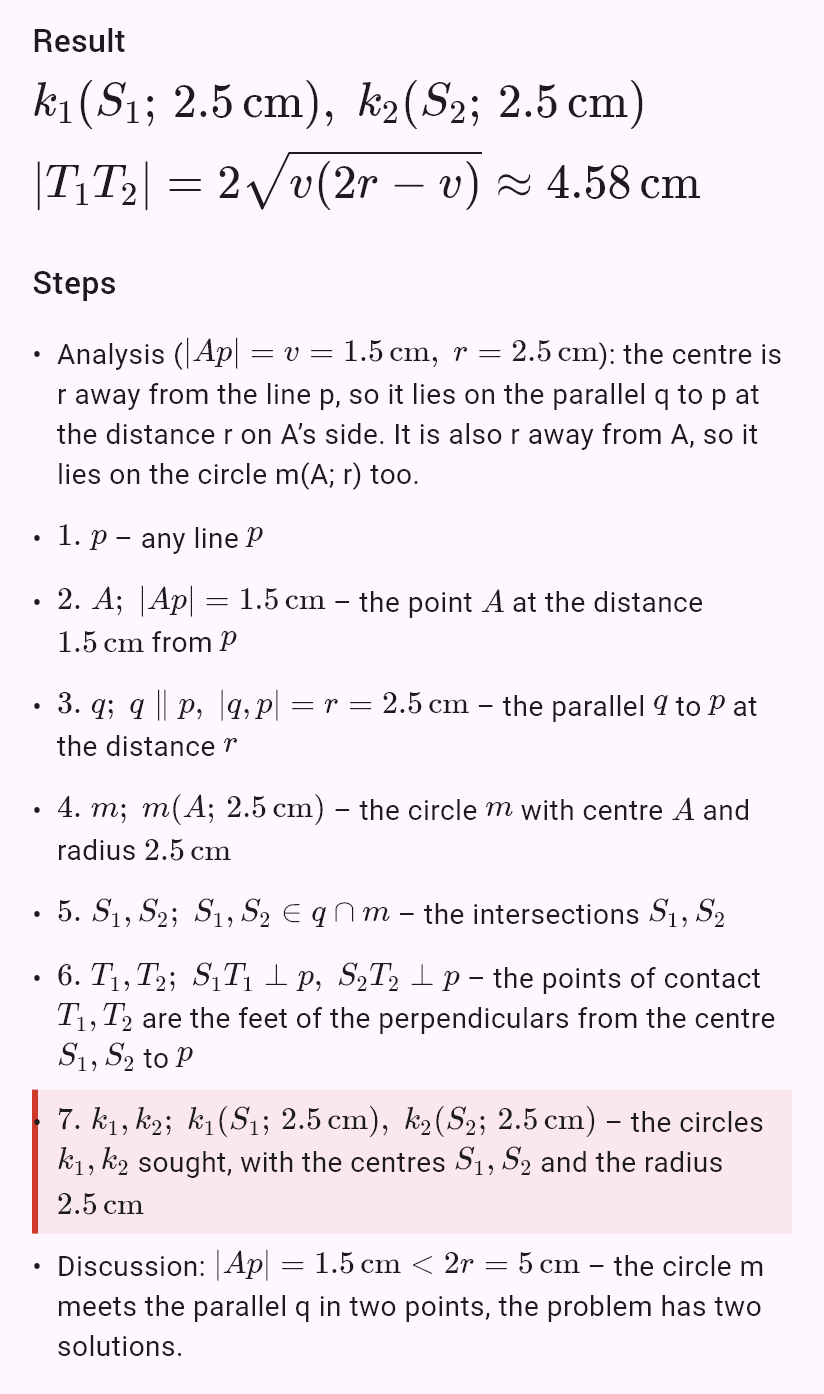
Circles and tangents: the tangents from a point to a circle (the points of contact on a Thales circle), the common tangents of two circles (via helper circles with the difference and the sum of the radii), the circle of a given radius touching an angle’s arms, the circles through a point touching a line and the circles through two points. The discussion counts the solutions by the position – two circles have four, three, two, one or no common tangents, for example.
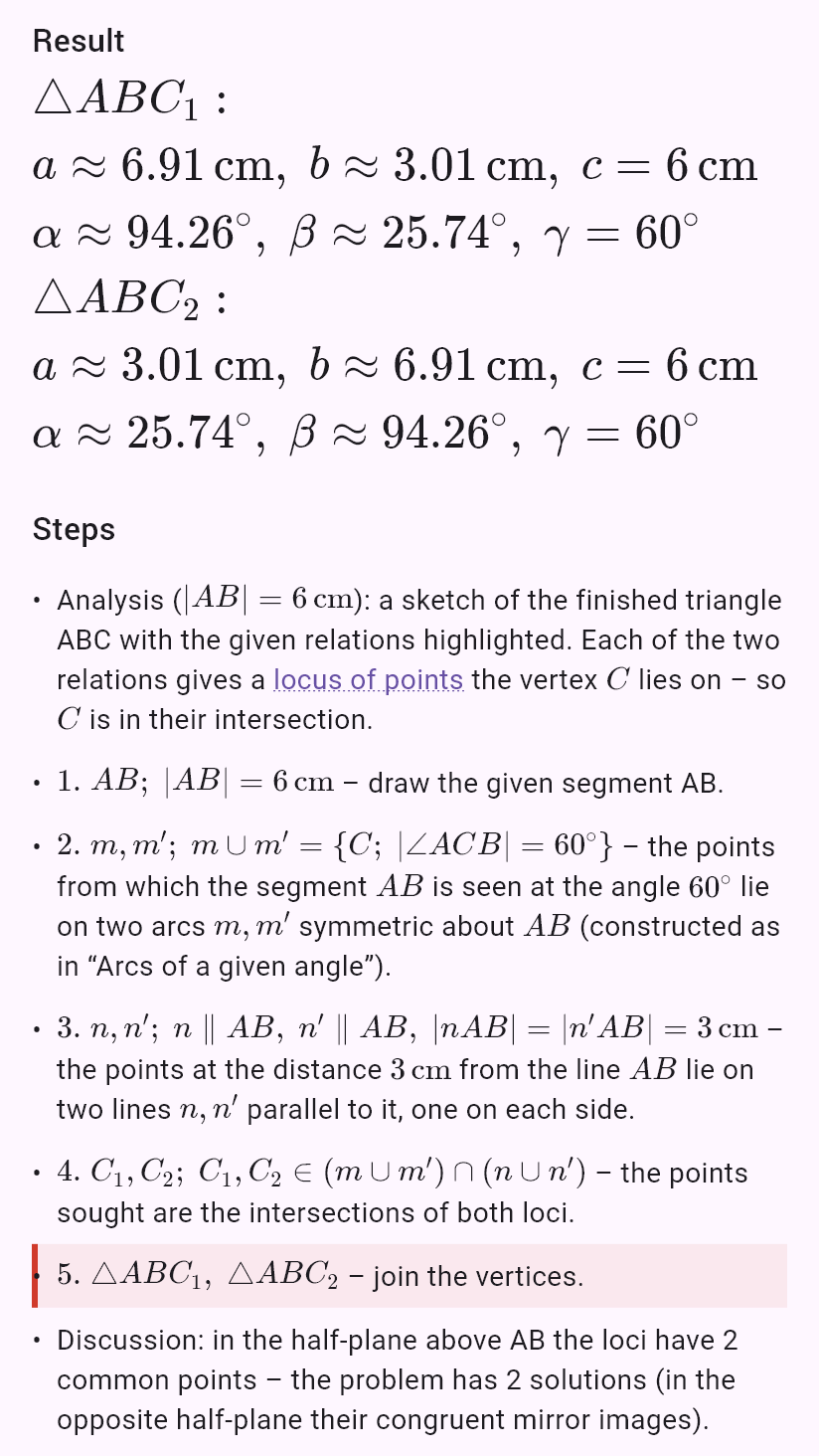
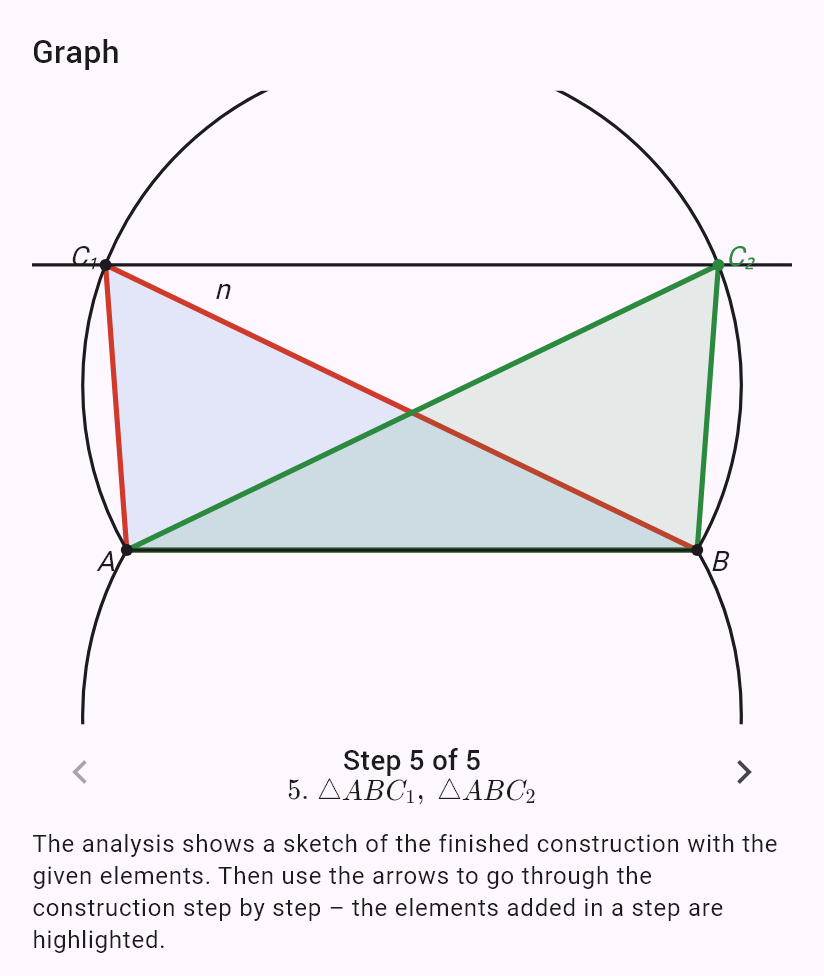
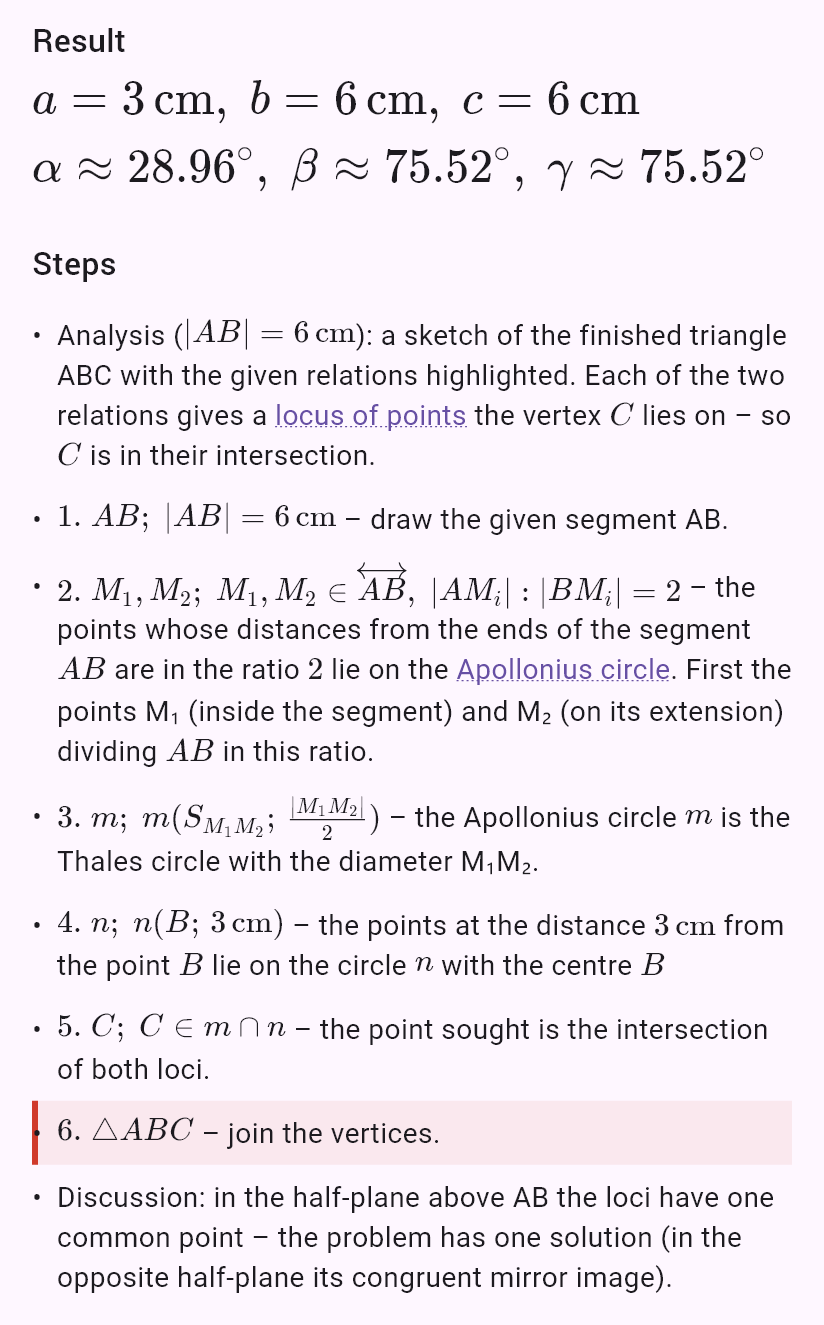
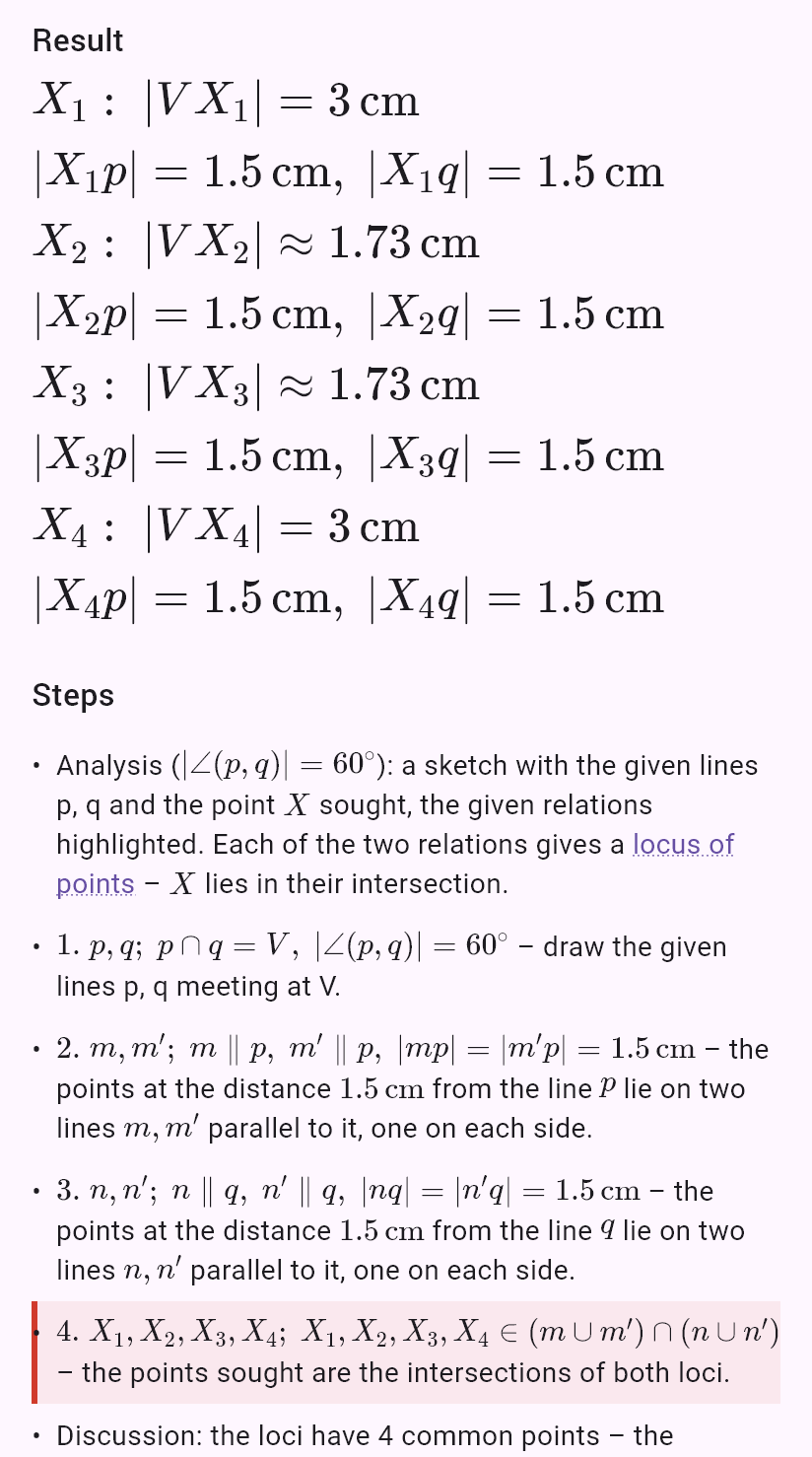
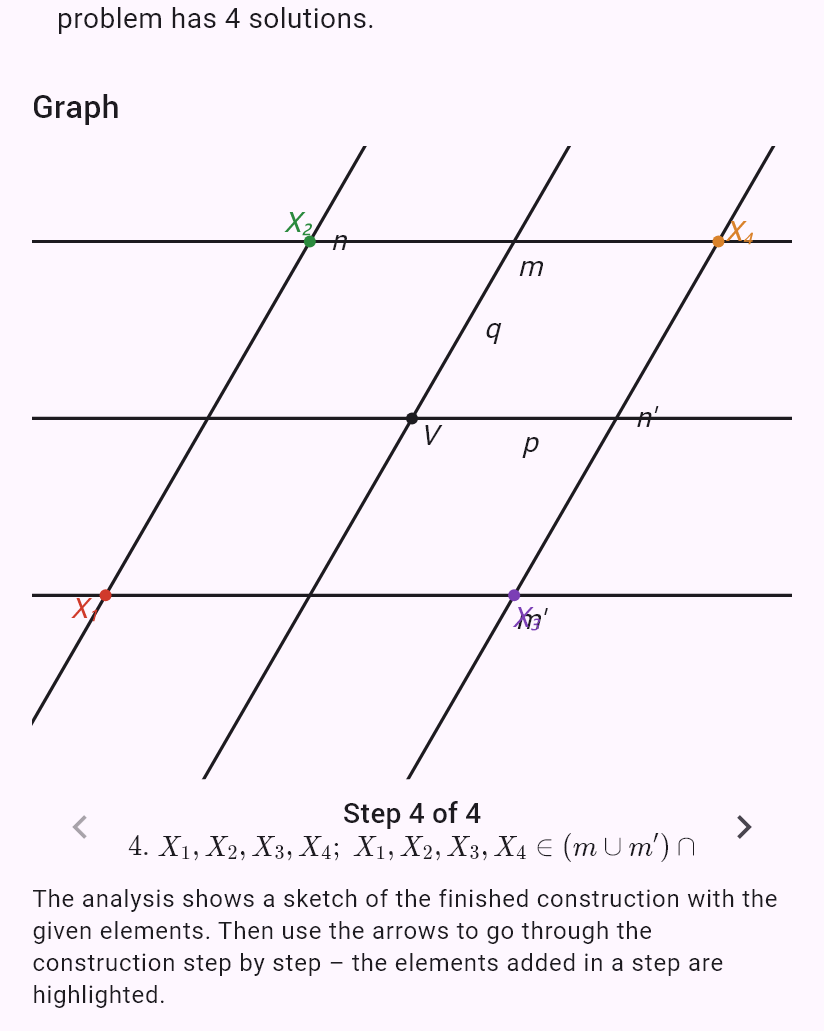
Problems with relations: a given figure (a segment AB, a circle k and a point A, a line p and a point A, a circle k and a line p, two intersecting lines p, q) and two relations the point sought must satisfy – over a segment the vertex C of the triangle ABC, otherwise a point X. The relations are picked in rows: the segment is seen from the point at an angle (90° = the Thales circle), as far from two points or two lines, a distance from a point or a line, the ratio of the distances from A and B (the Apollonius circle), lies on a line or a circle, the line AX is a tangent to k, the centre of a circle of radius ϱ touching k, and A is the midpoint of XY with Y on k or p (point reflection). Each relation becomes a locus of points, the point sought is in their intersection; the discussion counts the solutions (over a segment in one half-plane, the other gives congruent mirror images). Under the result are the distances of the point from the given points and lines as a check.
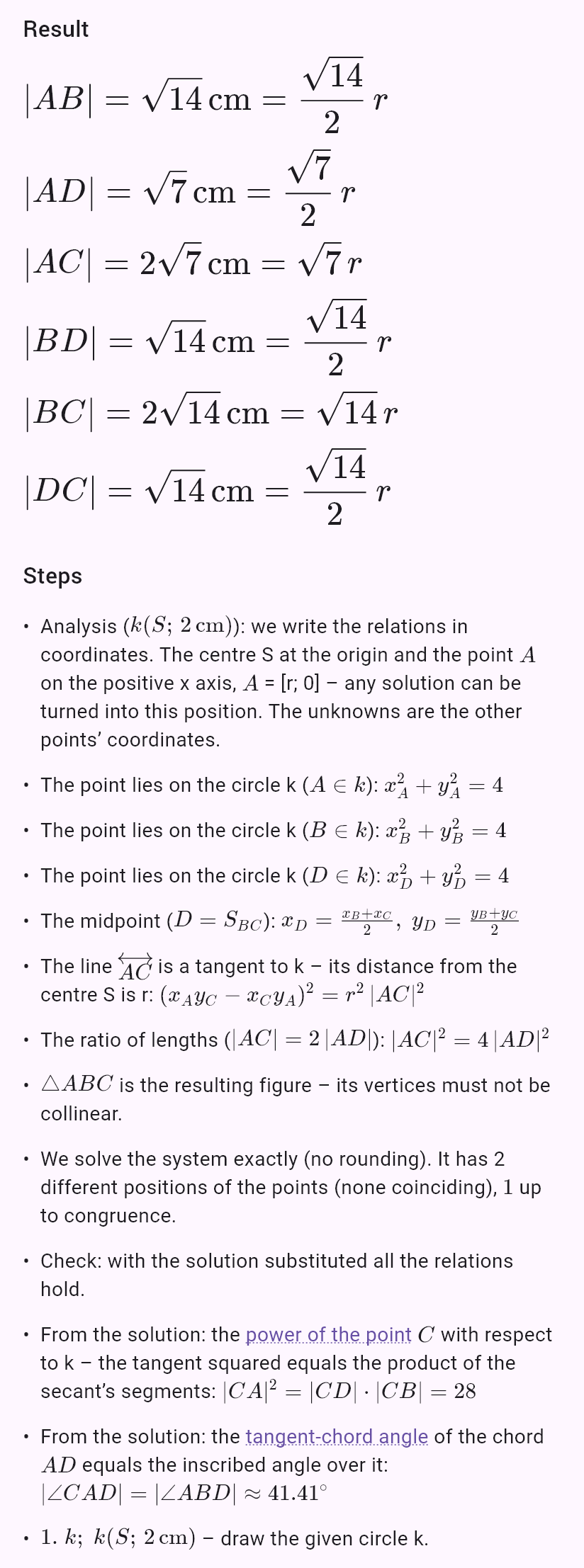
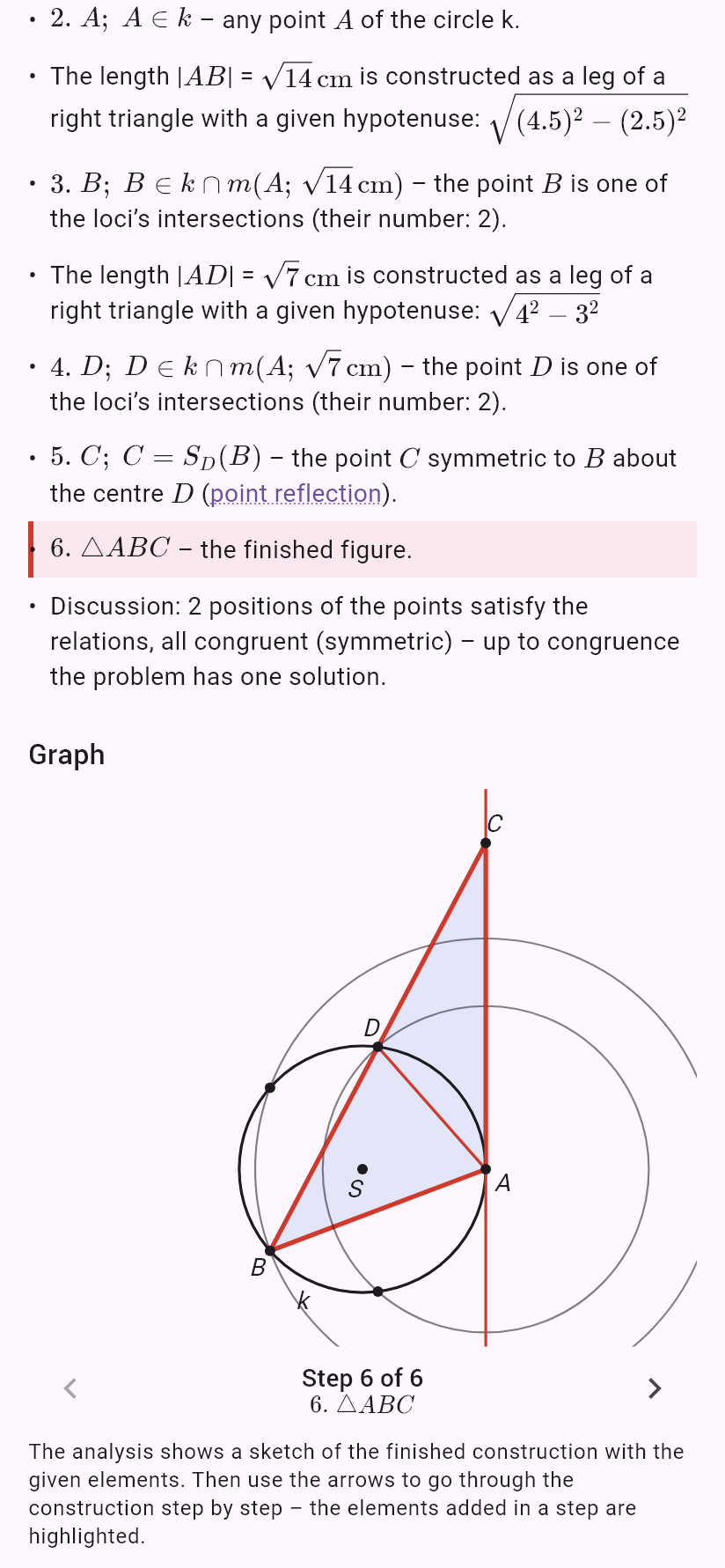
General relations among more points (with a circle k or without): the points A to H are given by rows of relations – a point on k, a midpoint, a tangent to k, a length, a ratio of lengths, perpendicular, parallel, a point on a line, an angle and a triangle (only what to draw). The relations become equations in coordinates (the centre S at the origin, the first point on the x axis), solved exactly, with square roots. The result is the lengths between the points (with a circle also as multiples of r), the check and the number of solutions up to congruence. Where possible a school construction follows: each point on two loci – the given circle, a distance, a line, a tangent, a midpoint, a point reflection – and the computed lengths constructed as a right triangle’s hypotenuse or leg or by the altitude theorem; the solution also shows the power of a point and the tangent-chord angle when they hold. Otherwise honestly only the computation and the picture.
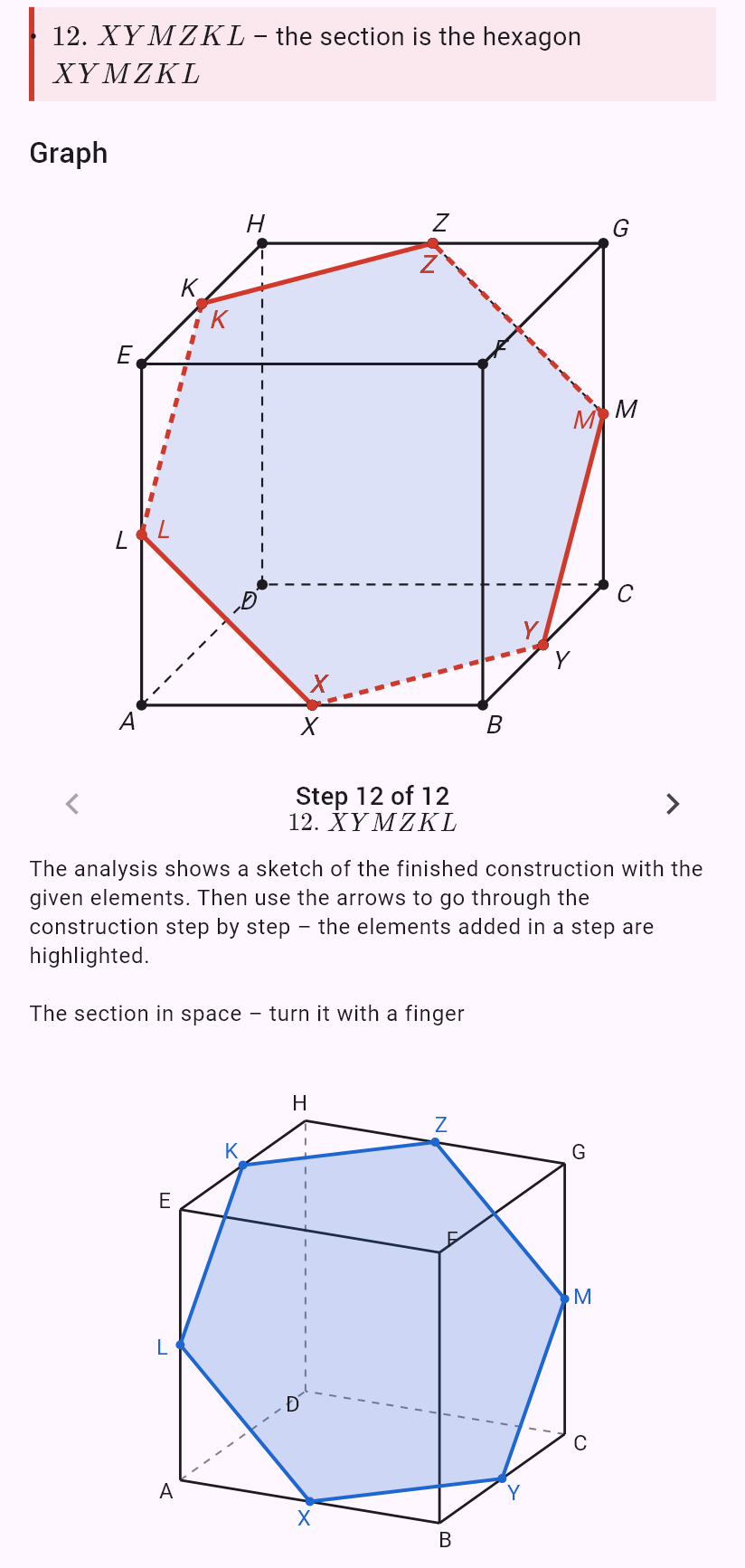
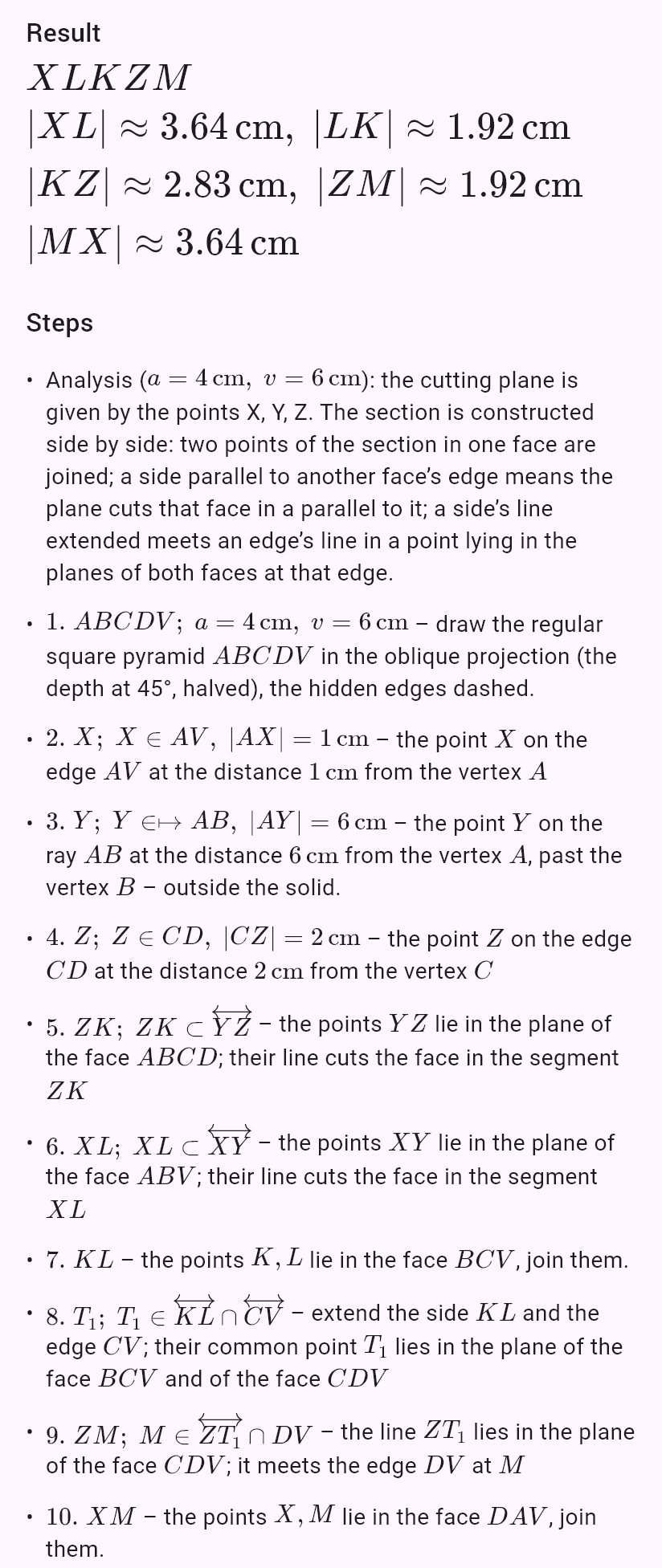
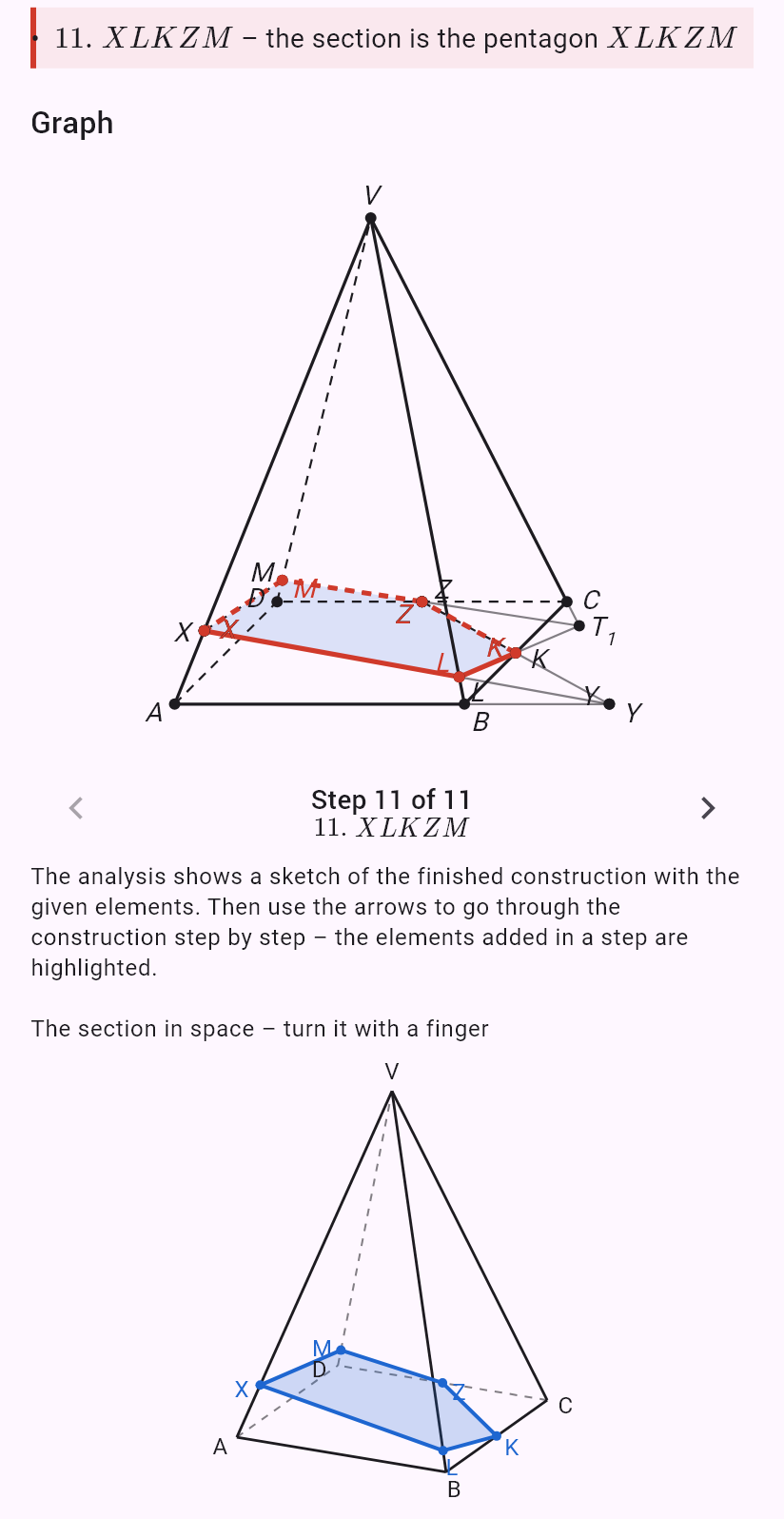
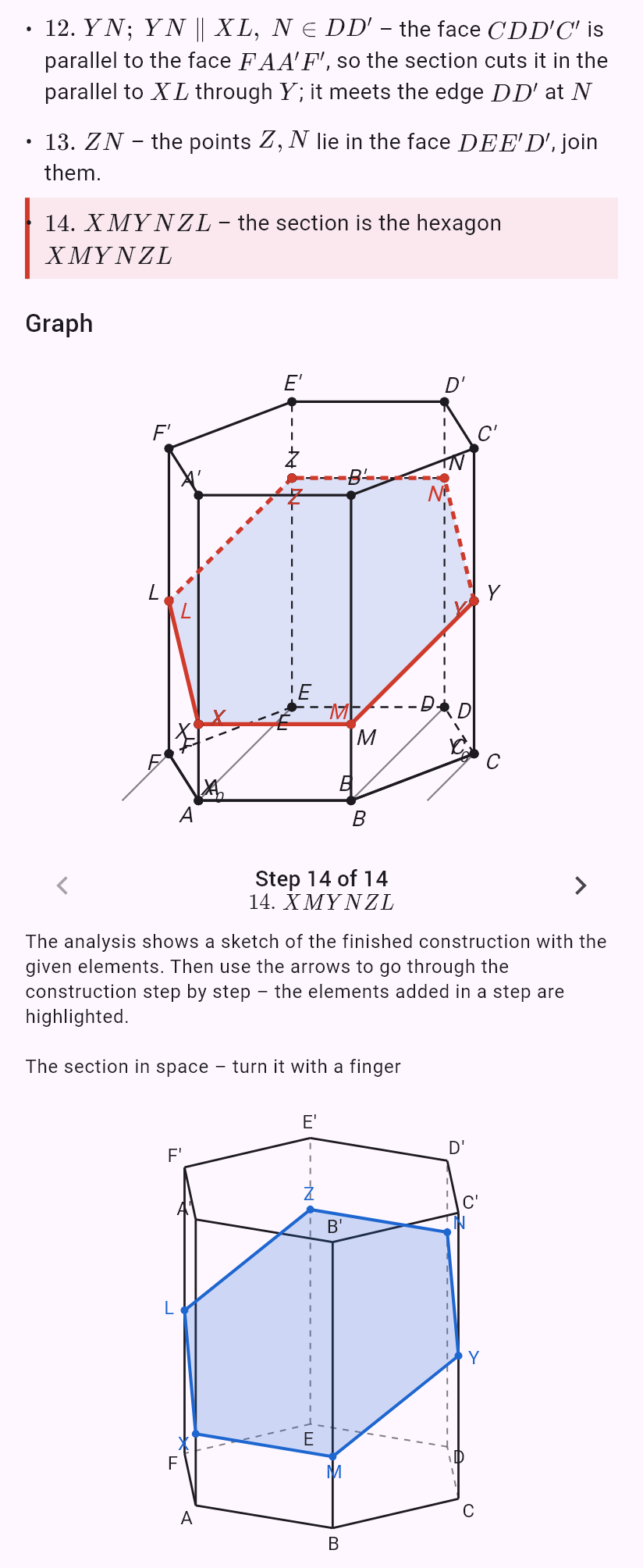
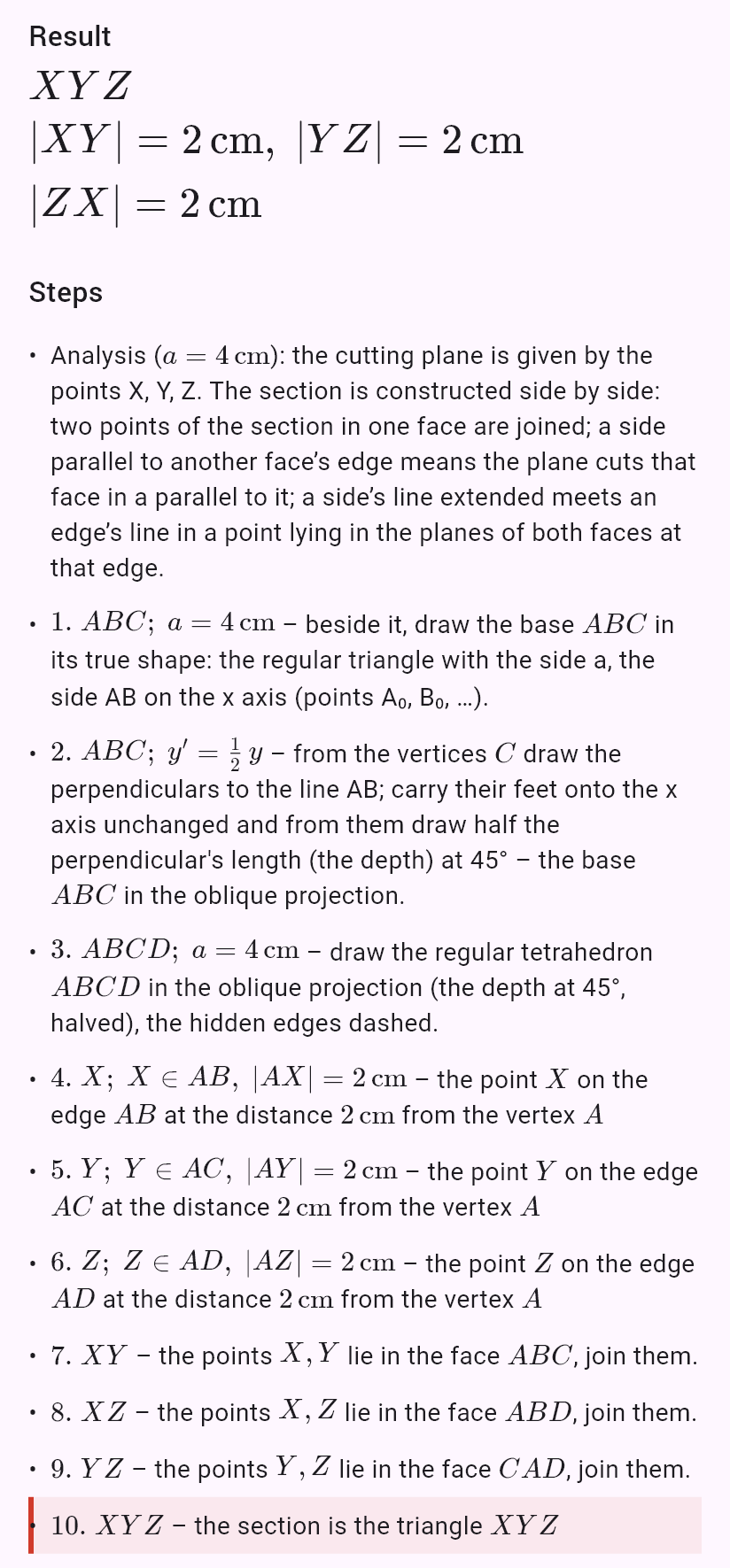
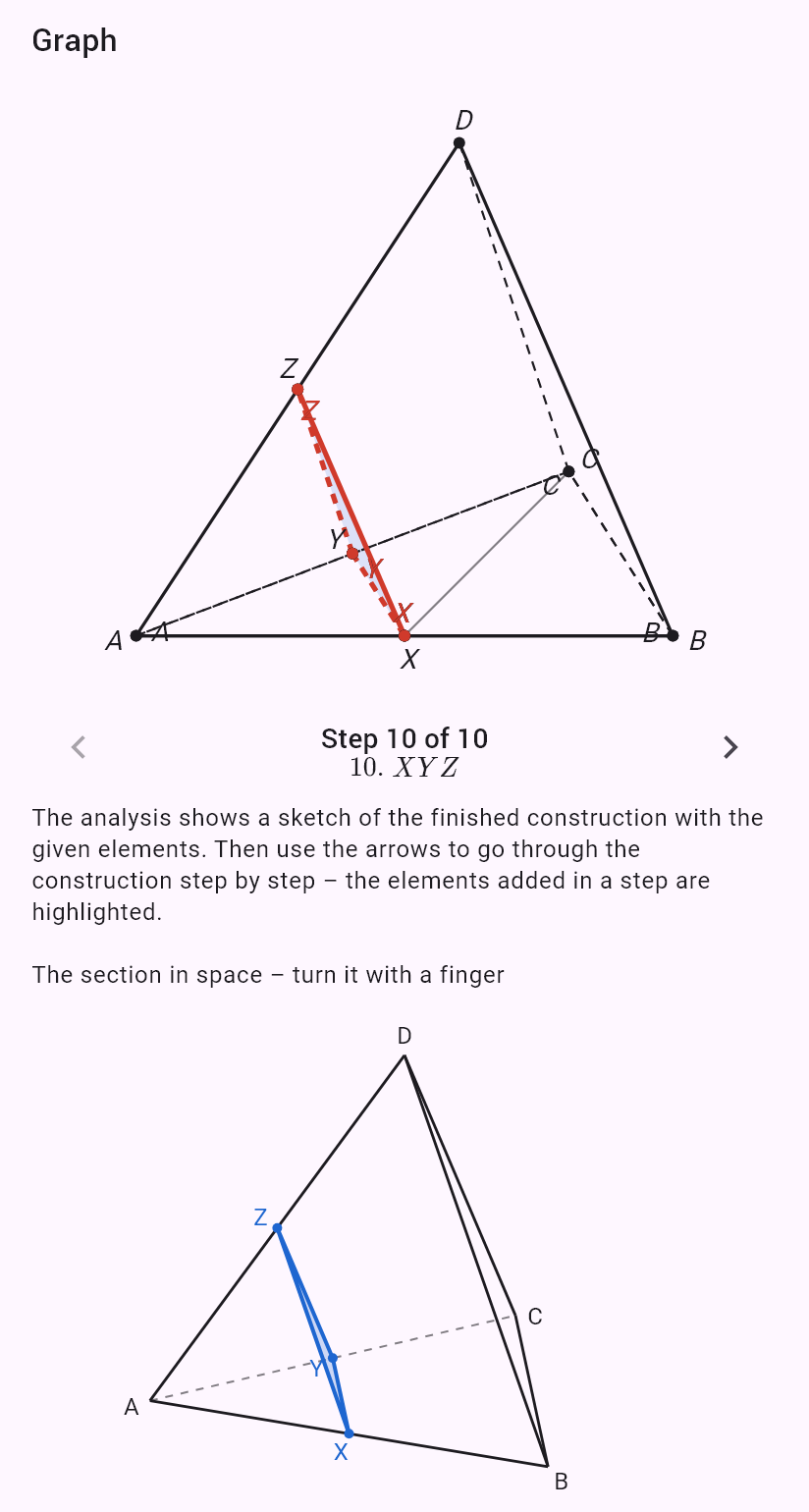
Sections of solids: a cube, a cuboid, a regular prism and pyramid with a base of 3 to 6 sides (vertices ABC… and A'B'C'…, a pyramid's apex V) and the regular tetrahedron ABCD. The cutting plane is given by the points X, Y, Z, one per line: AE=2 is the point on the segment AE 2 cm from A – the segment may be an edge, a face's or the solid's diagonal or the axis SS' (S, S' the bases' centres), and a distance longer than it gives a point on its extension; X: AB = 1:2 is the point X dividing AB in the ratio 1 : 2. Auxiliary points can be used on other lines. The solid is in the oblique projection with the hidden edges dashed; a regular triangle, pentagon or hexagon in the base is first drawn beside it in its true shape and carried into the projection. The section is built side by side by the school's rules: points in one face are joined, parallel faces are cut in parallels, the line of a side meets an edge's line in a helper point T that lies in the neighbouring face too, and the line of a point inside the solid is carried to the base by an auxiliary vertical plane. Under the picture, the finished section in space can be turned with a finger.
Examples
construction(triangle; a=5; b=4; c=6)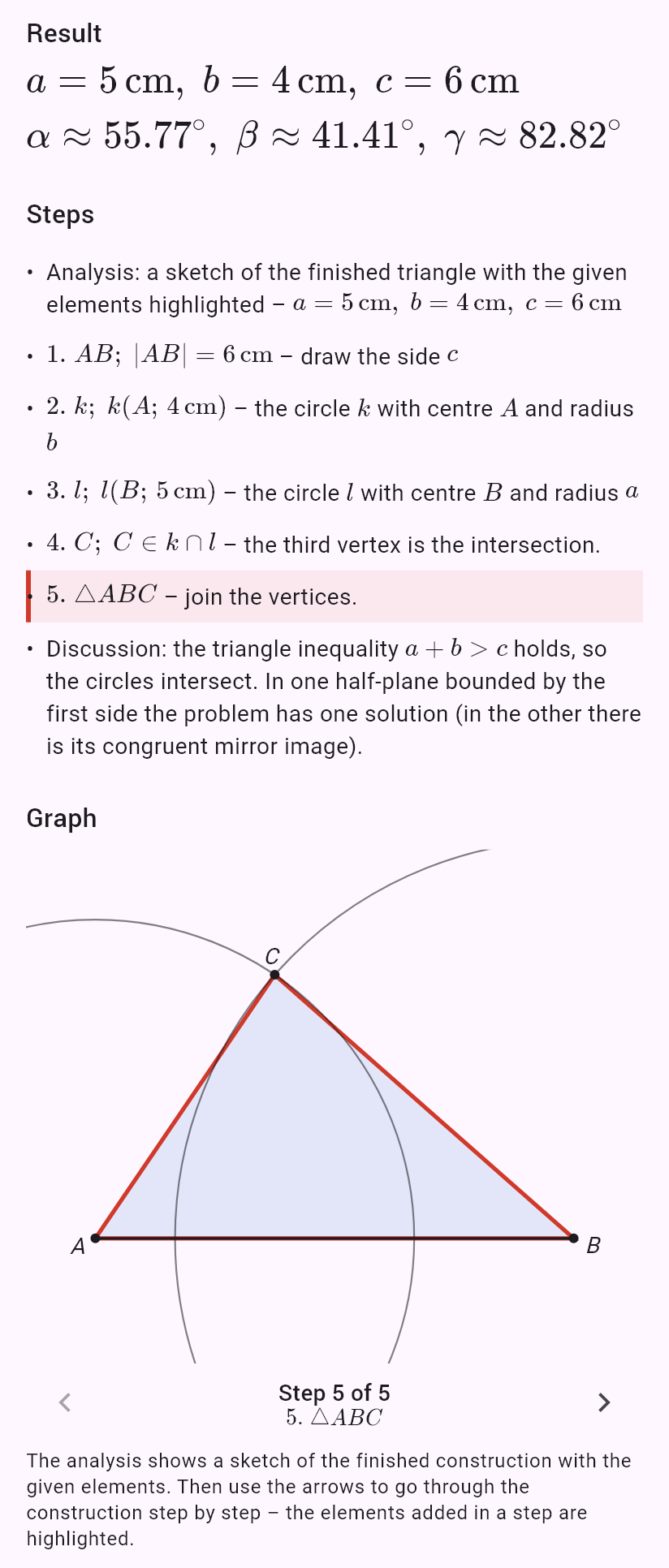
construction(triangle; b=4; c=6; alpha=60)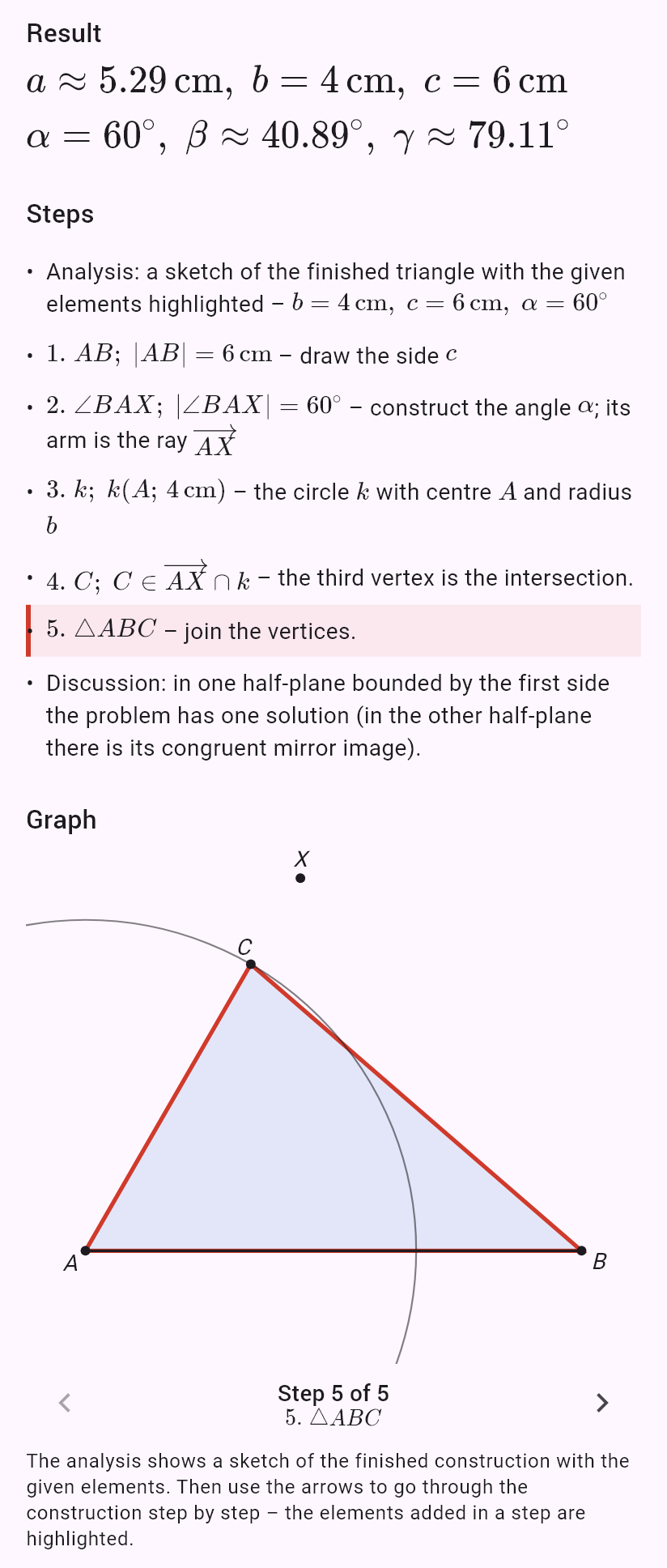
construction(triangle; c=6; alpha=50; gamma=70)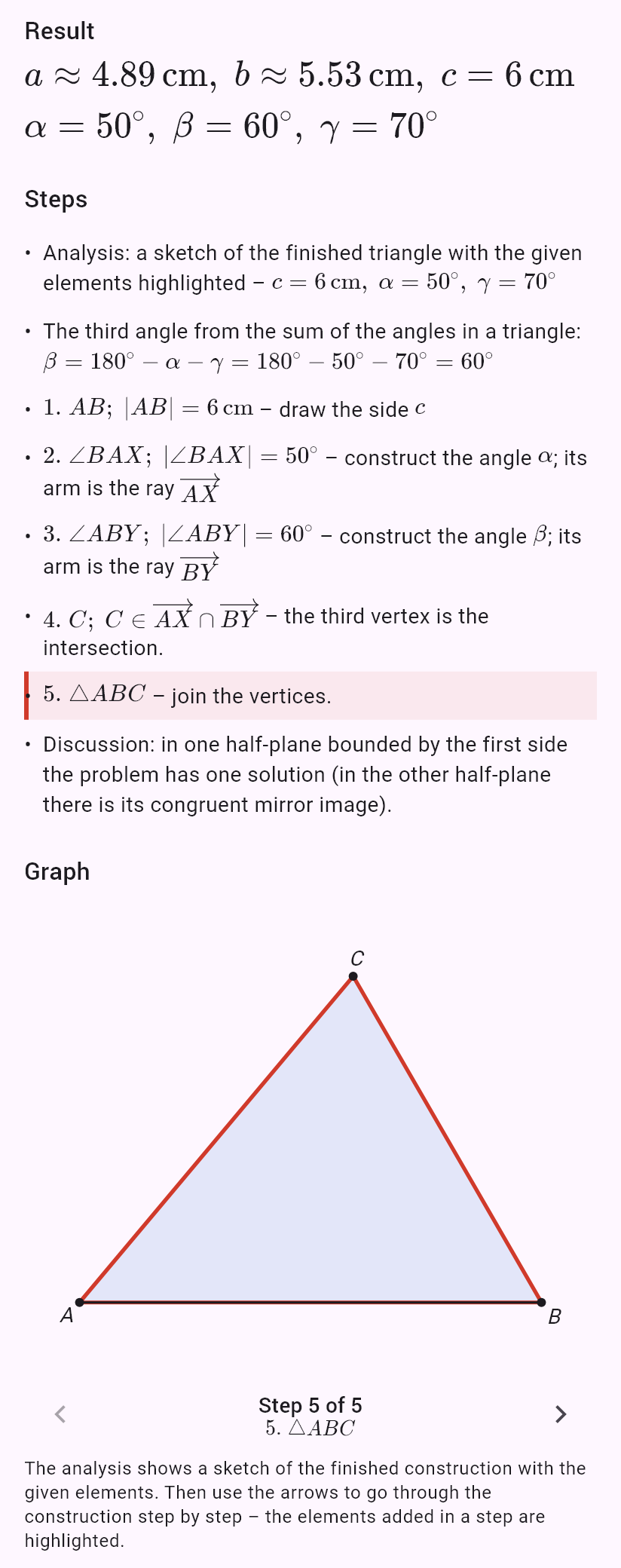
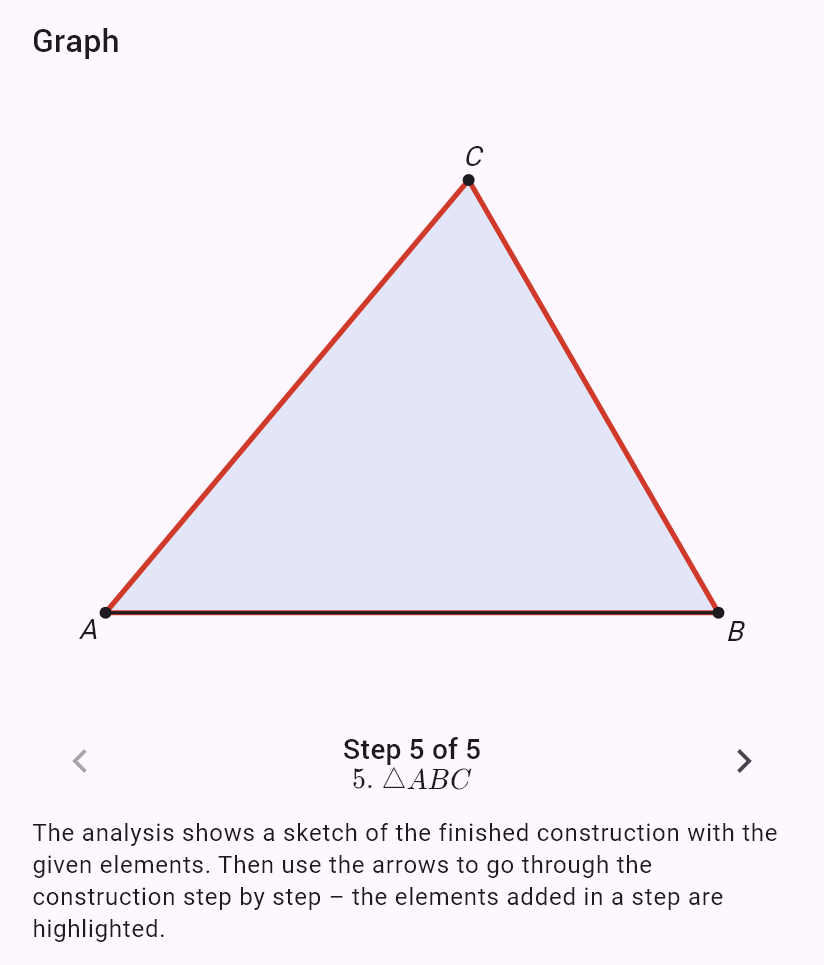
construction(triangle; a=4; c=6; alpha=30)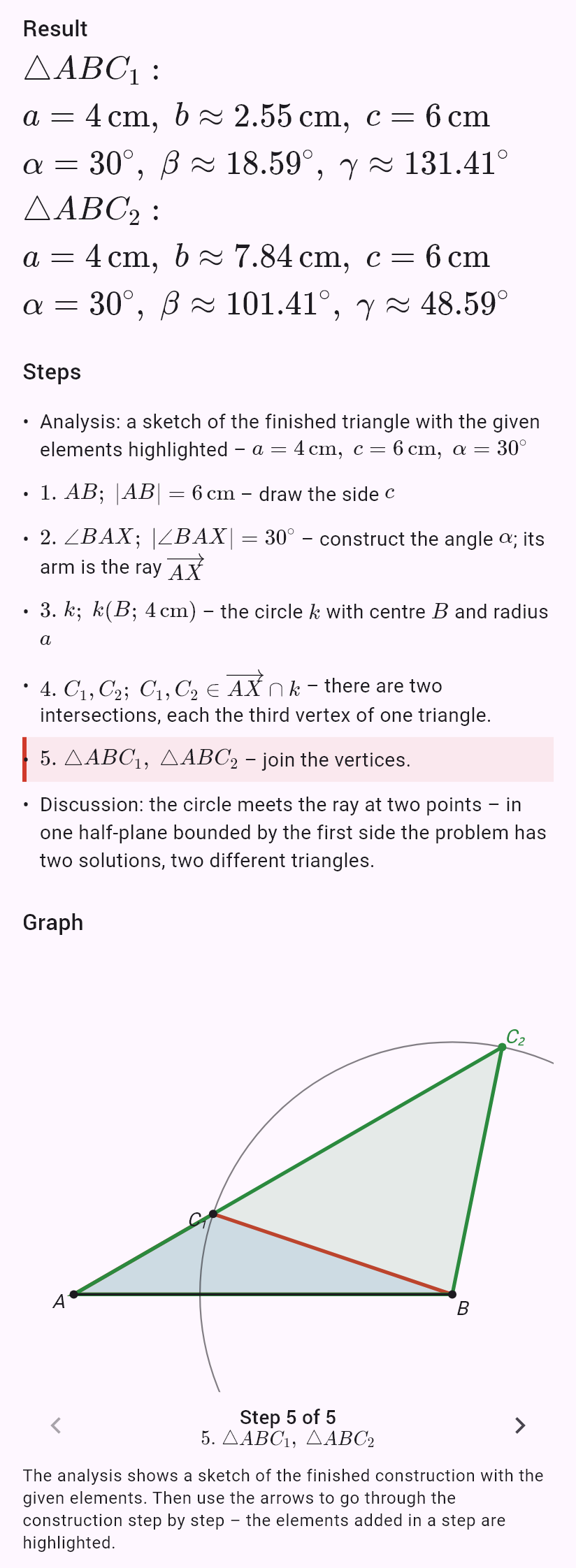
construction(triangle; a=2; b=3; c=6)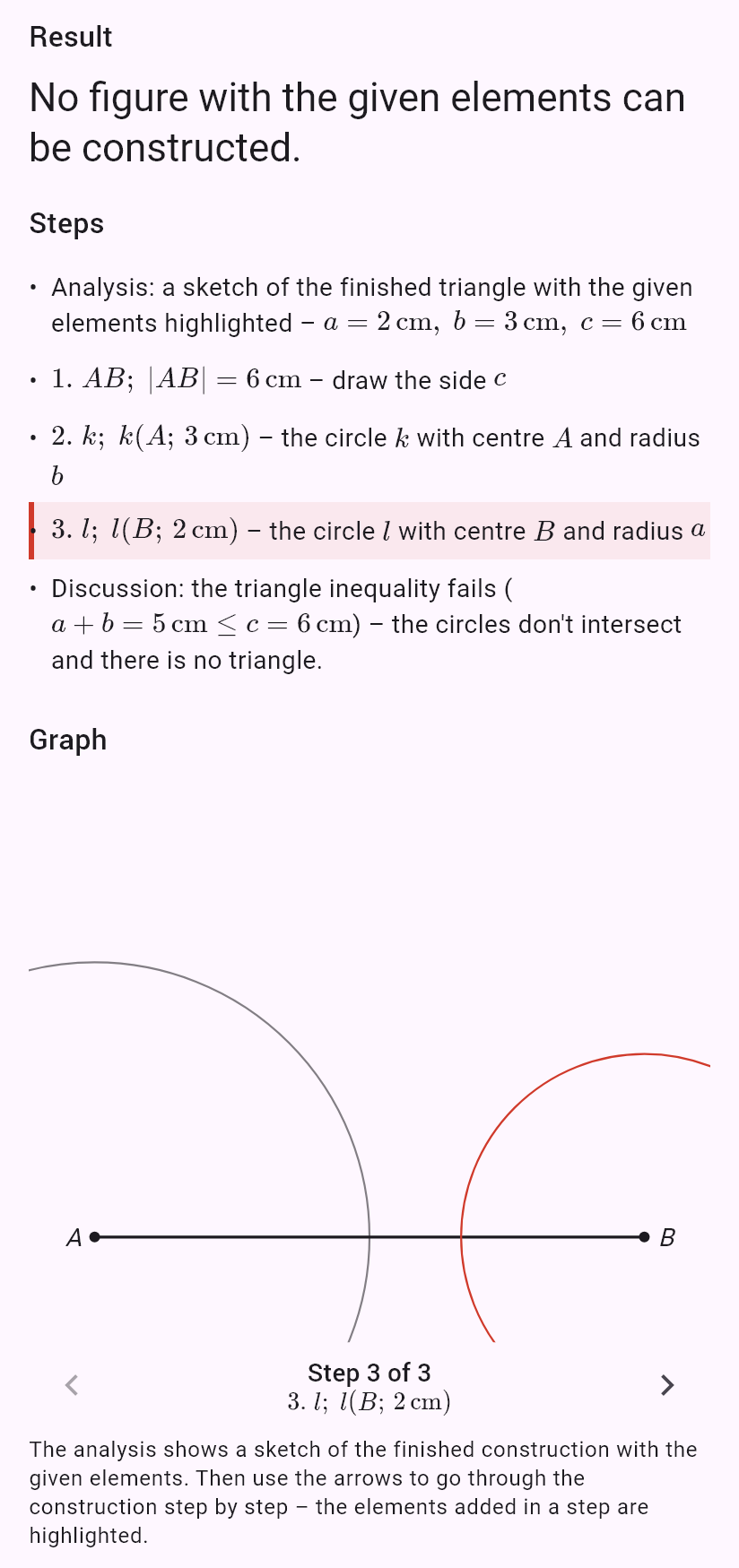
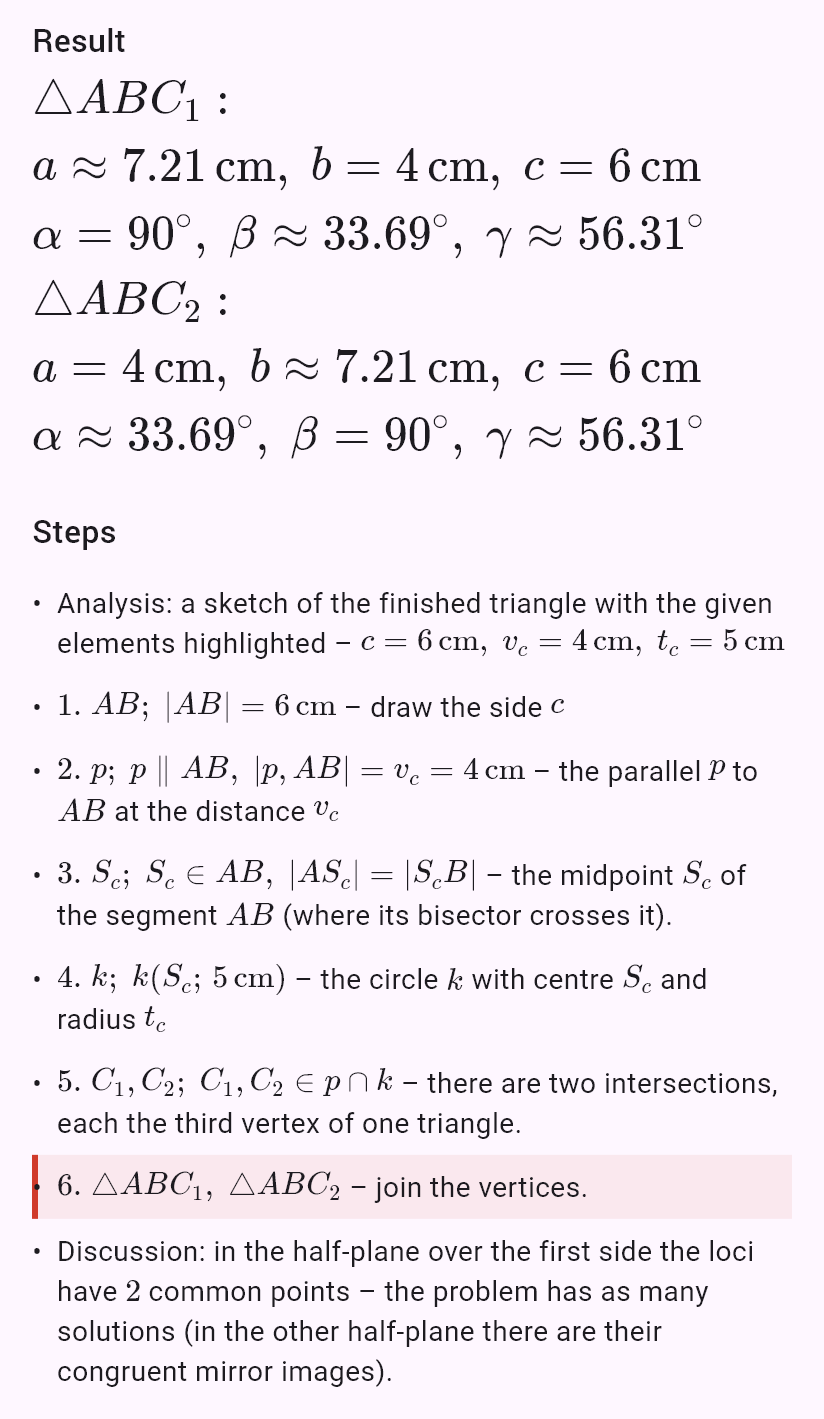
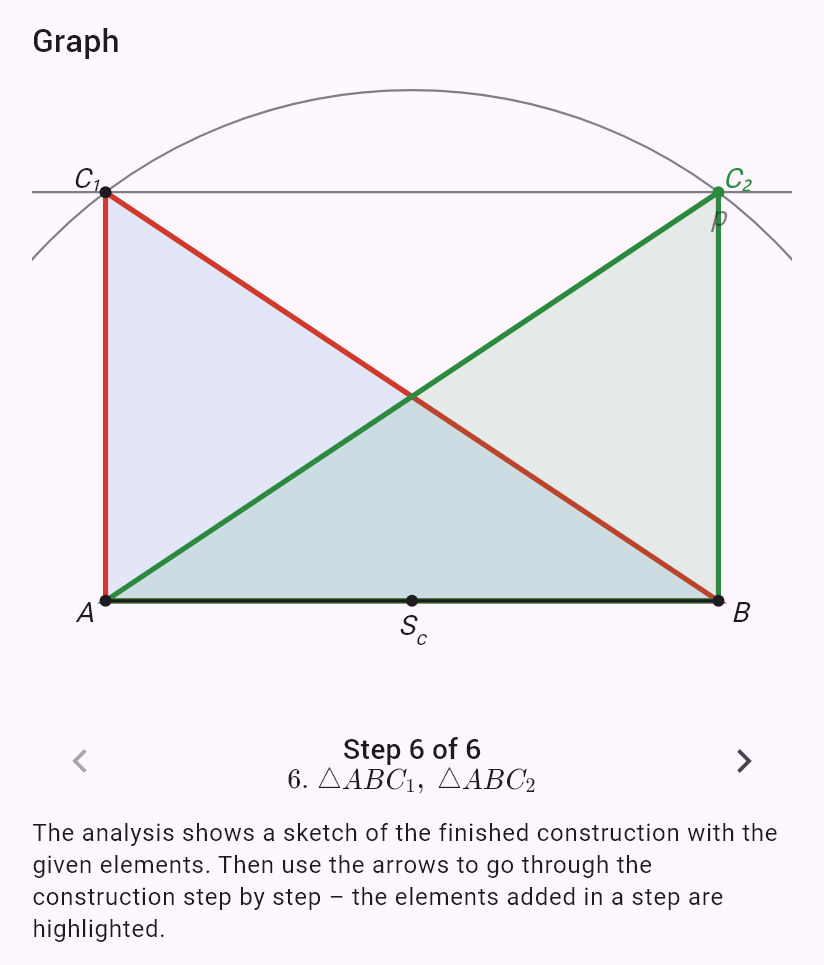
construction(triangle; c=6; vc=4; tc=5)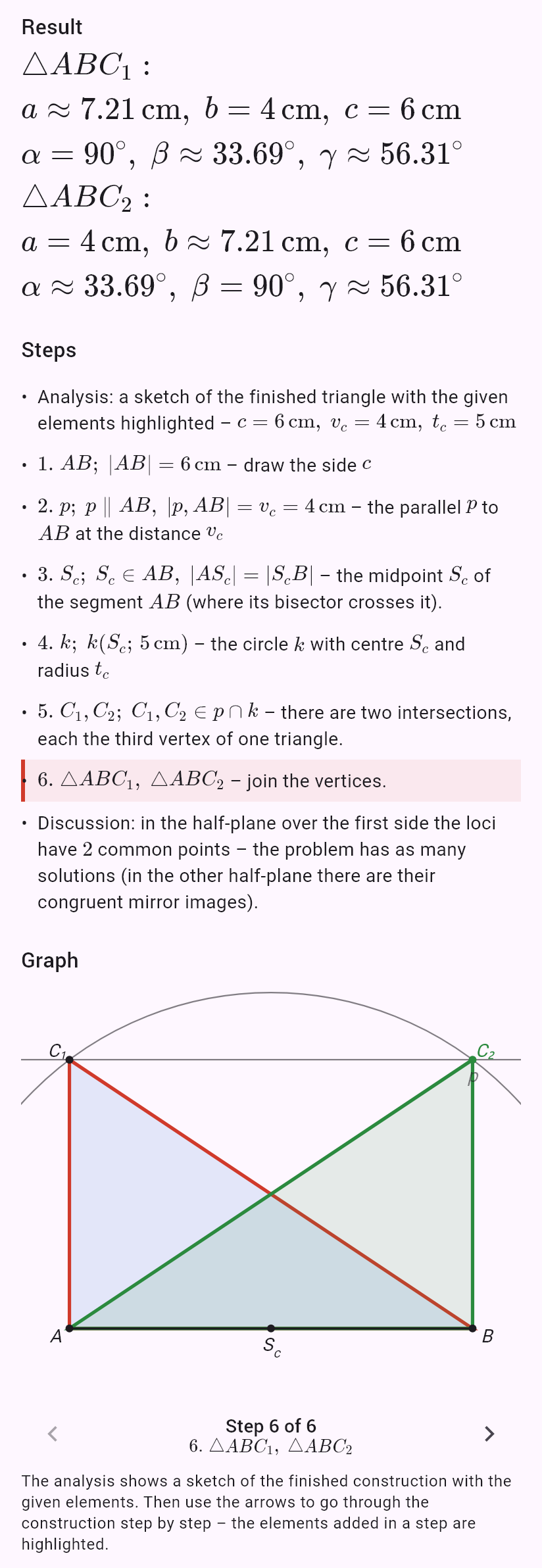
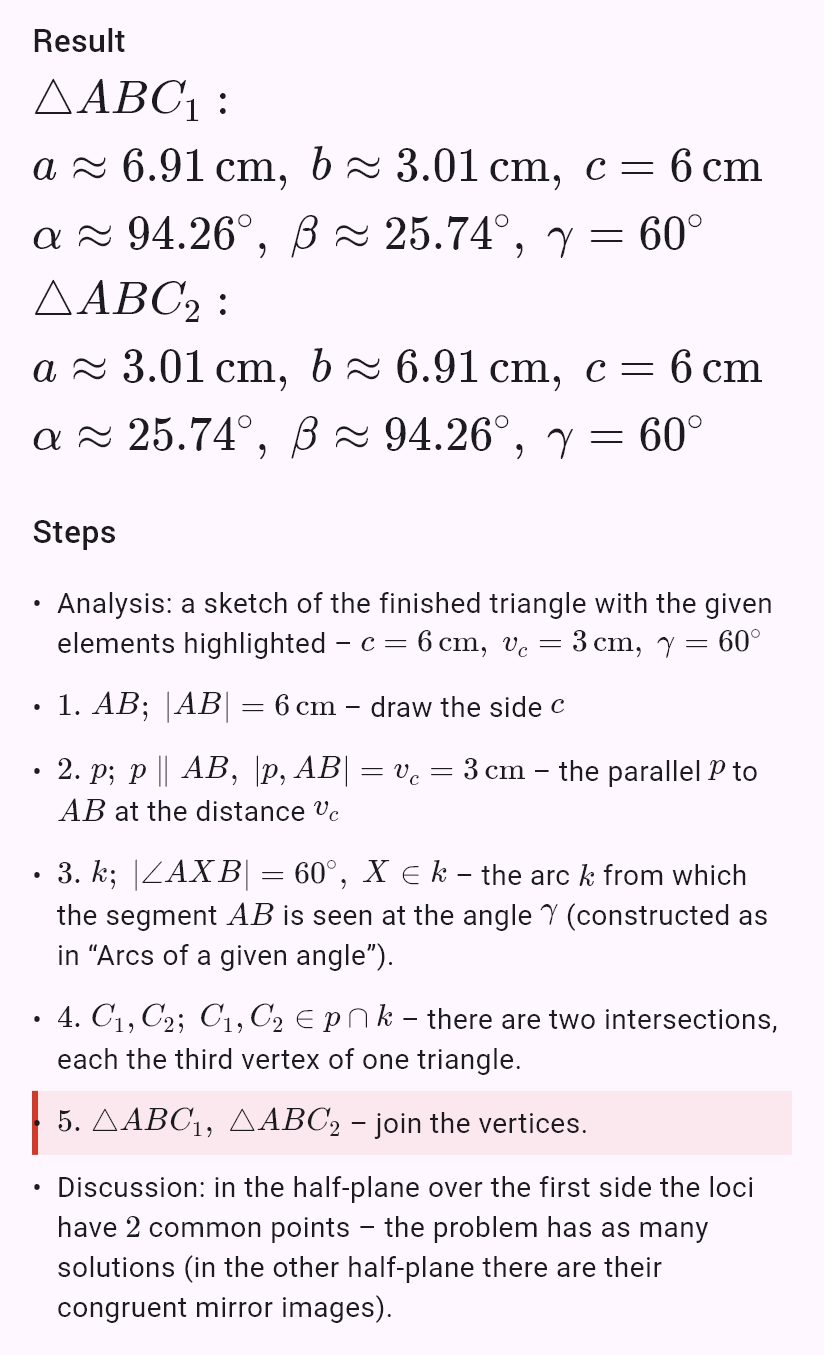
construction(triangle; c=6; vc=3; gamma=60)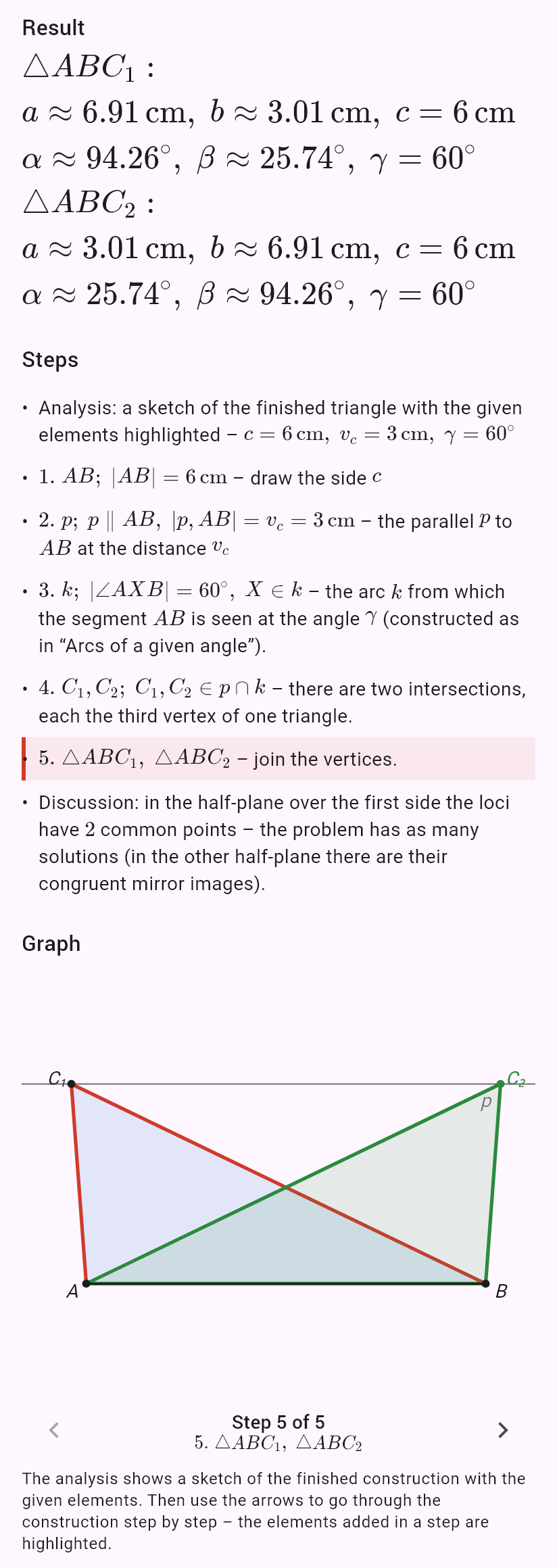
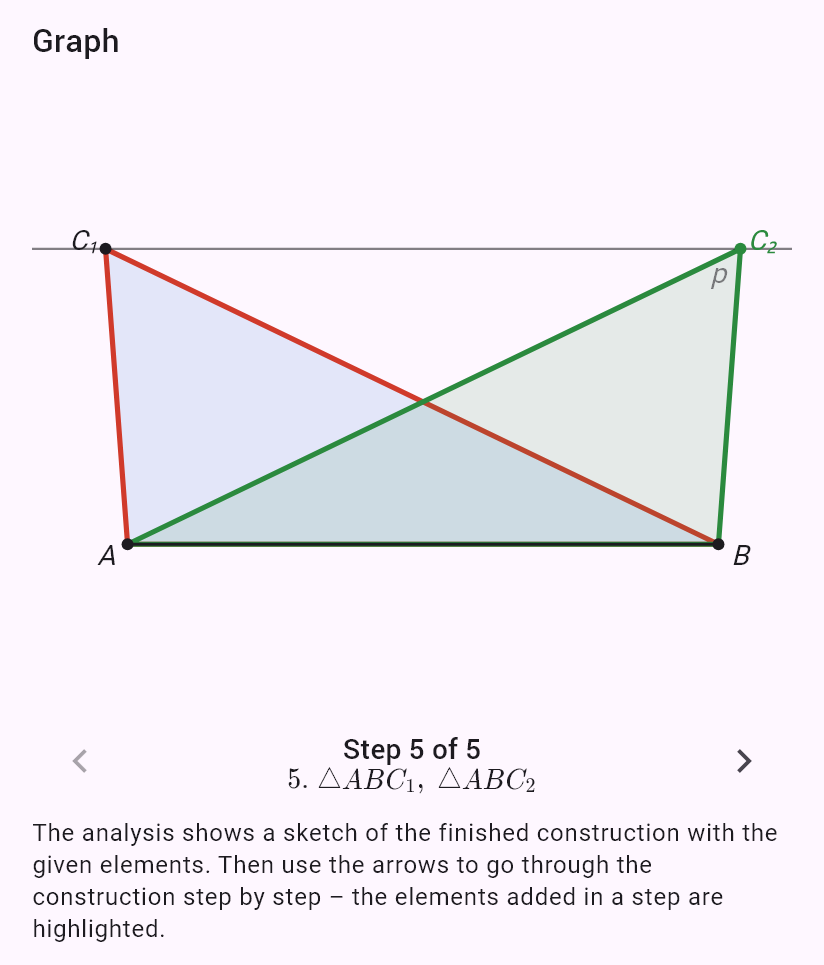
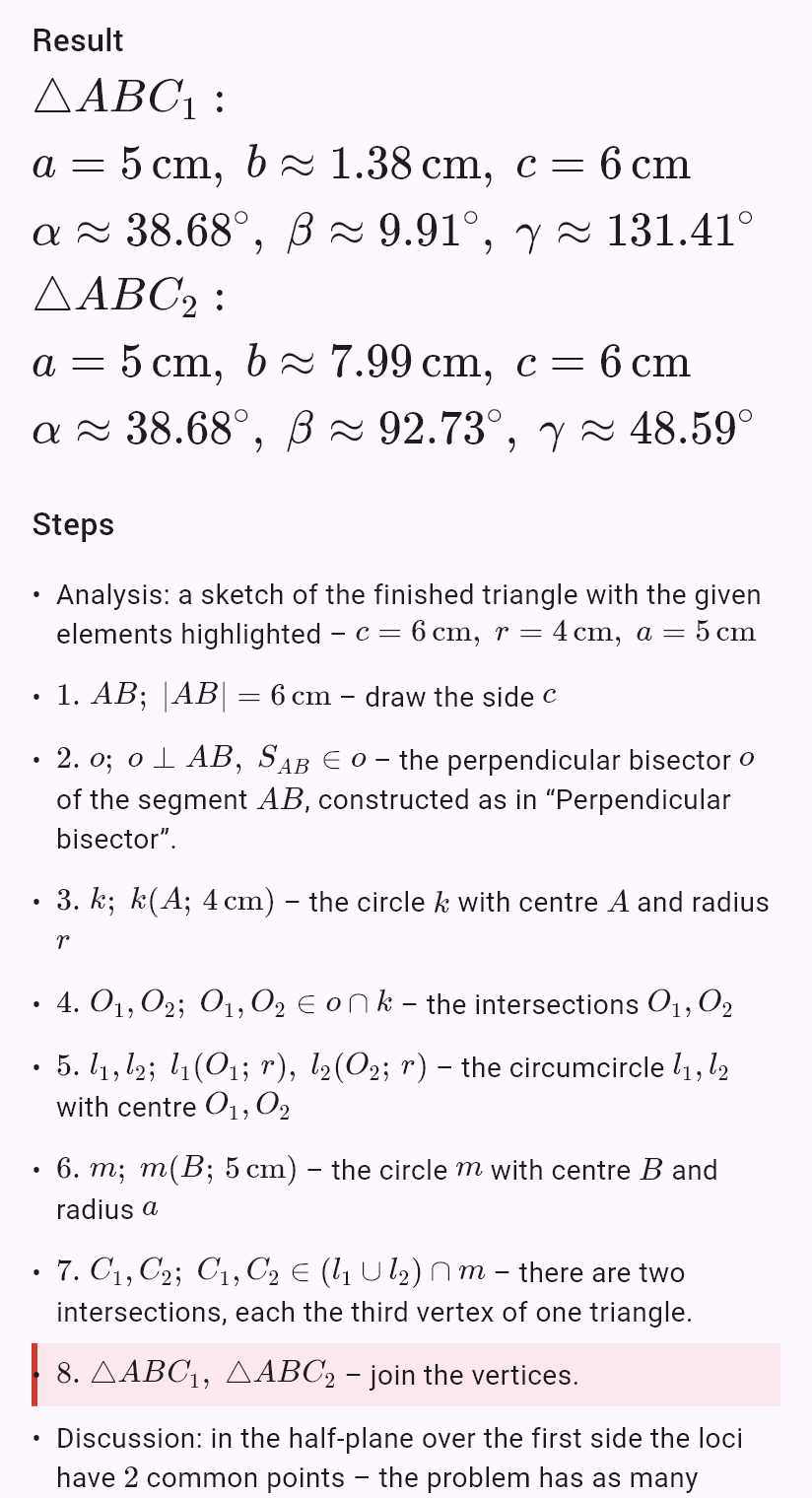
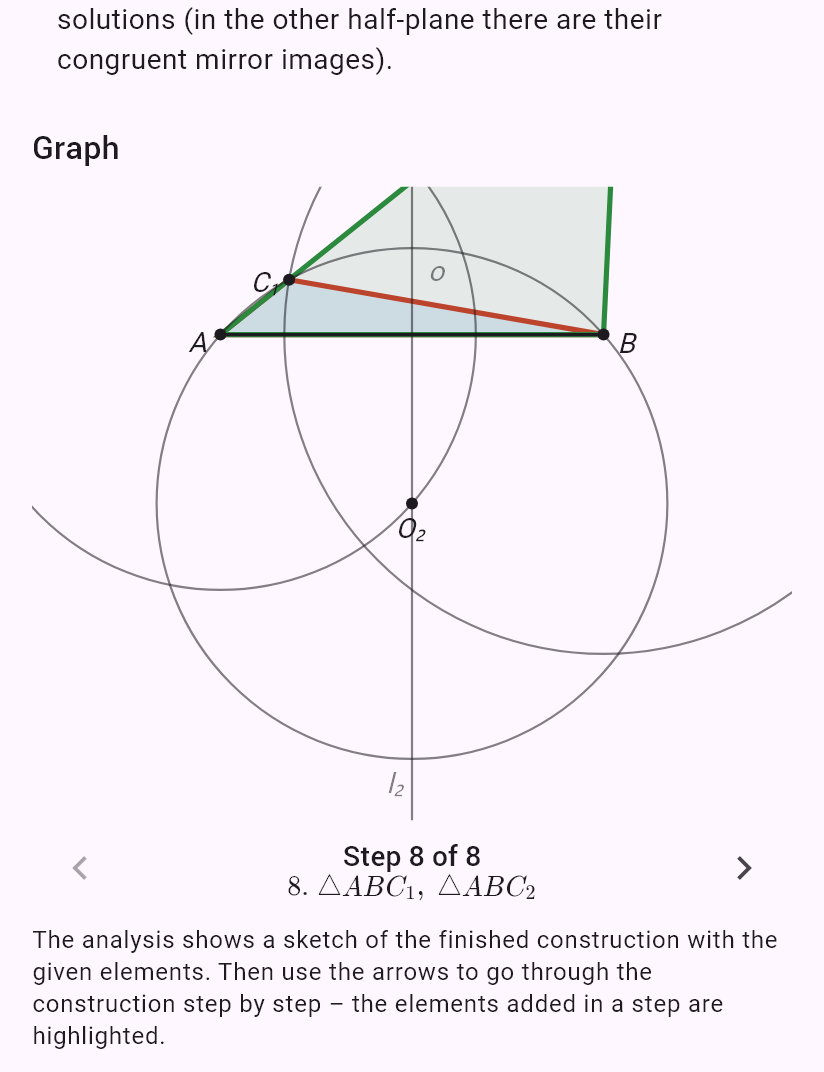
construction(triangle; c=6; r=4; a=5)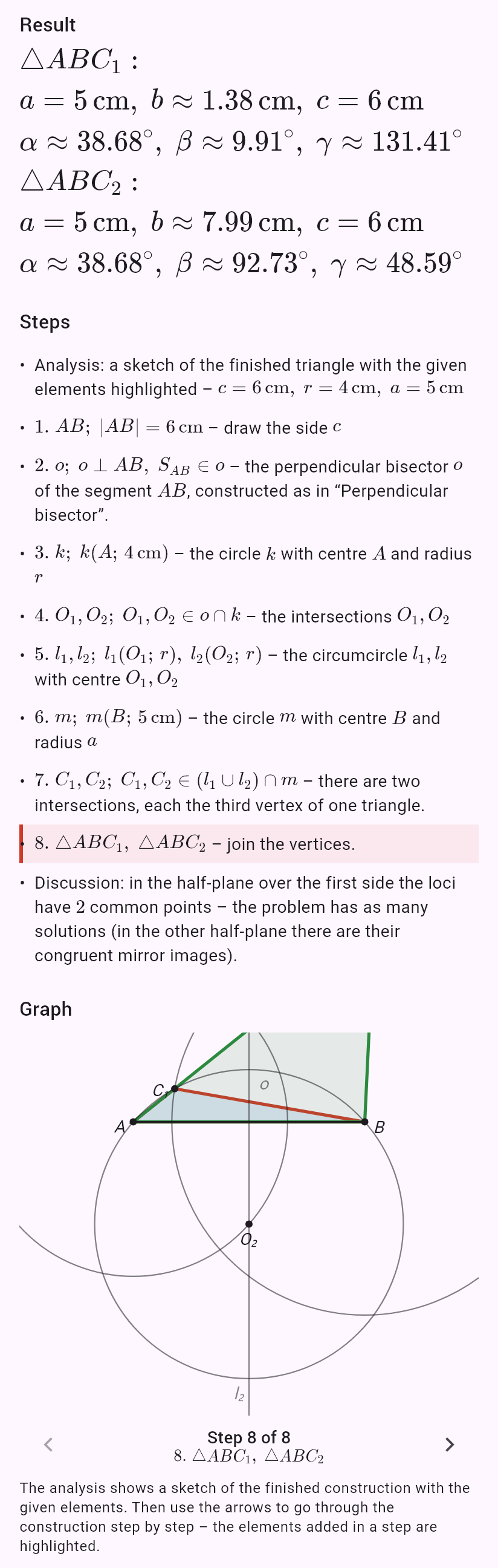
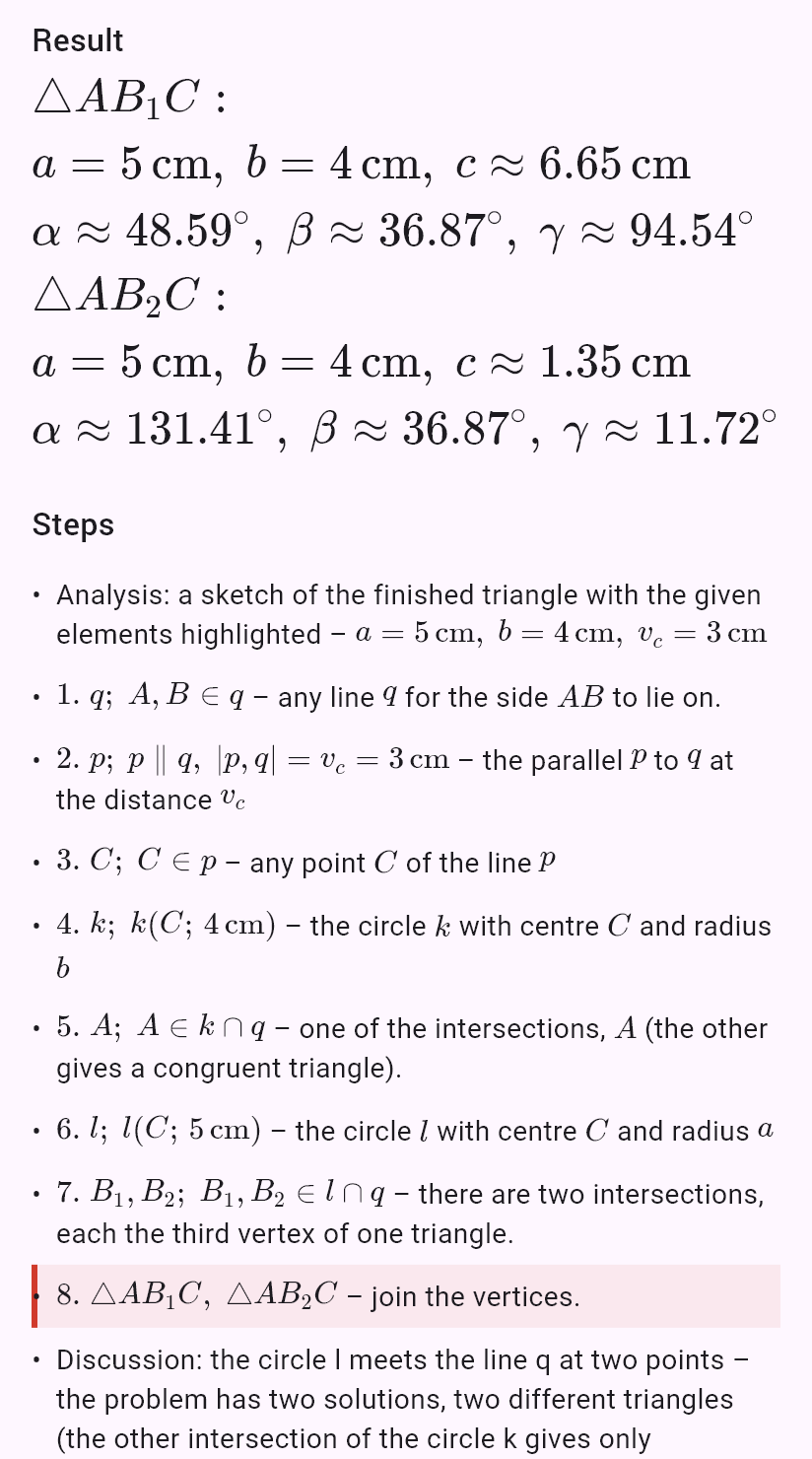
construction(triangle; a=5; b=4; vc=3)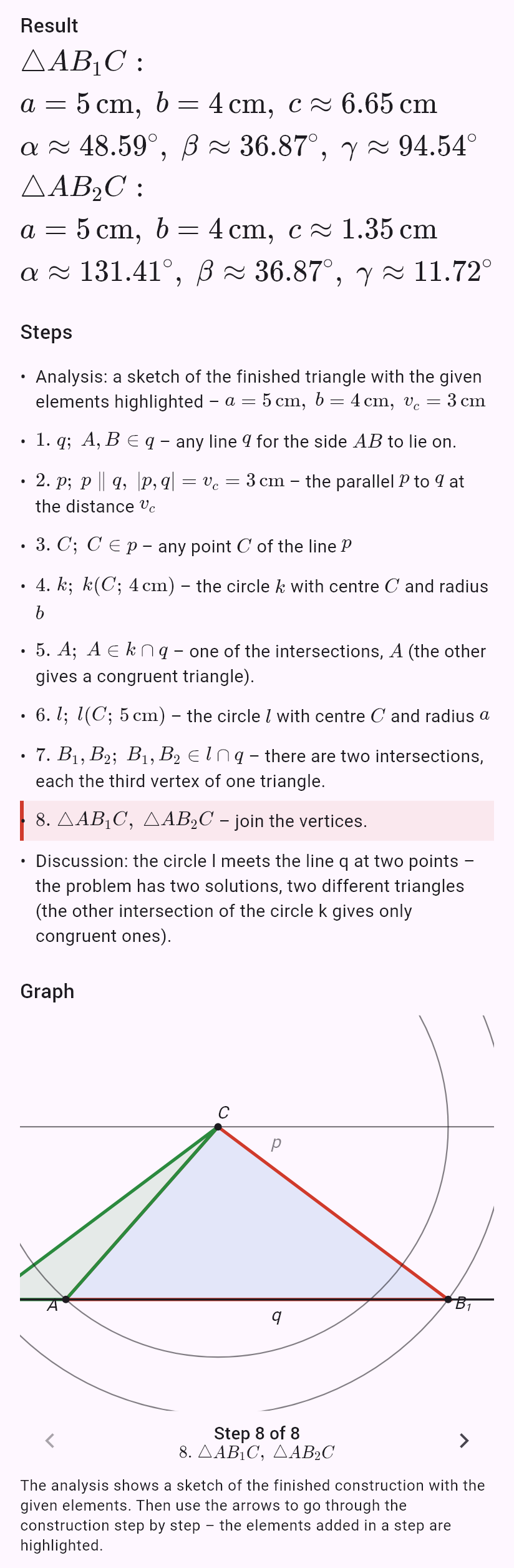
construction(triangle; c=6; alpha=60; rho=1)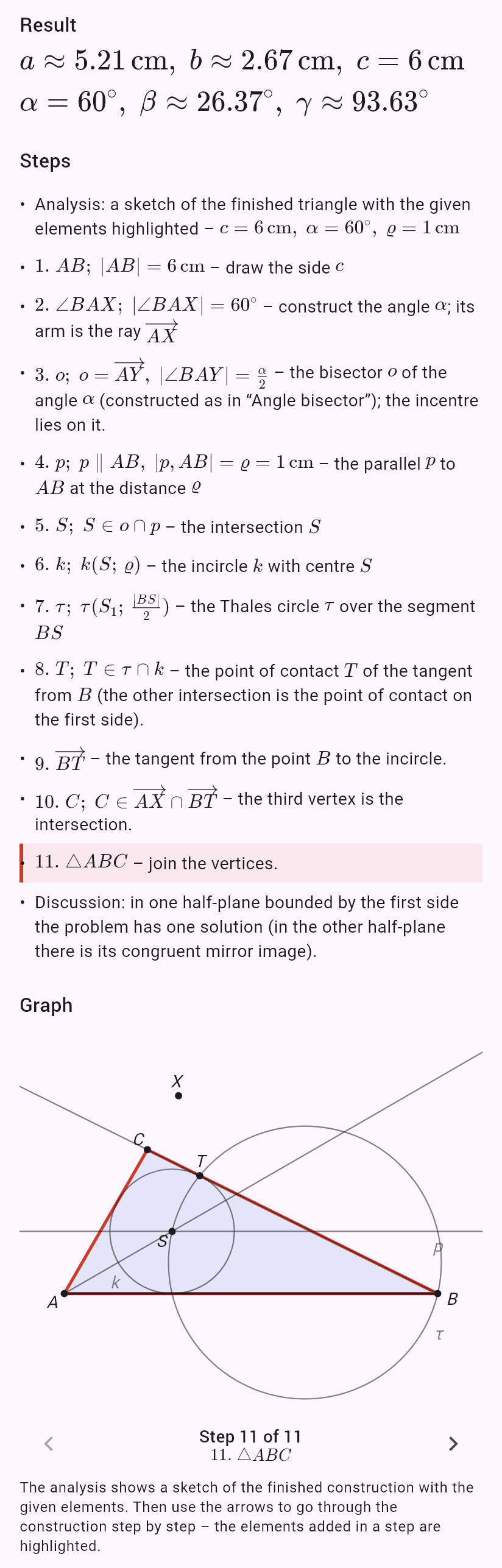
construction(rectangle; a=5; e=6.5)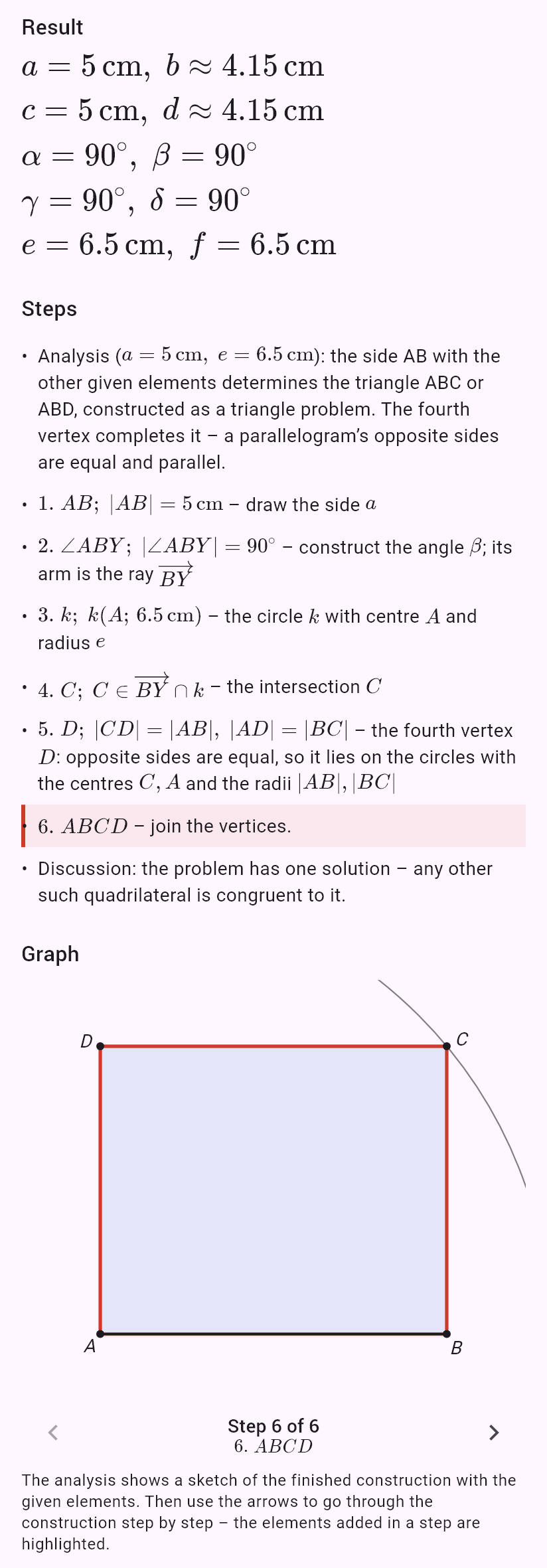
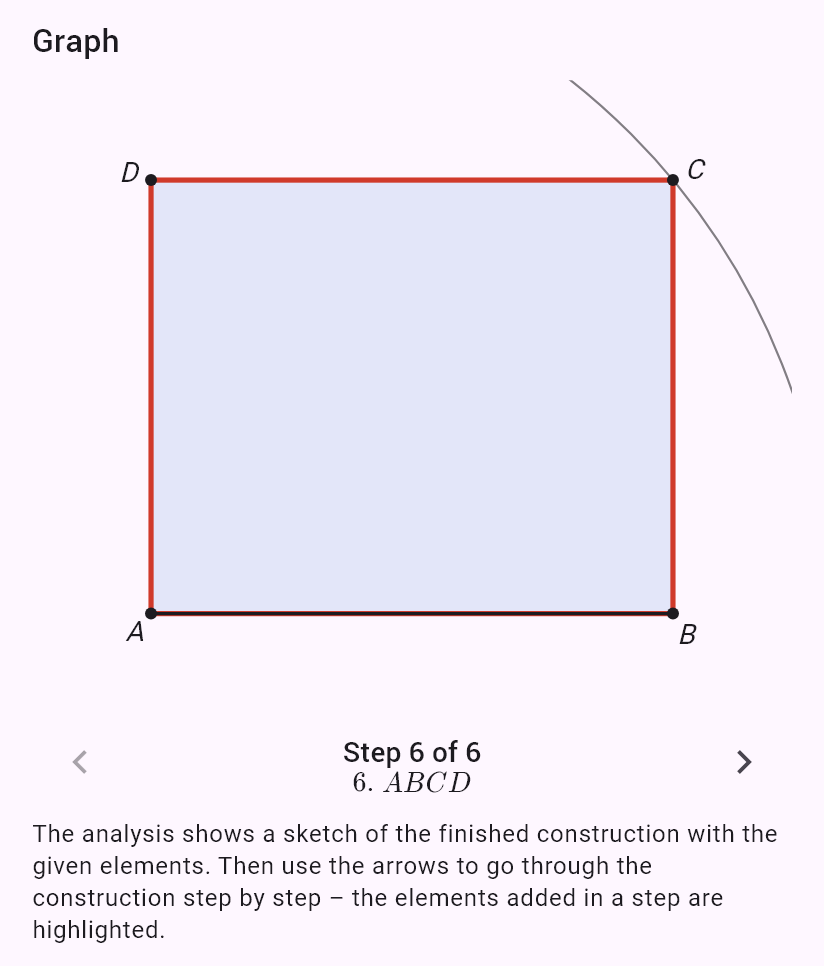
construction(rhombus; e=7; f=4)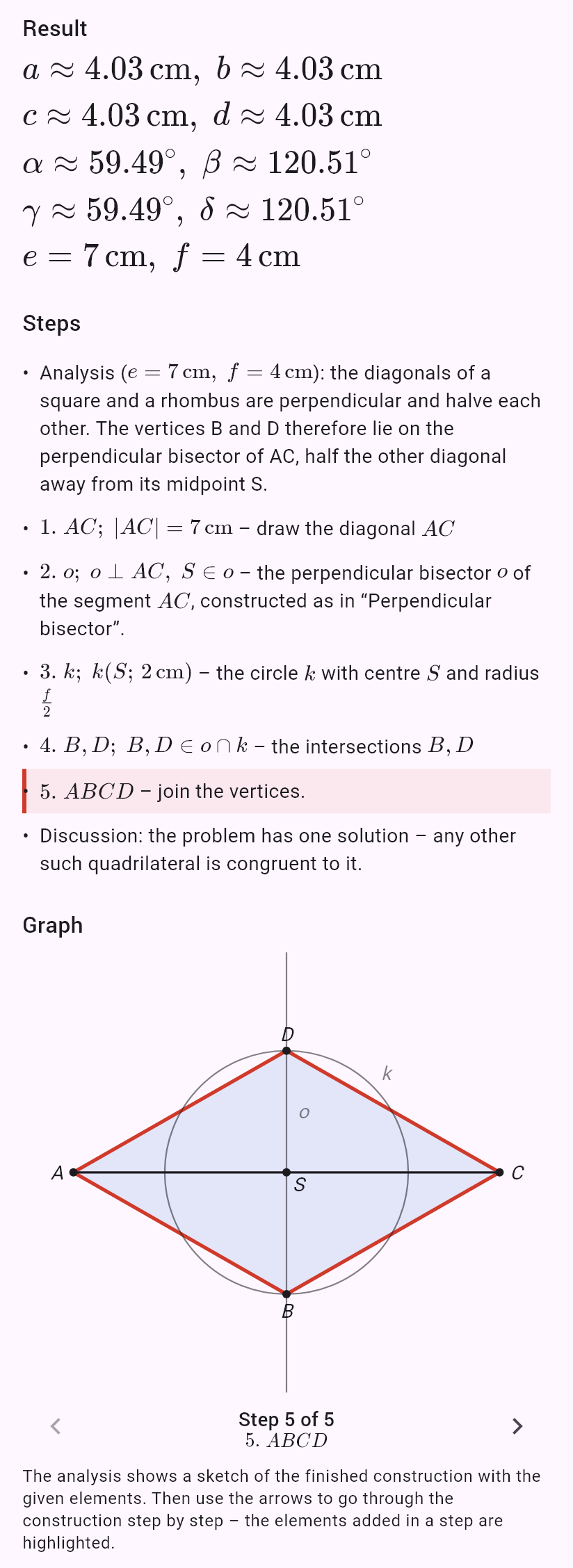
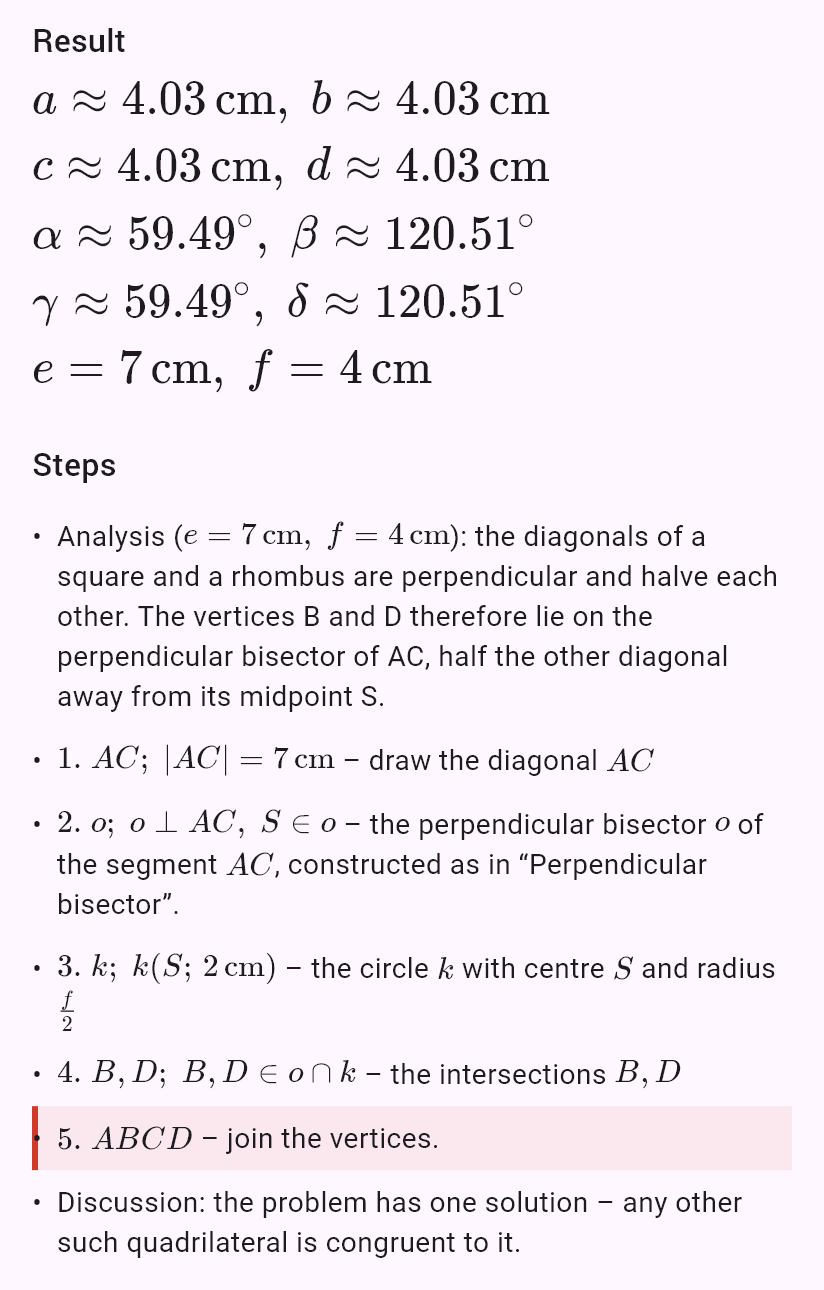
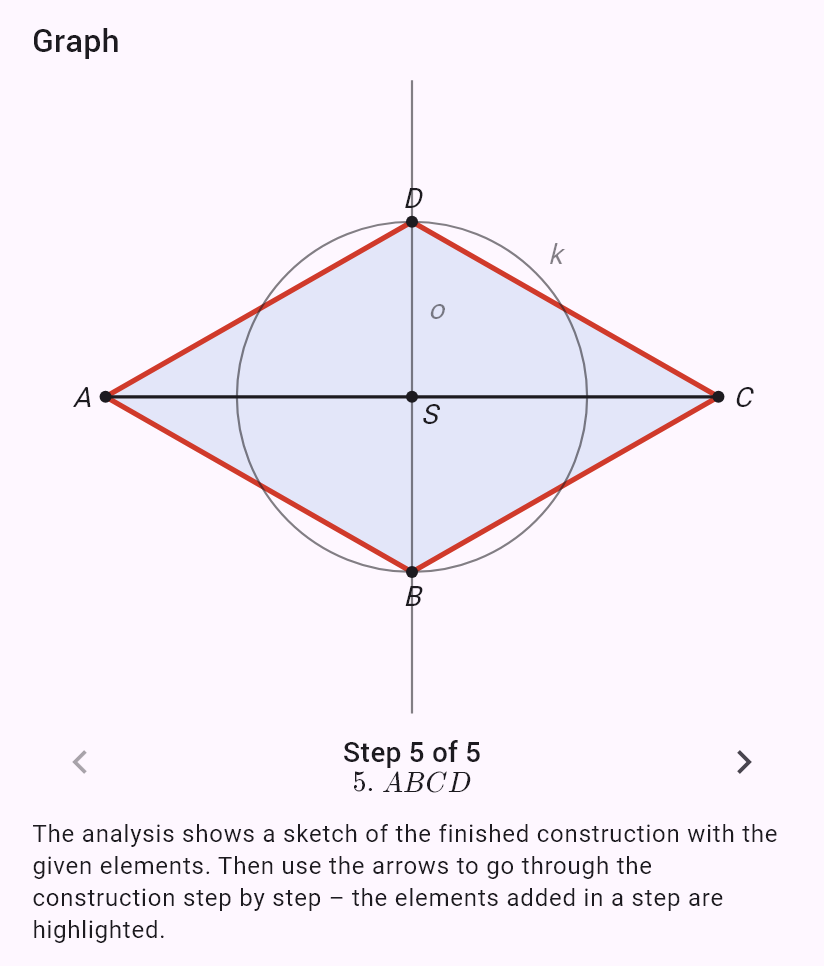
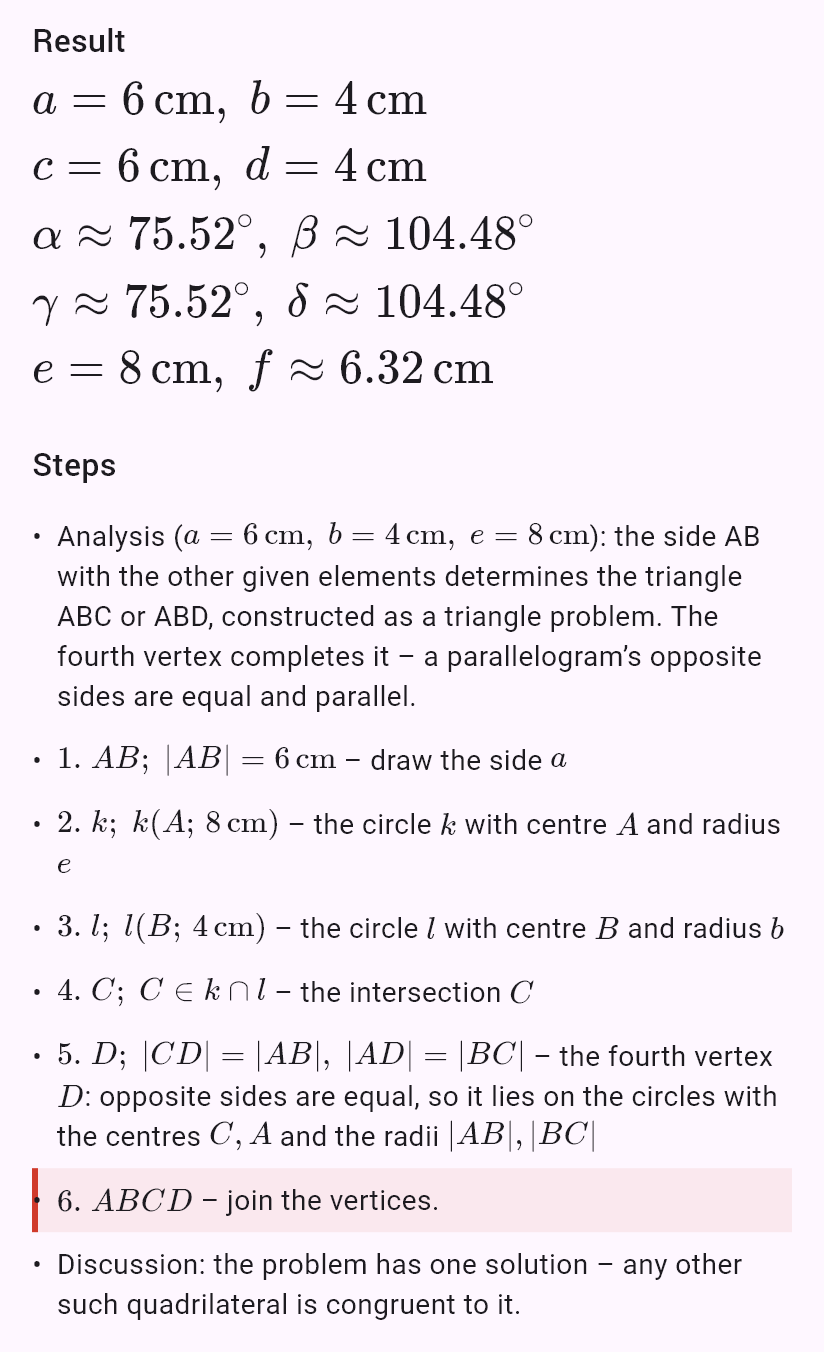
construction(parallelogram; a=6; b=4; e=8)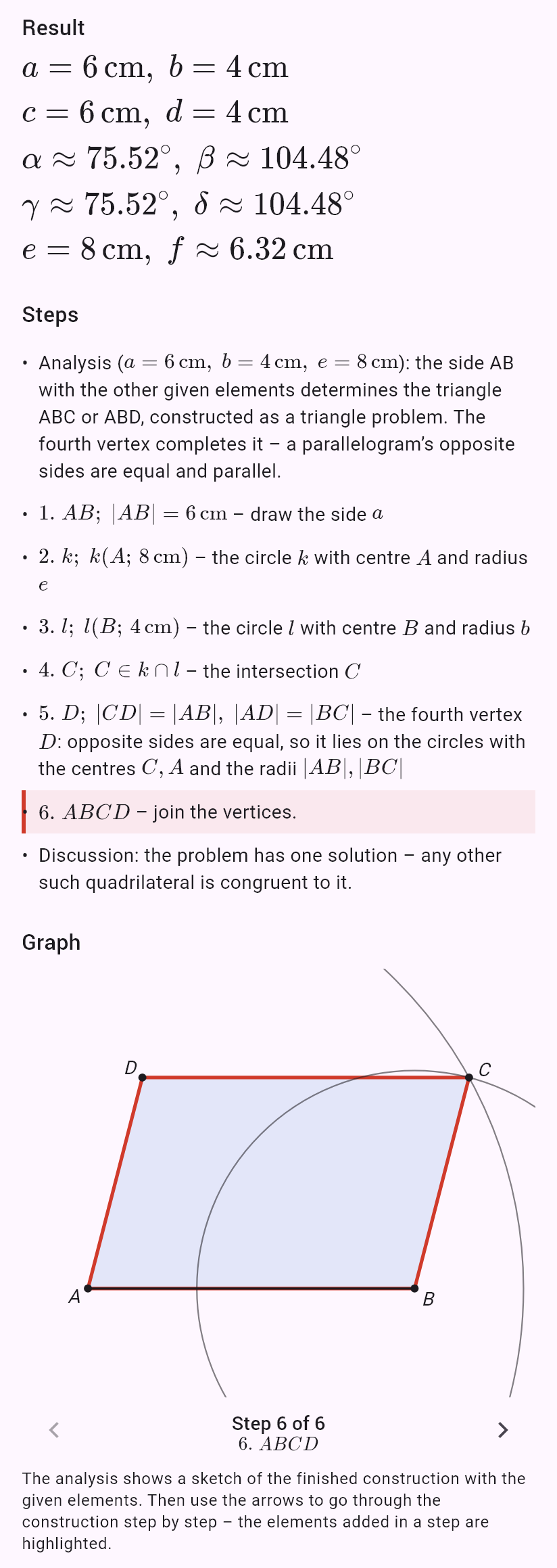
construction(trapezoid; a=7; b=4; c=3; d=4)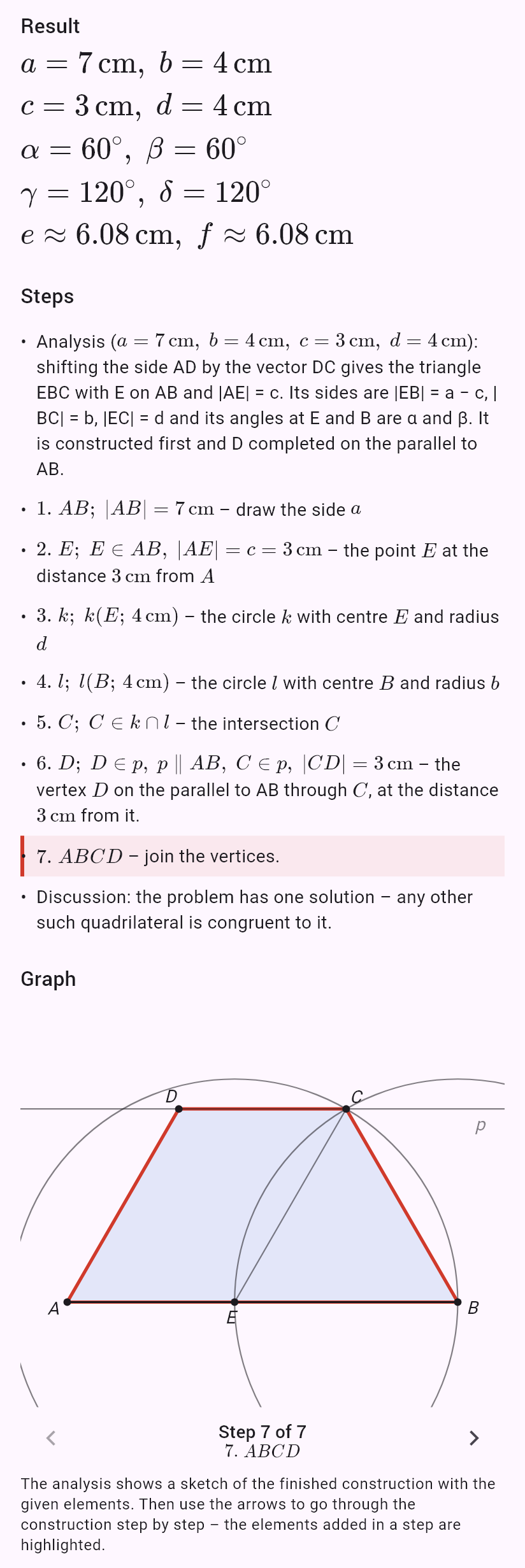
construction(trapezoid; a=7; b=3.5; c=3; alpha=60)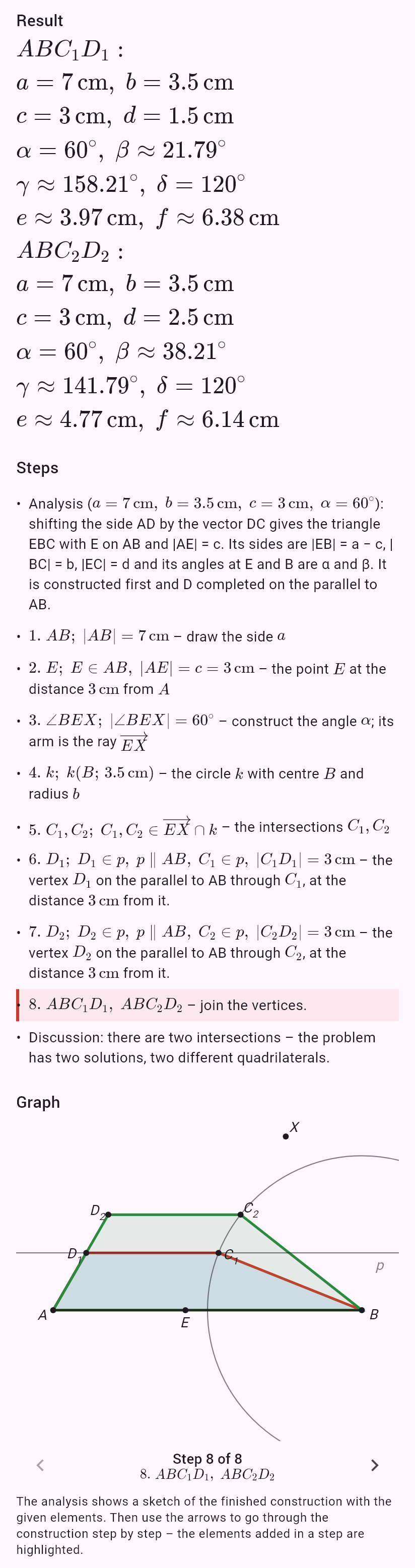
construction(segment_bisector; d=6)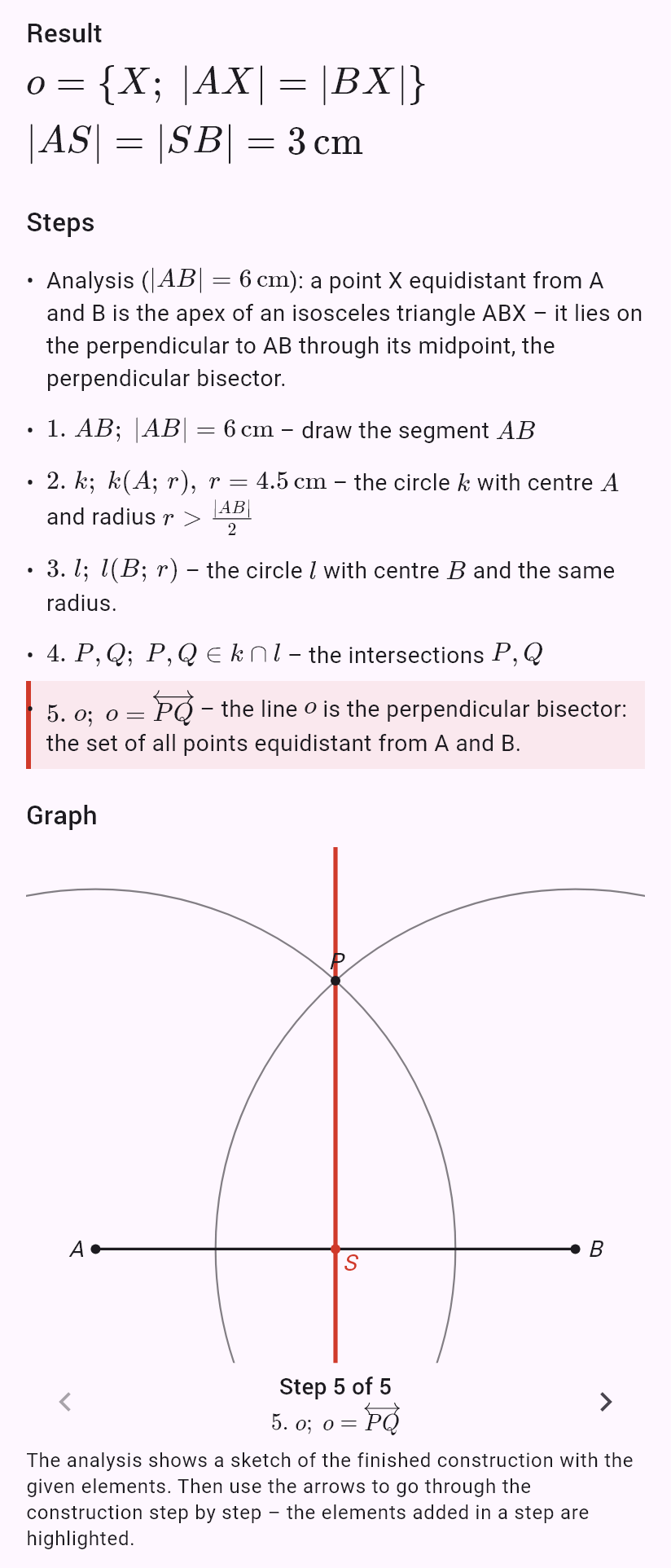
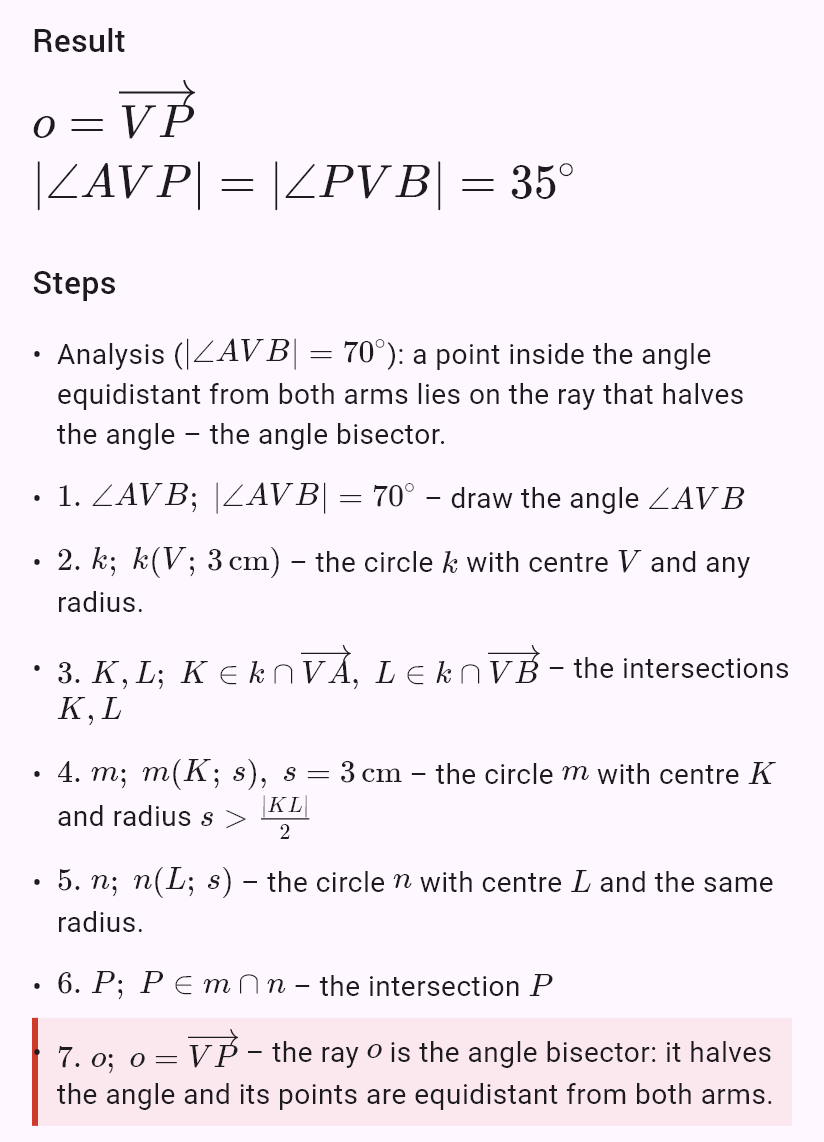
construction(angle_bisector; phi=70)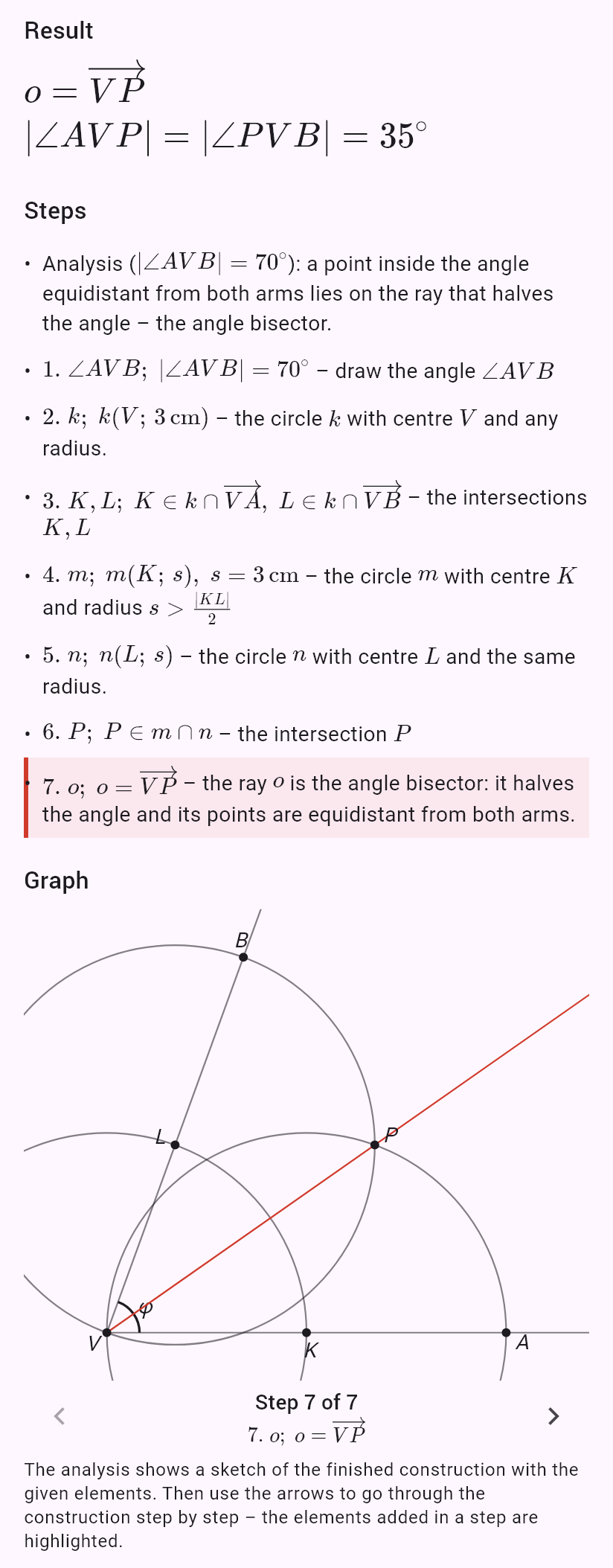
construction(thales; d=5)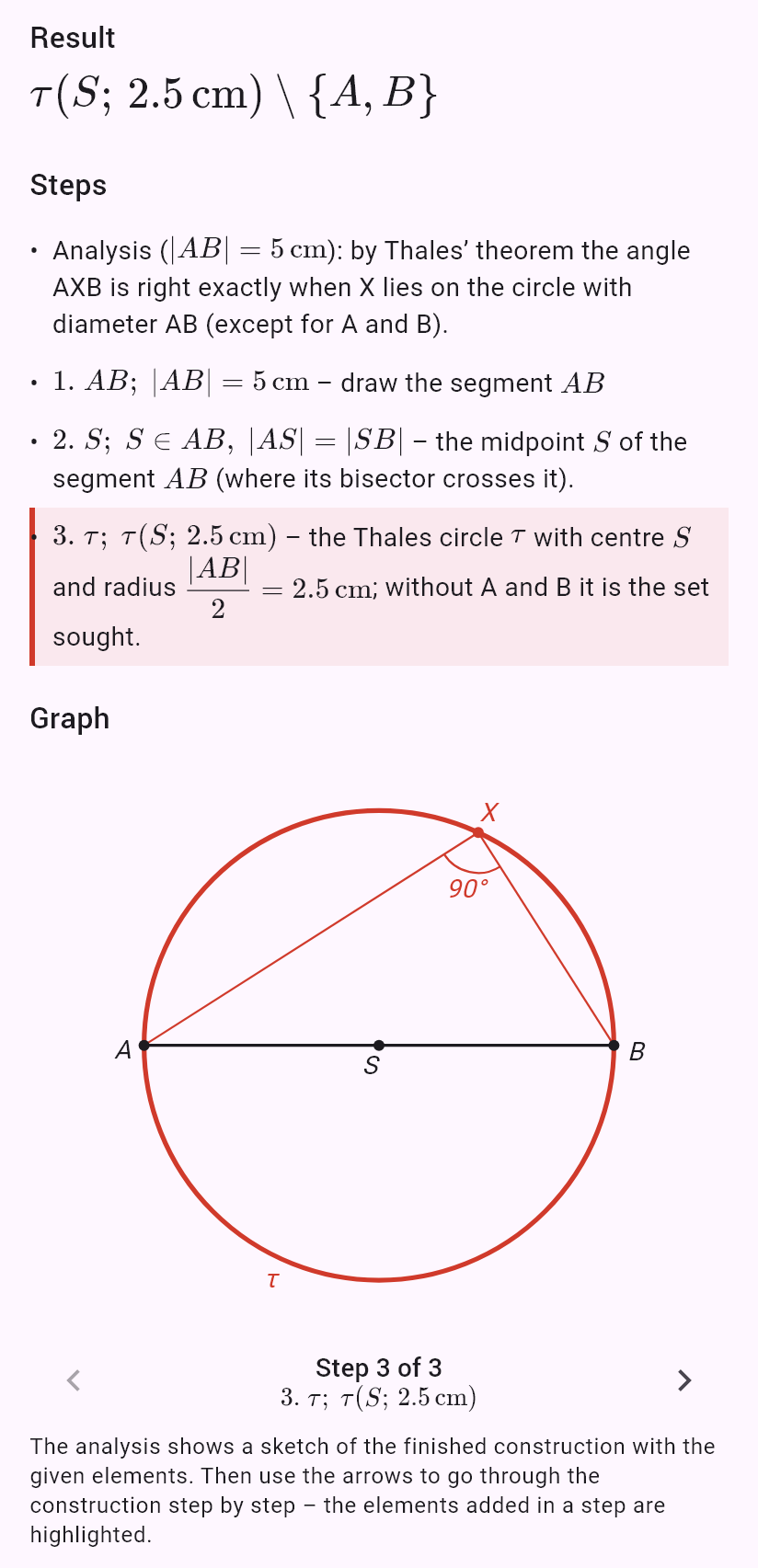
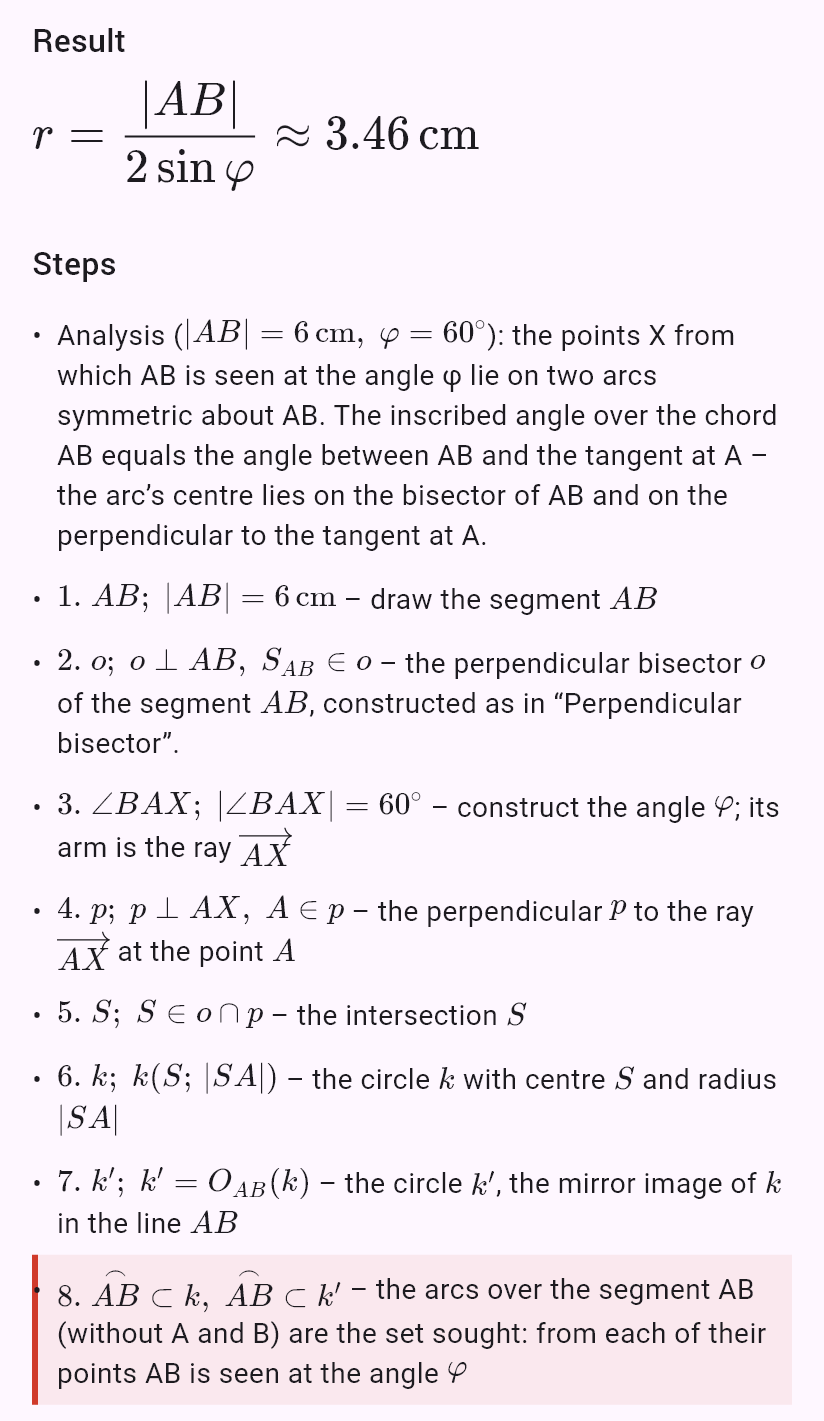
construction(angle_arc; d=6; phi=60)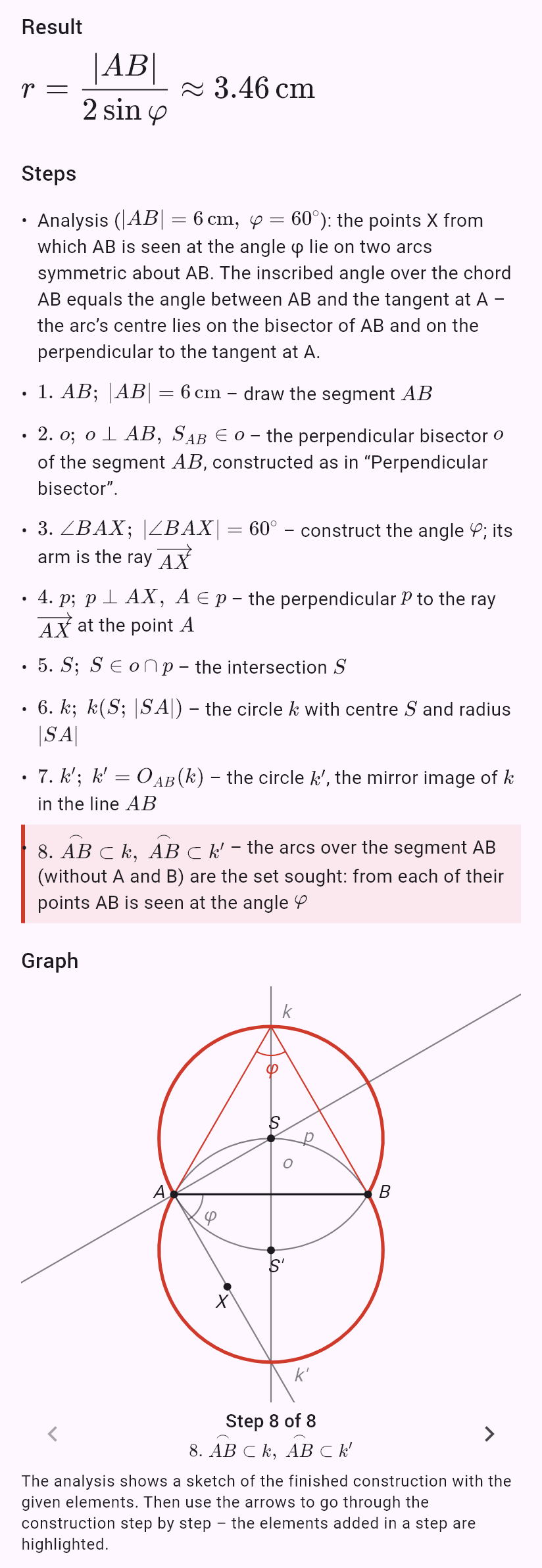
construction(tangents_point; r=3; d=5)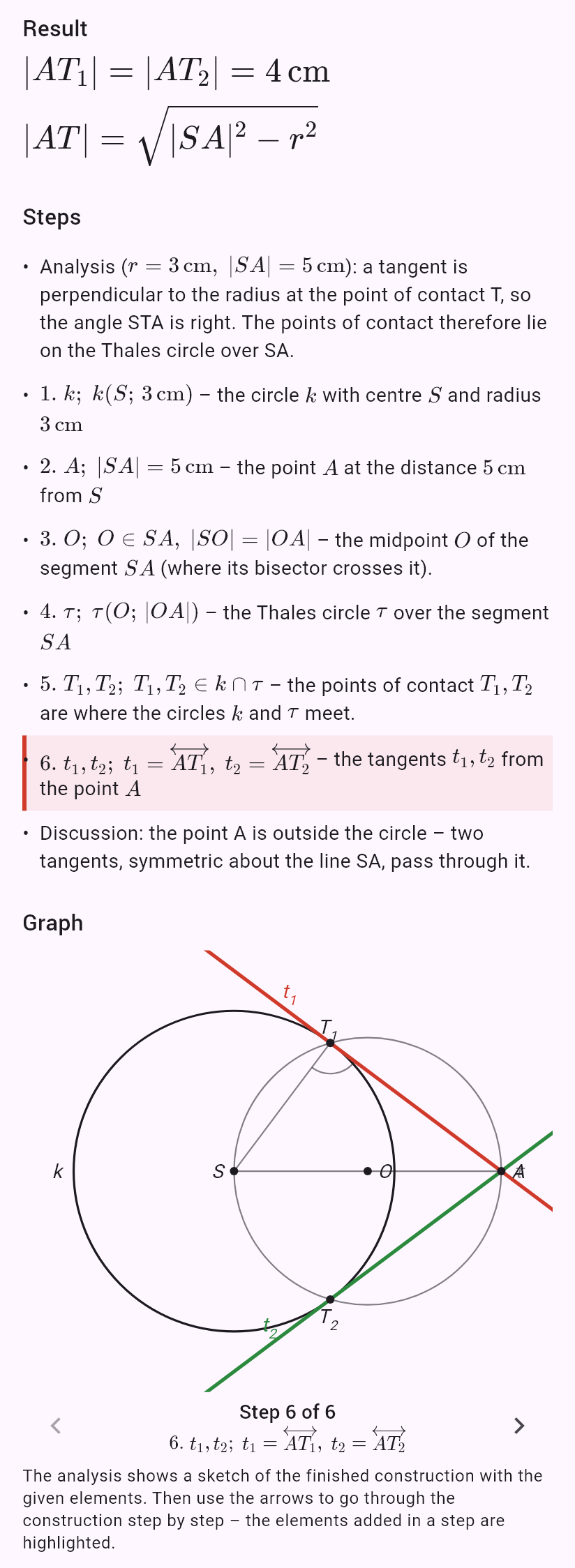
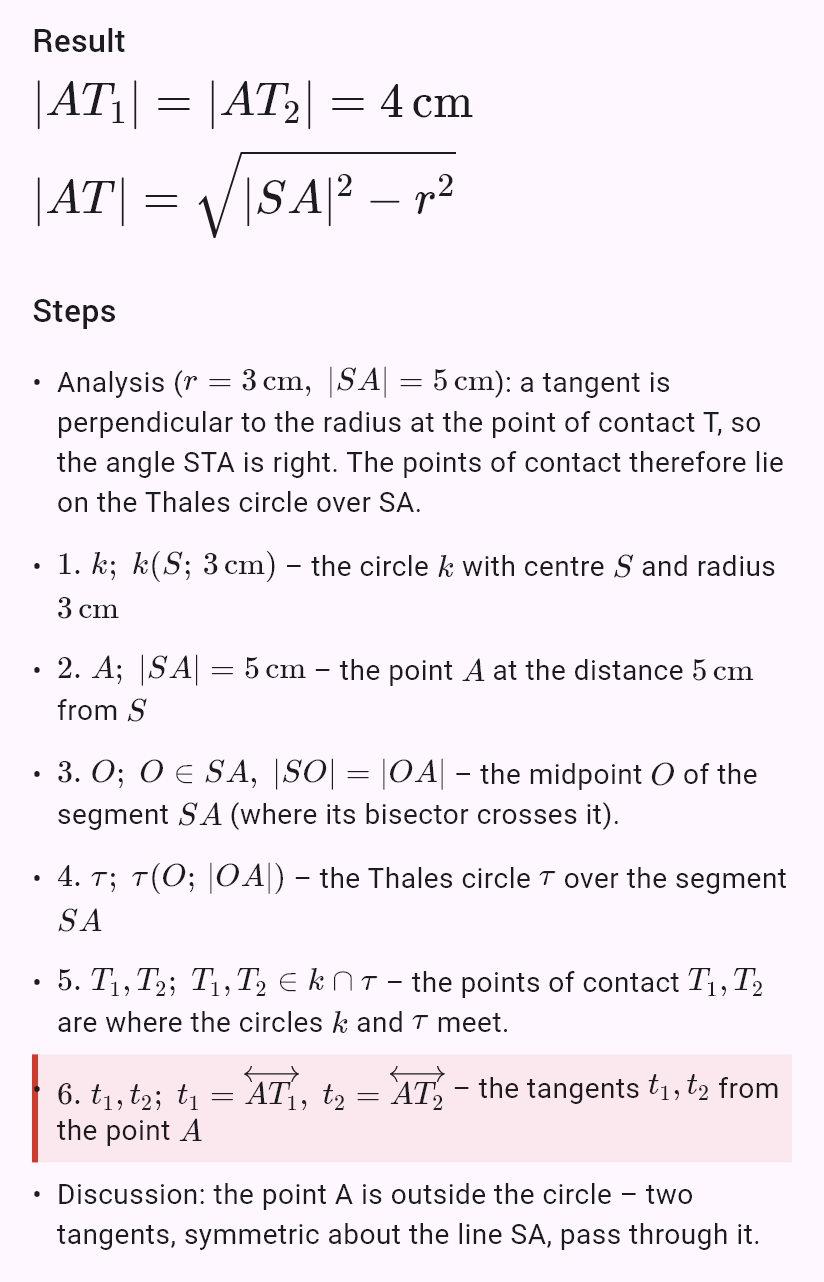
construction(common_tangents; r1=3; r2=1.5; d=6)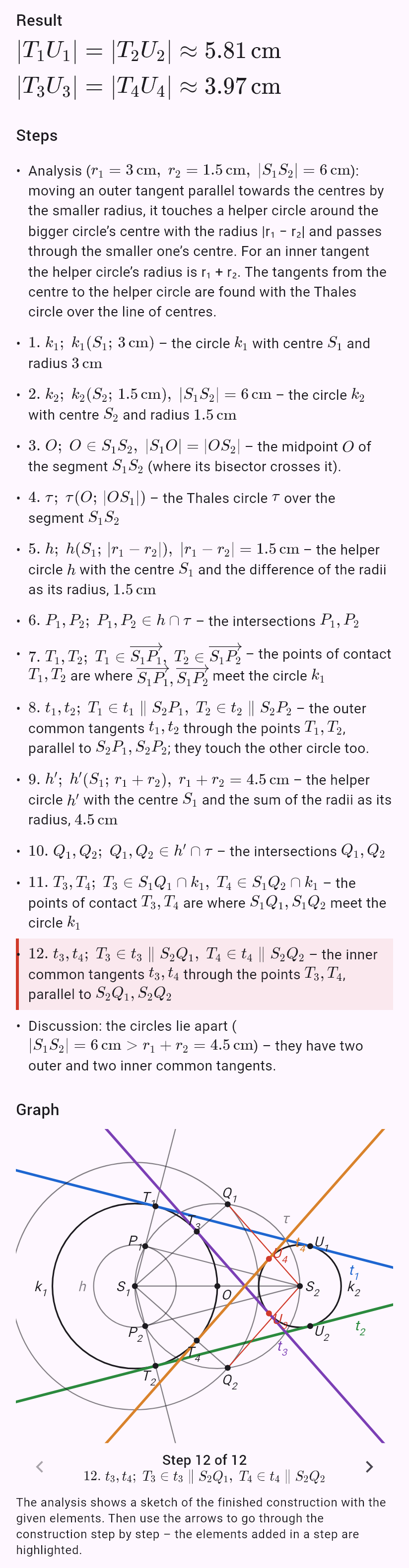
construction(circle_angle; phi=60; r=2)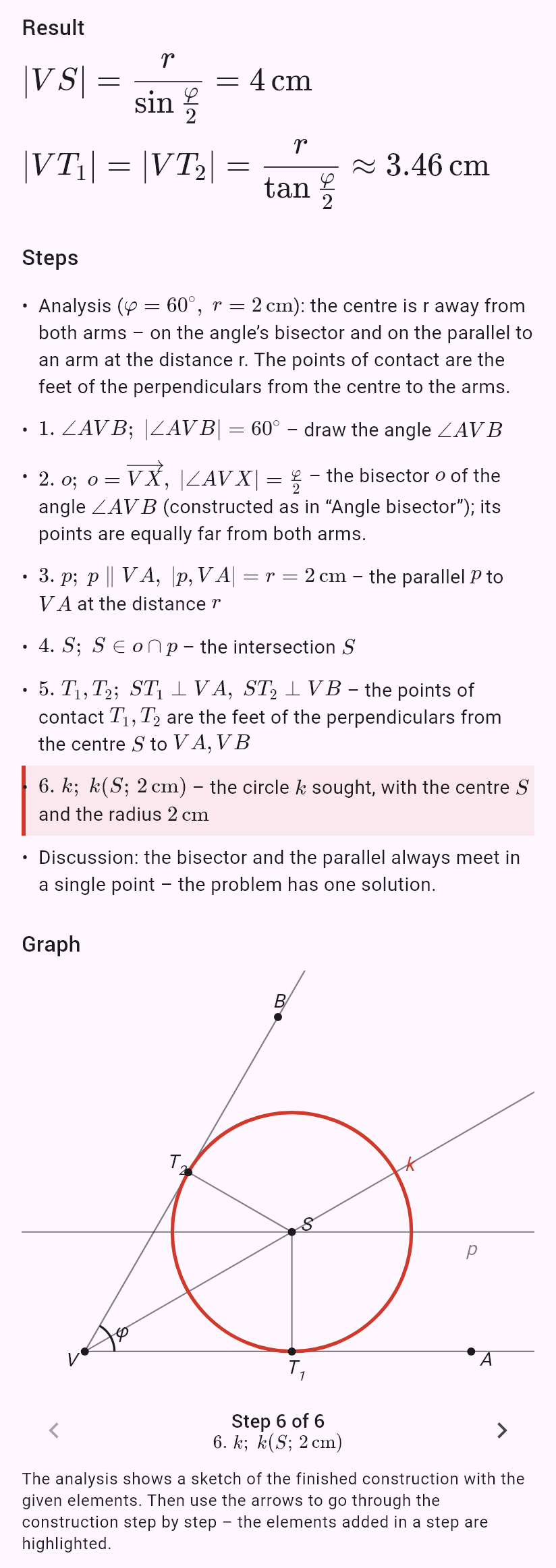
construction(circle_point_line; v=1.5; r=2.5)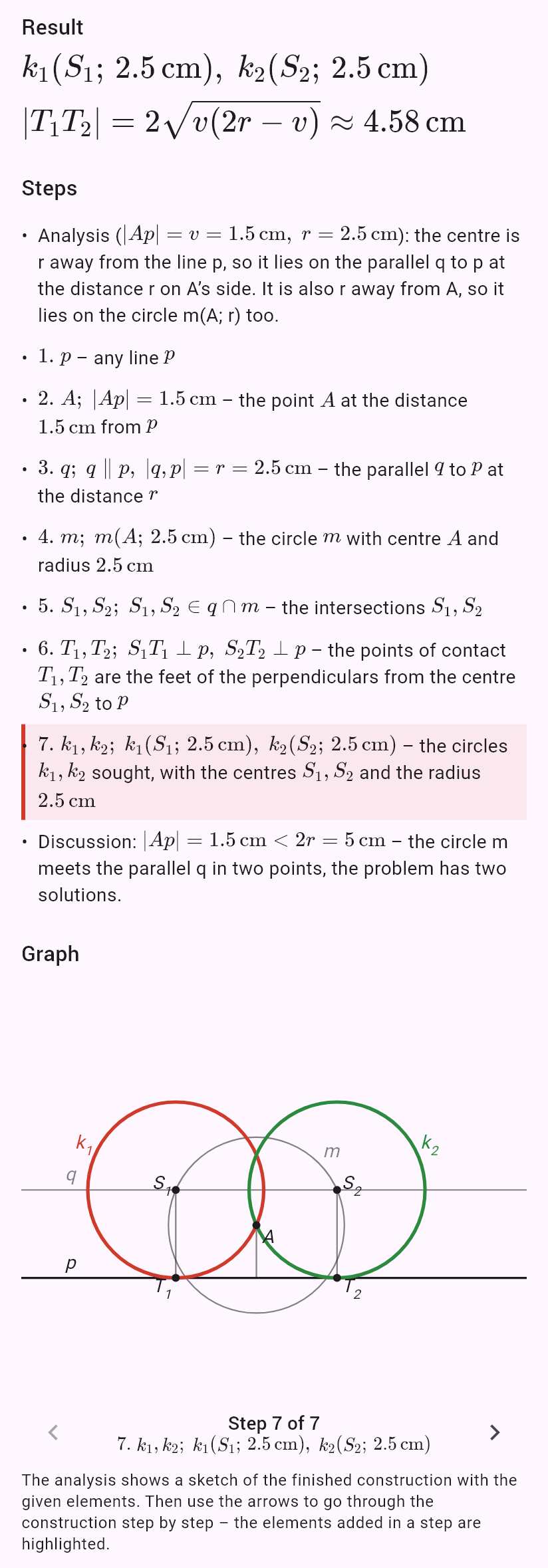
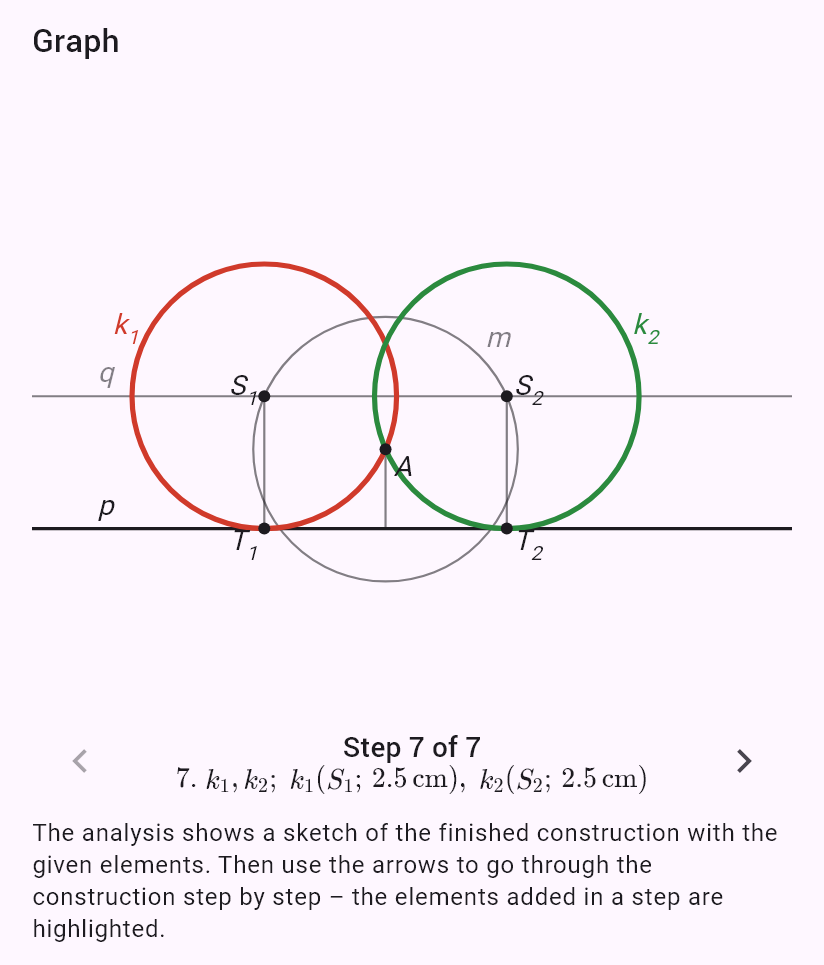
construction(circle_two_points; d=6; r=5)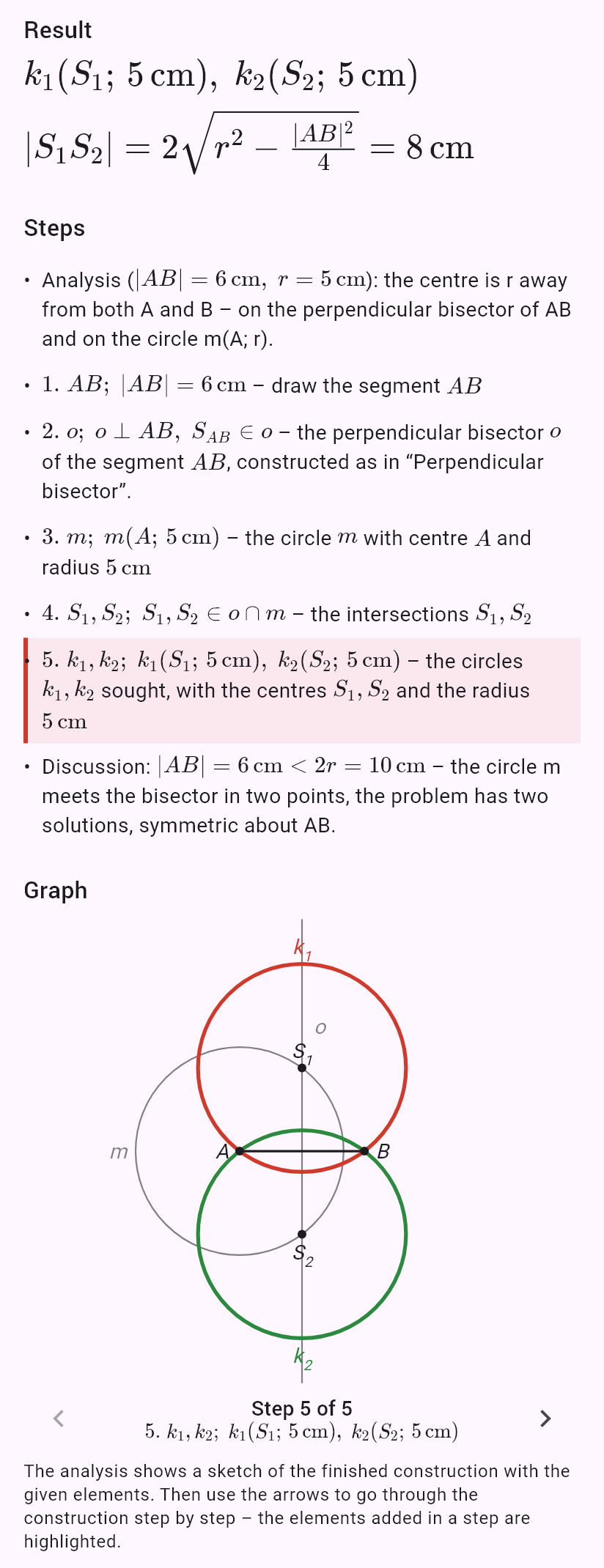
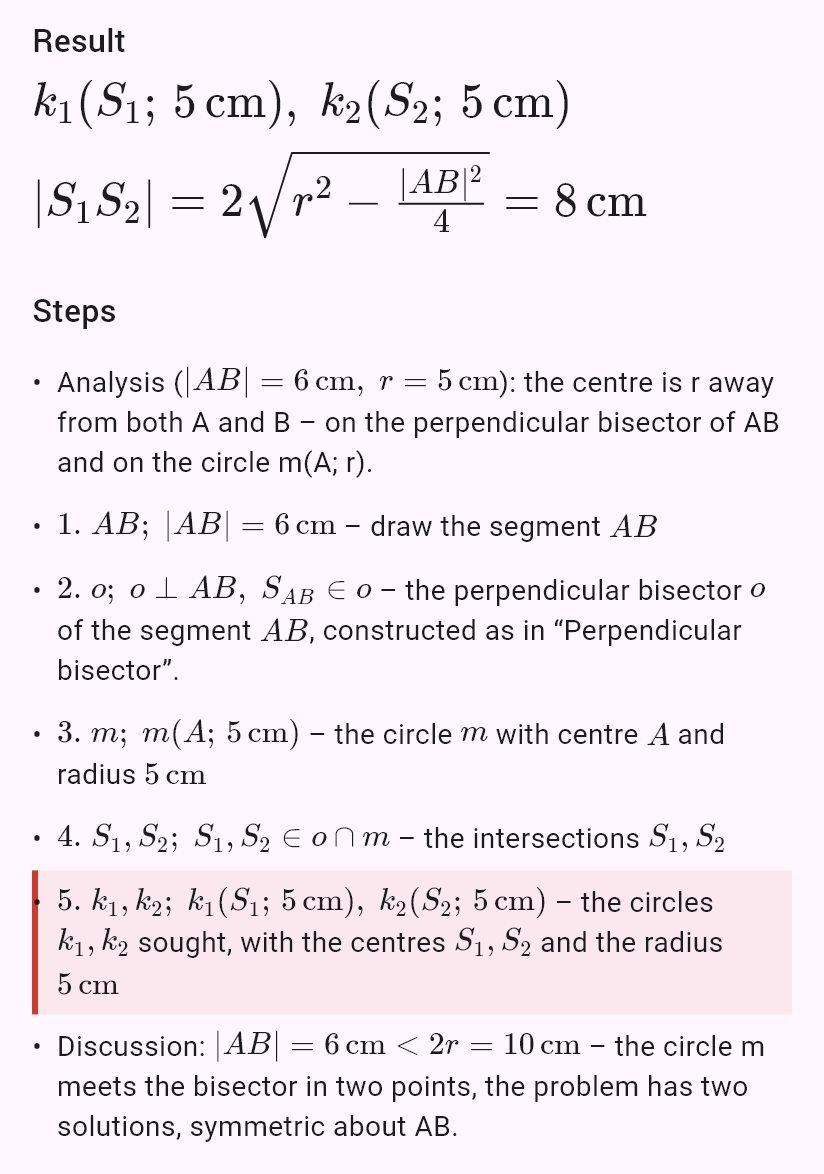
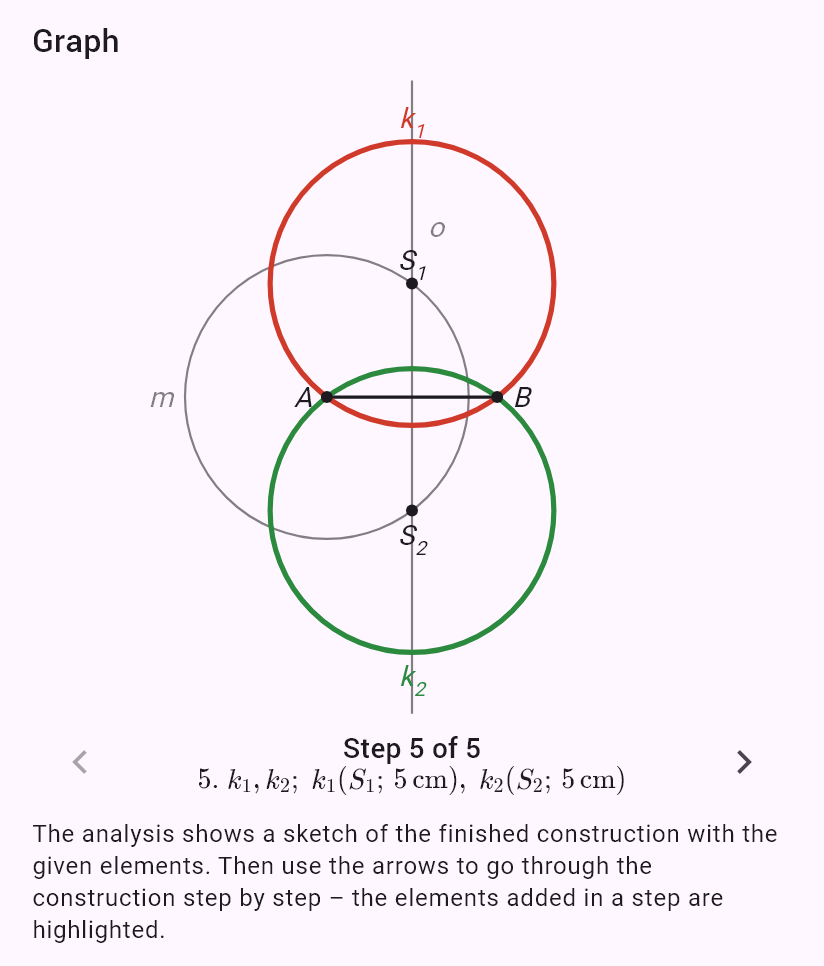
construction(relations_segment; d=6; angle_AB=60; dist_AB=3)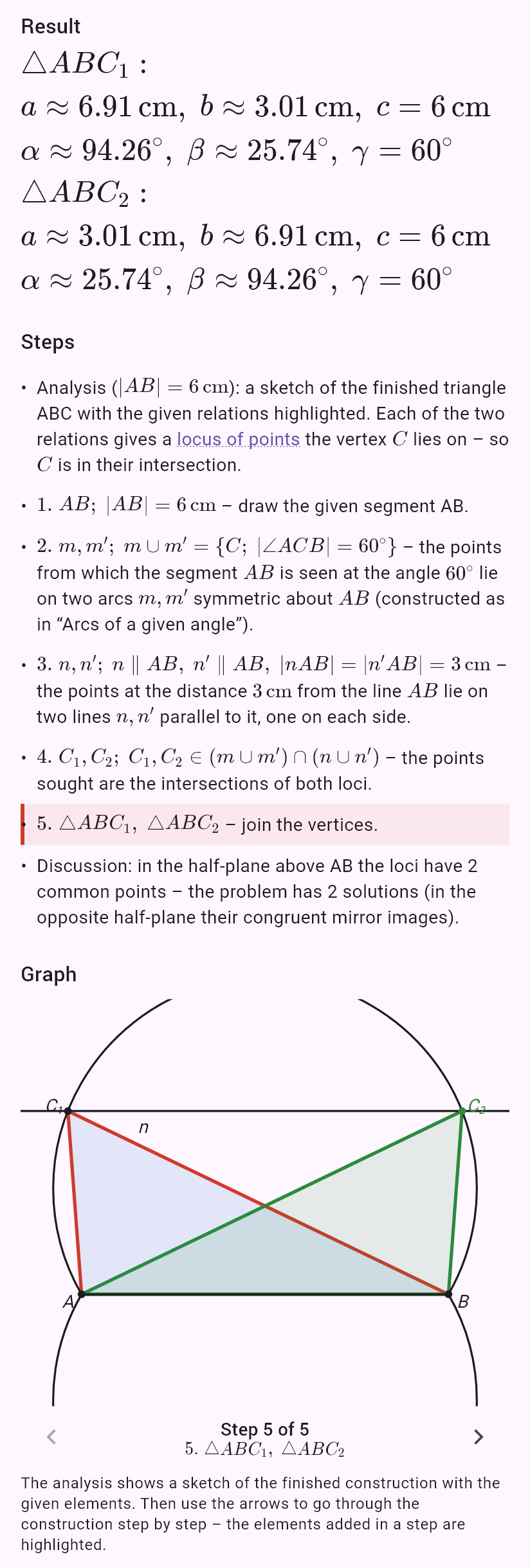
construction(relations_segment; d=6; ratio_AB=2; dist_B=3)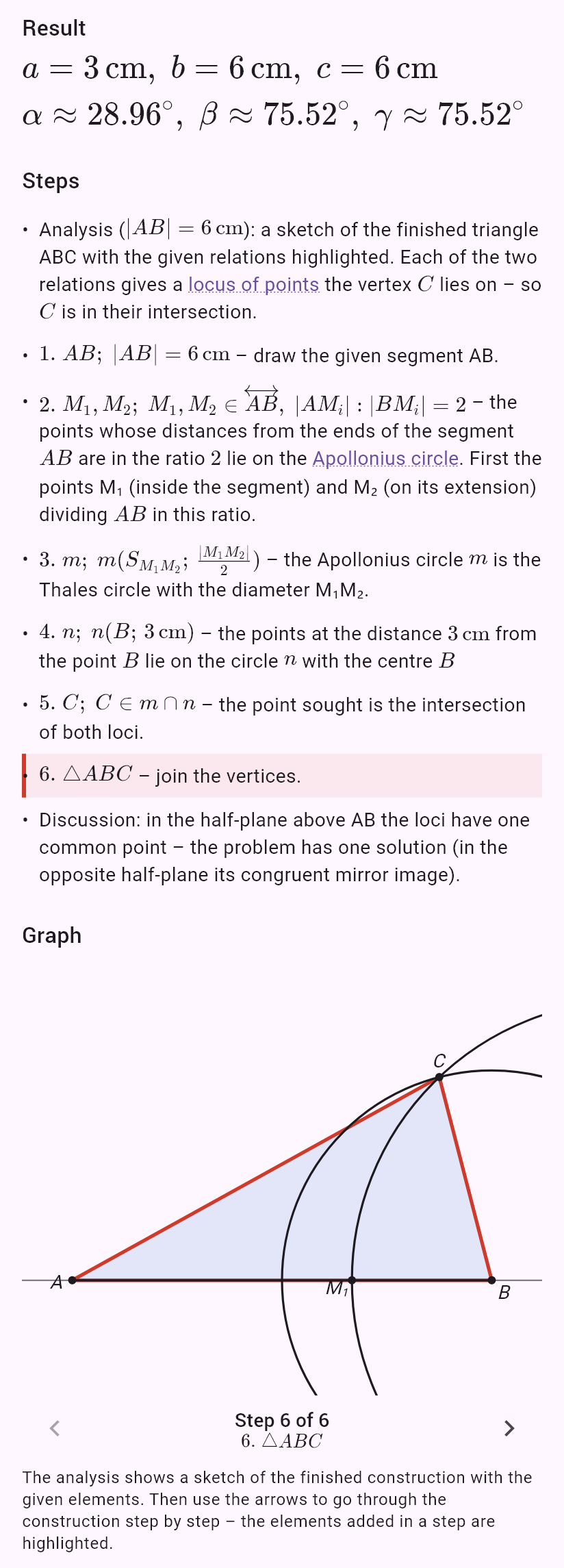
construction(relations_circle_point; r=3; d=5; tangent_A=1; on_k=1)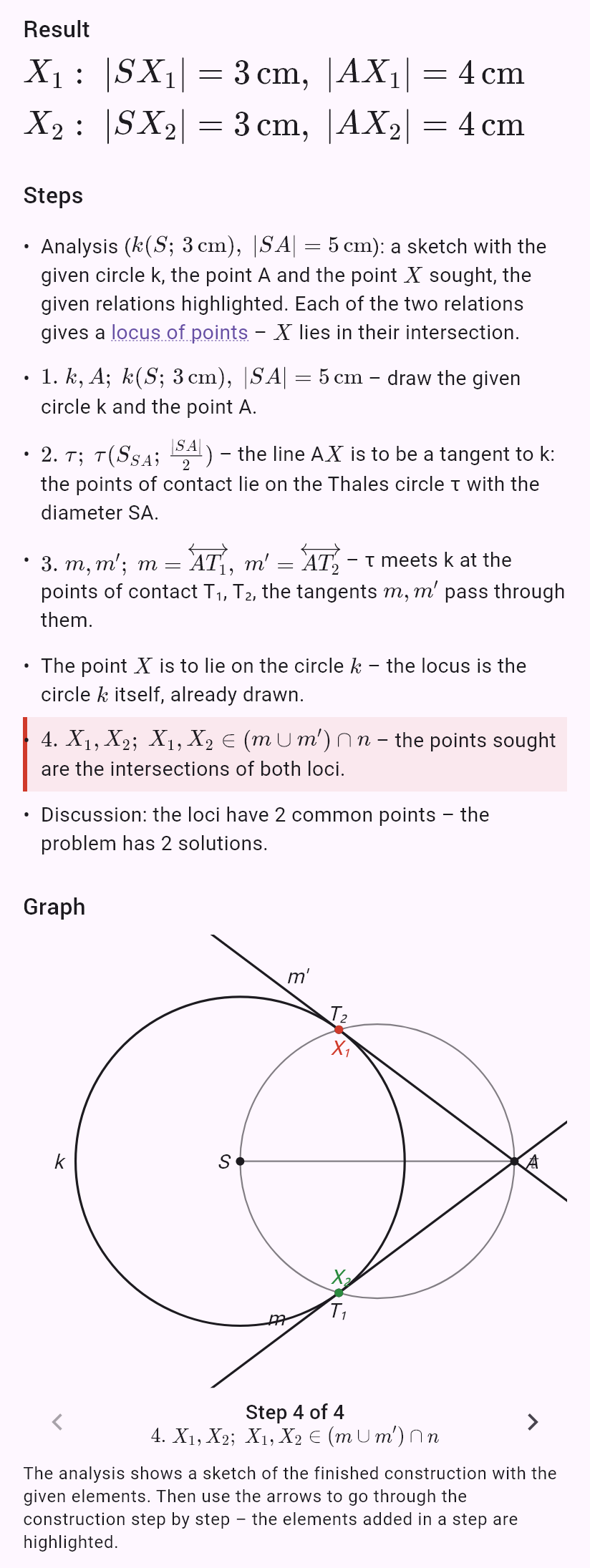
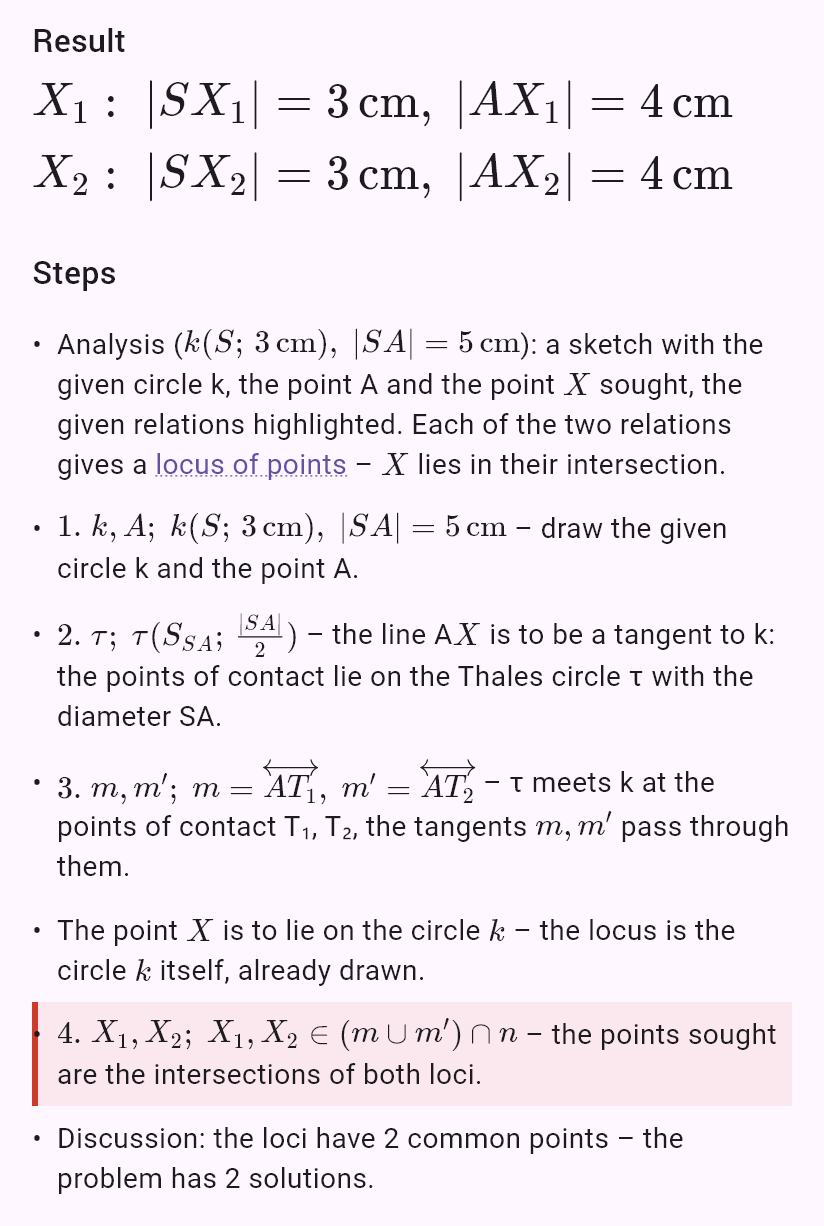
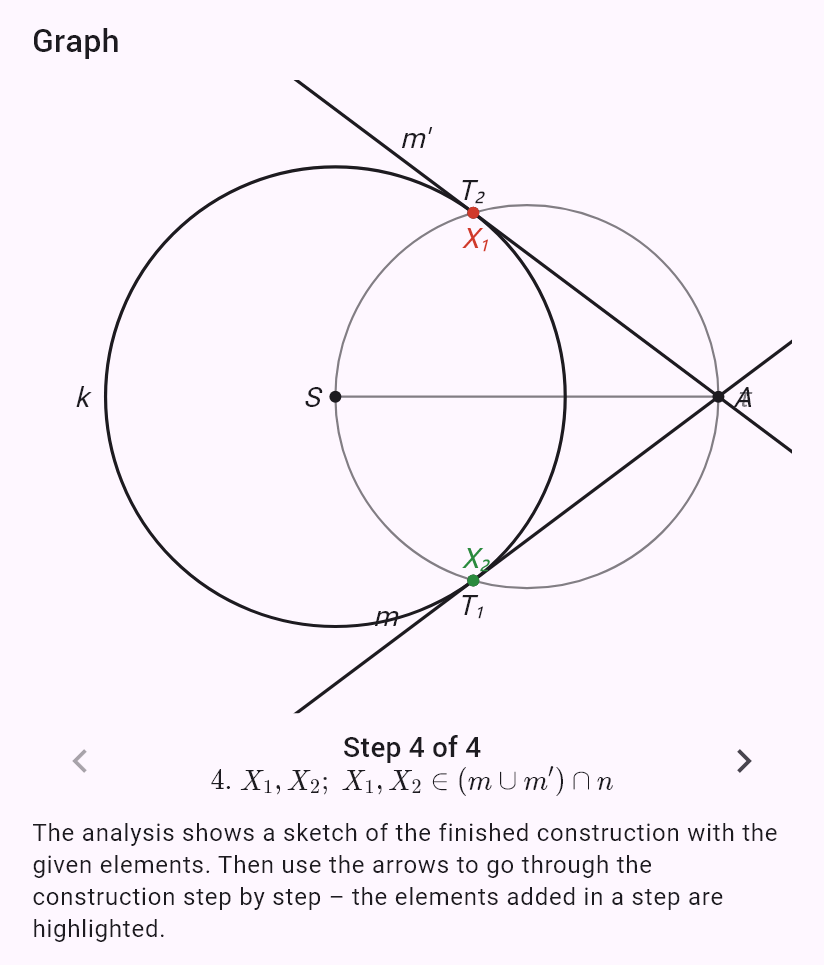
construction(relations_circle_line; r=2; d=3; touch_k=1; dist_p=1)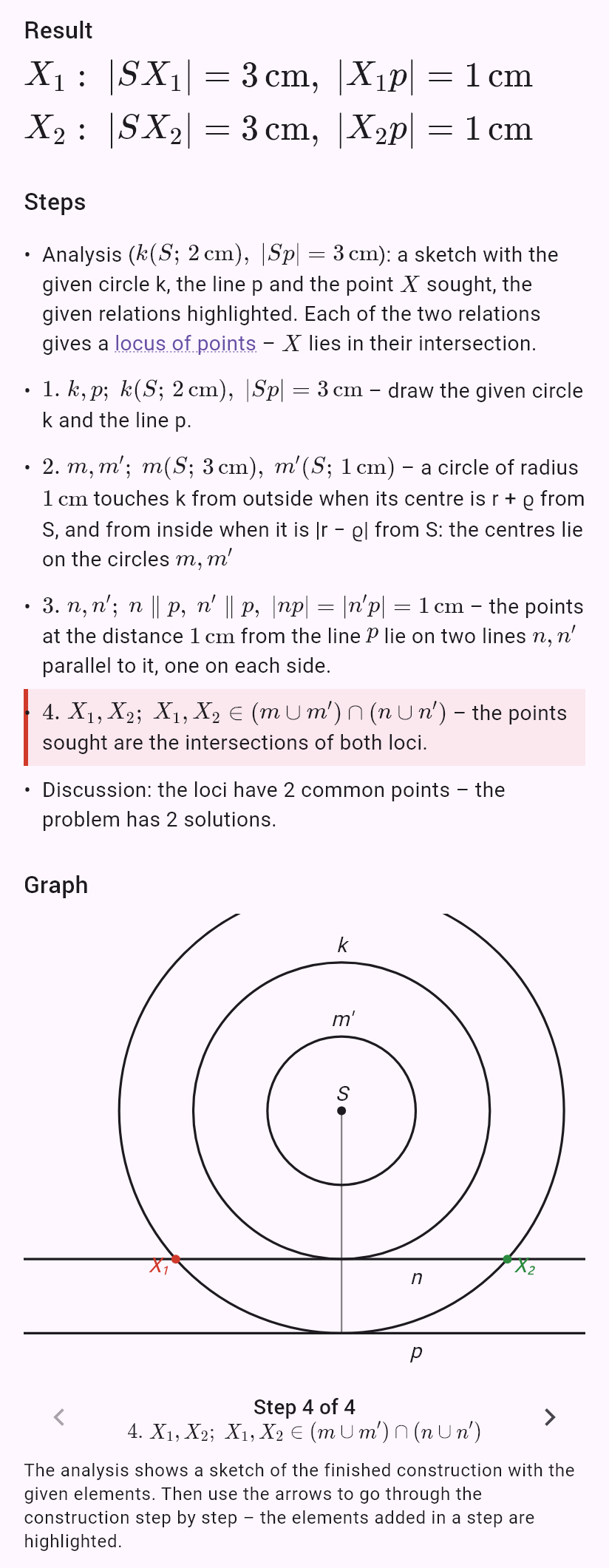
construction(relations_lines; phi=60; dist_p=1.5; dist_q=1.5)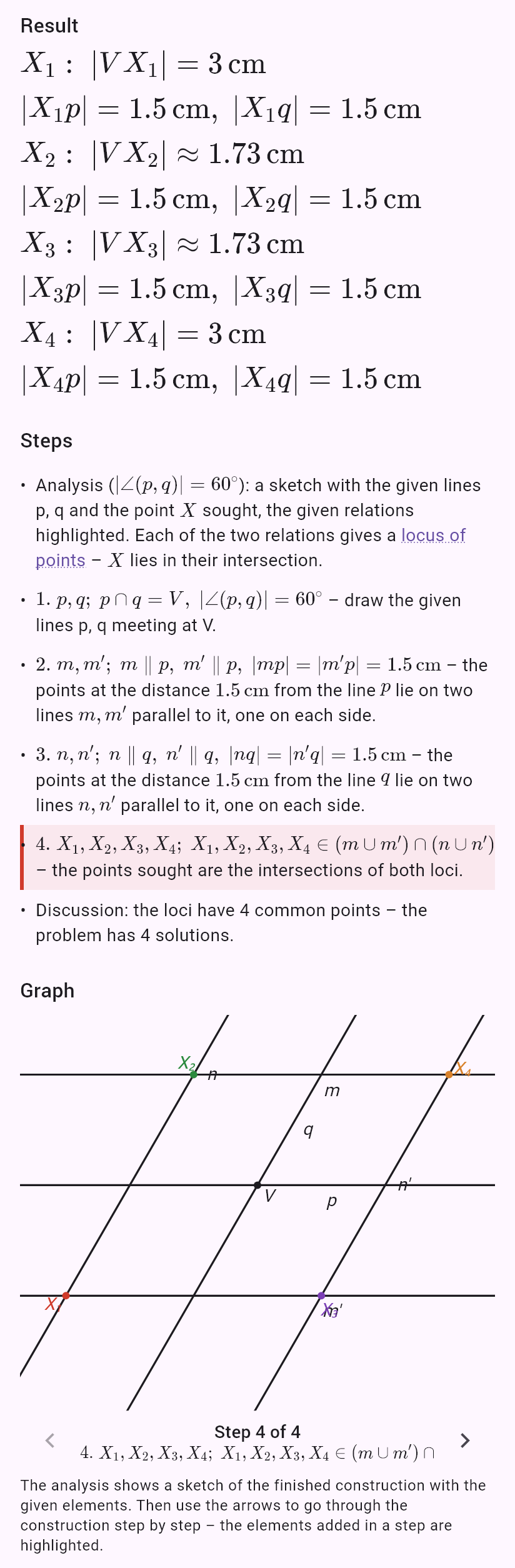
construction(general_circle; r=2; on_A=1; on_B=1; on_D=1; mid_DBC=1; tangent_AC=1; ratio_ACAD=2; triangle_ABC=1)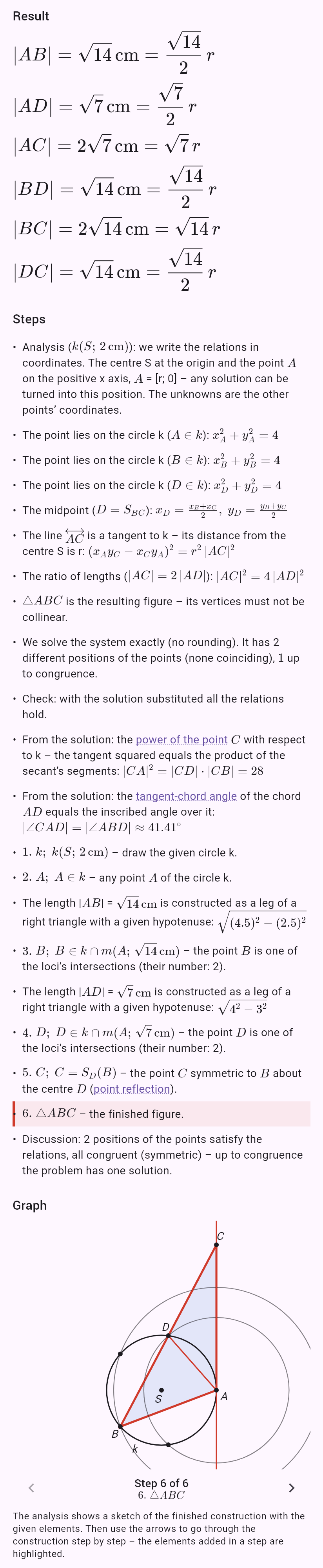
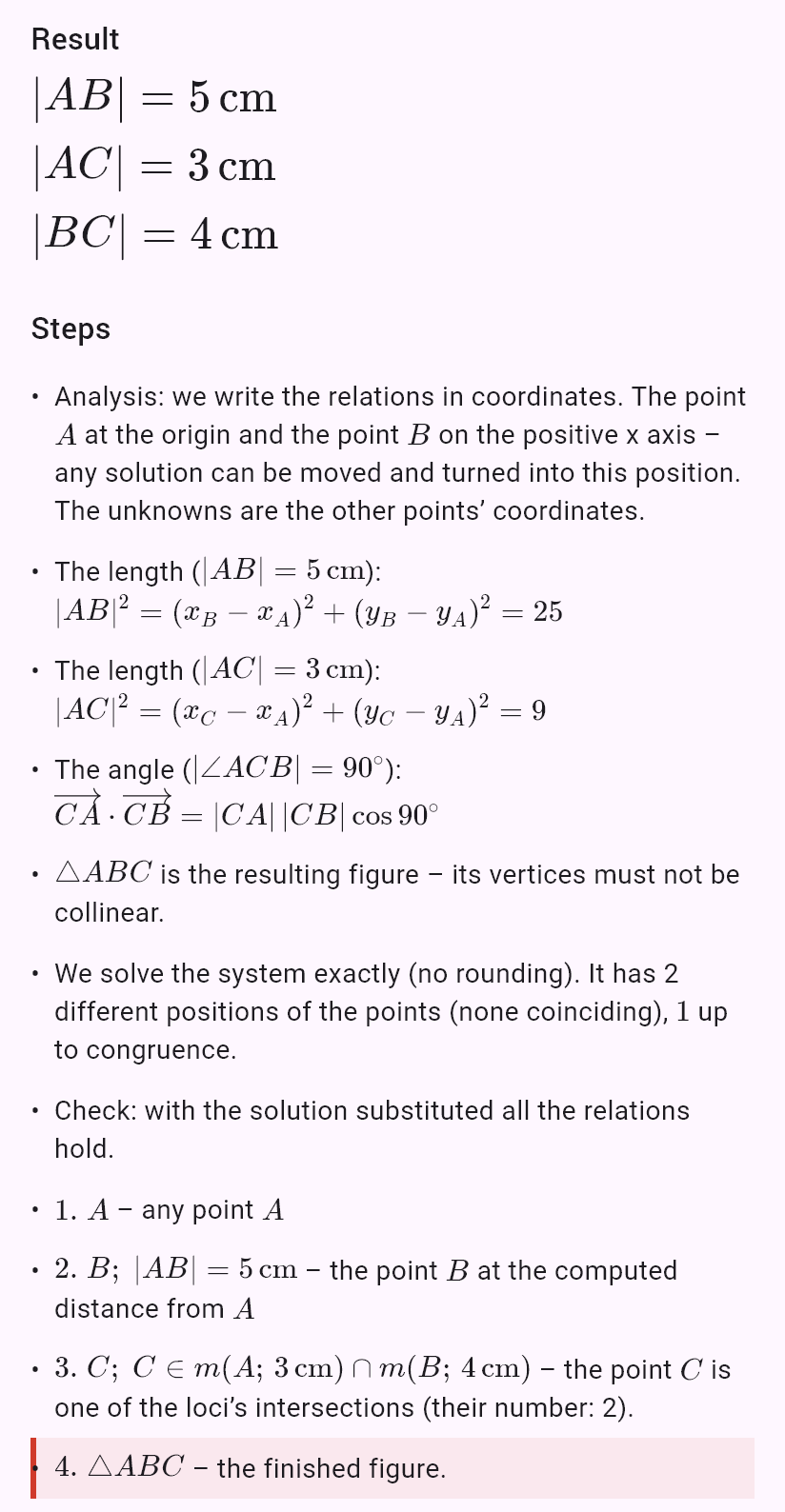
construction(general; len_AB=5; len_AC=3; angle_ACB=90; triangle_ABC=1)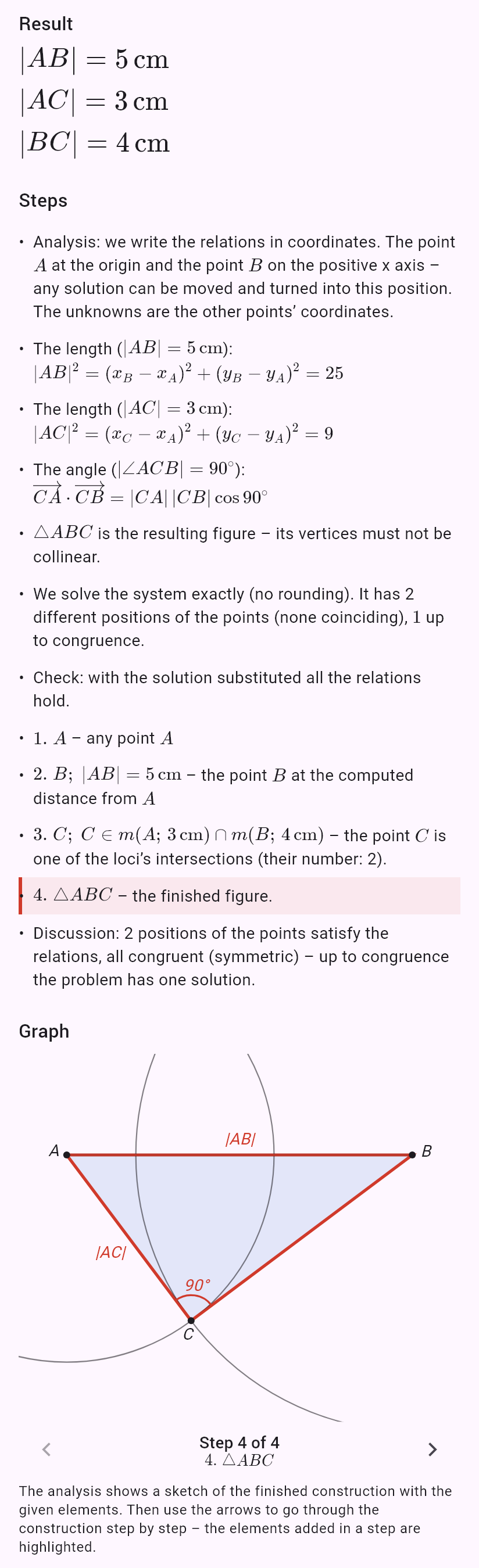
construction(cube_section; a=6; AE=2; BF=4; CG=5)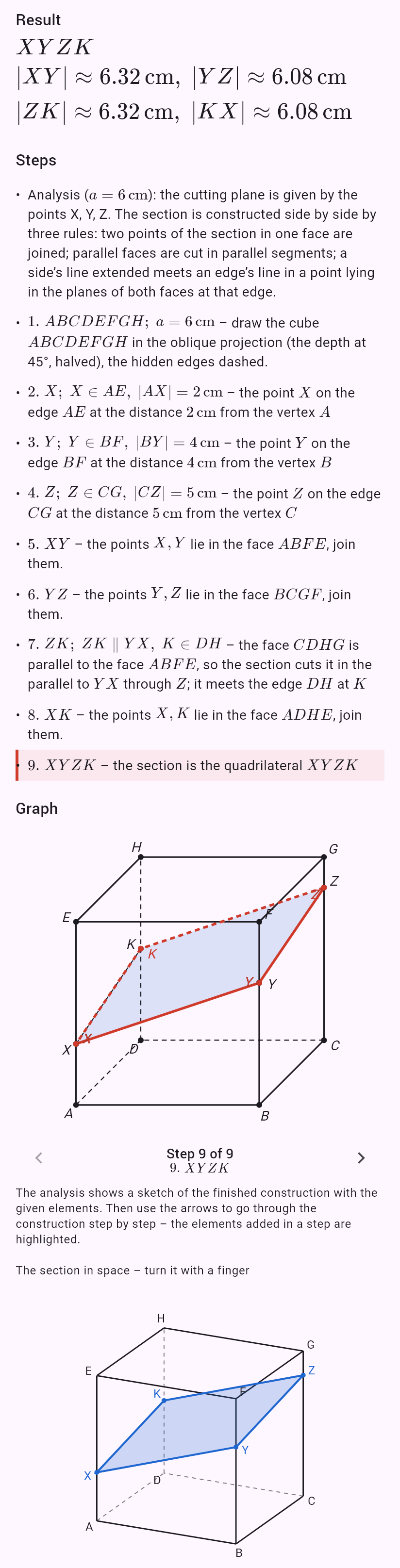
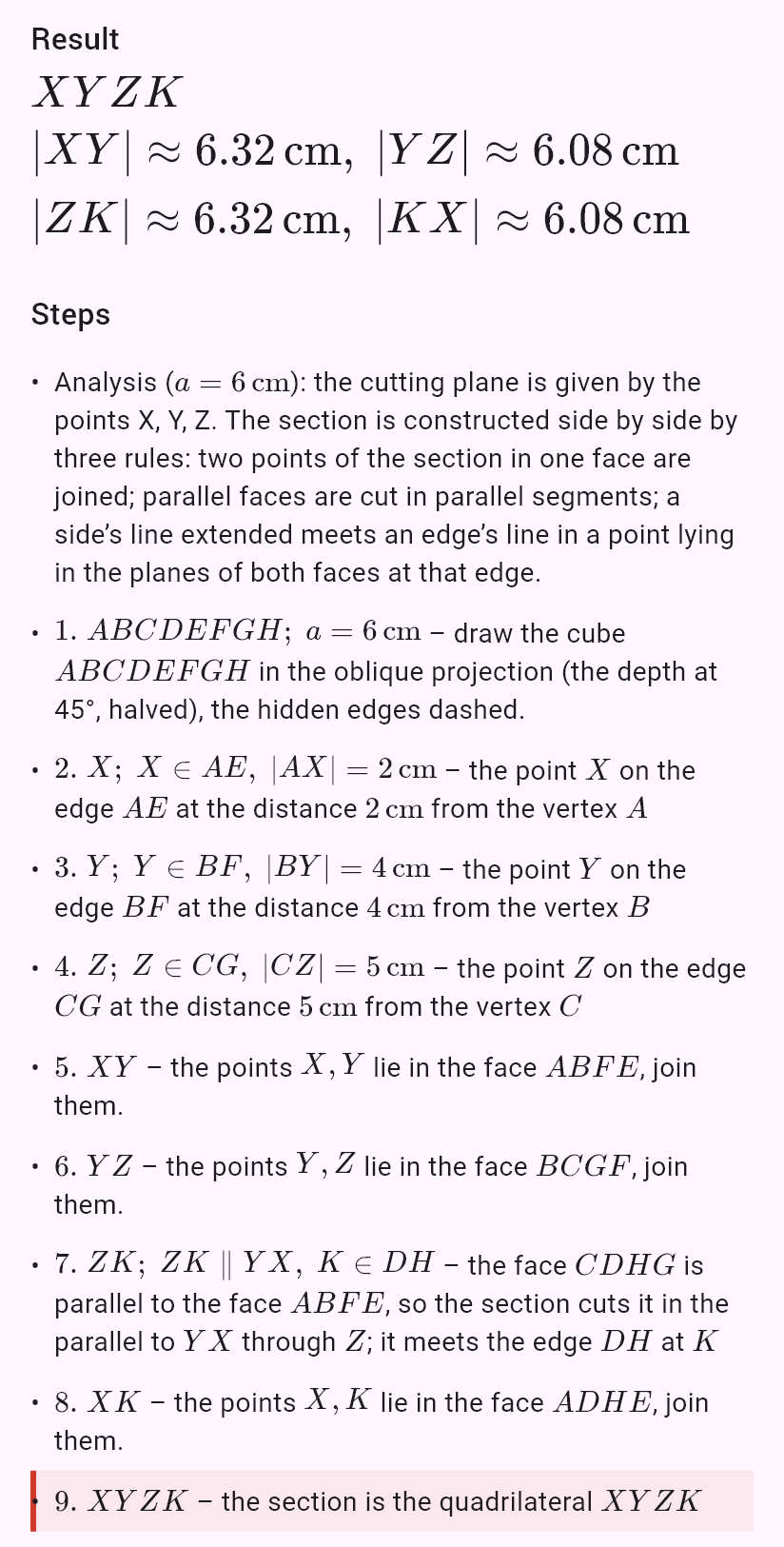
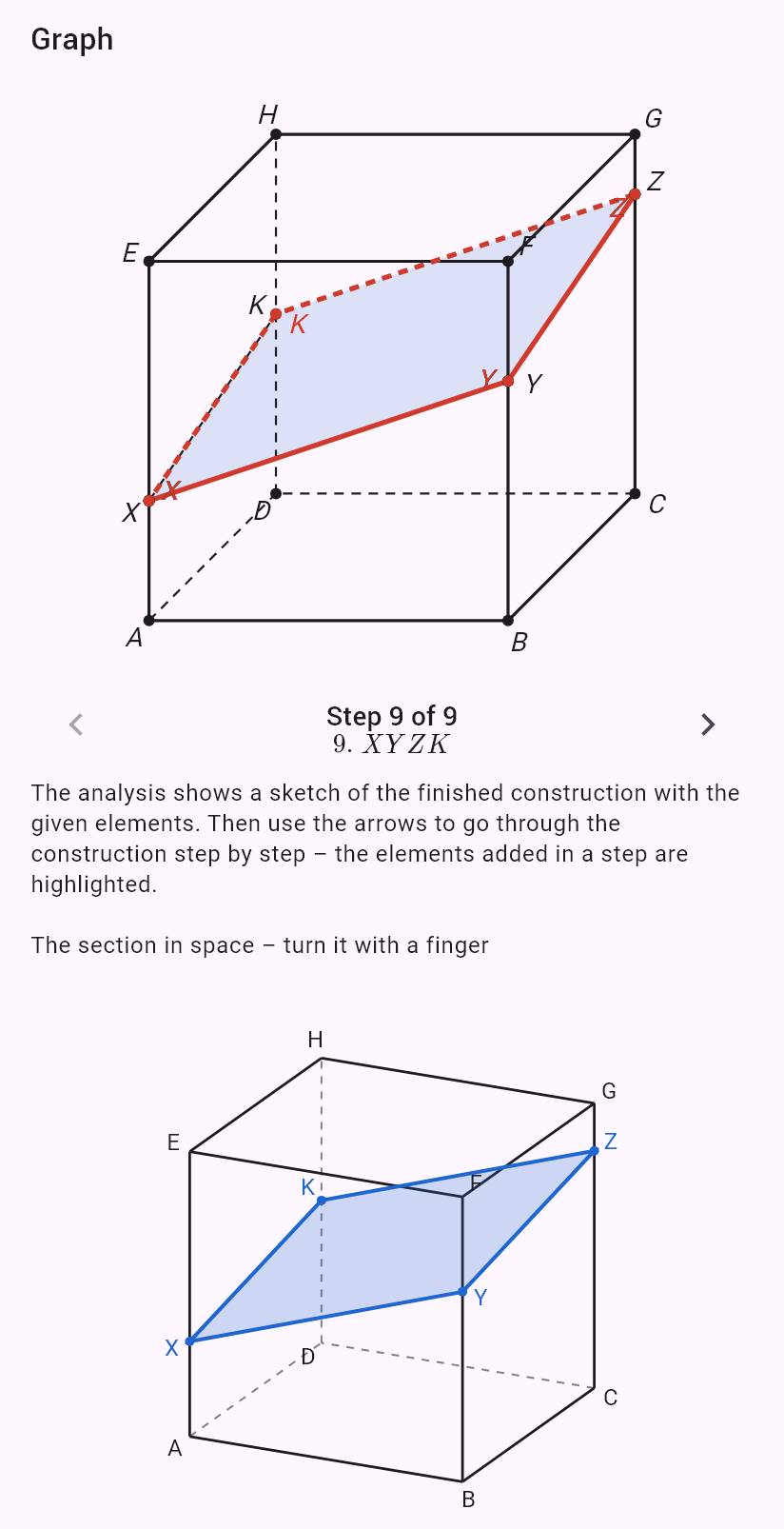
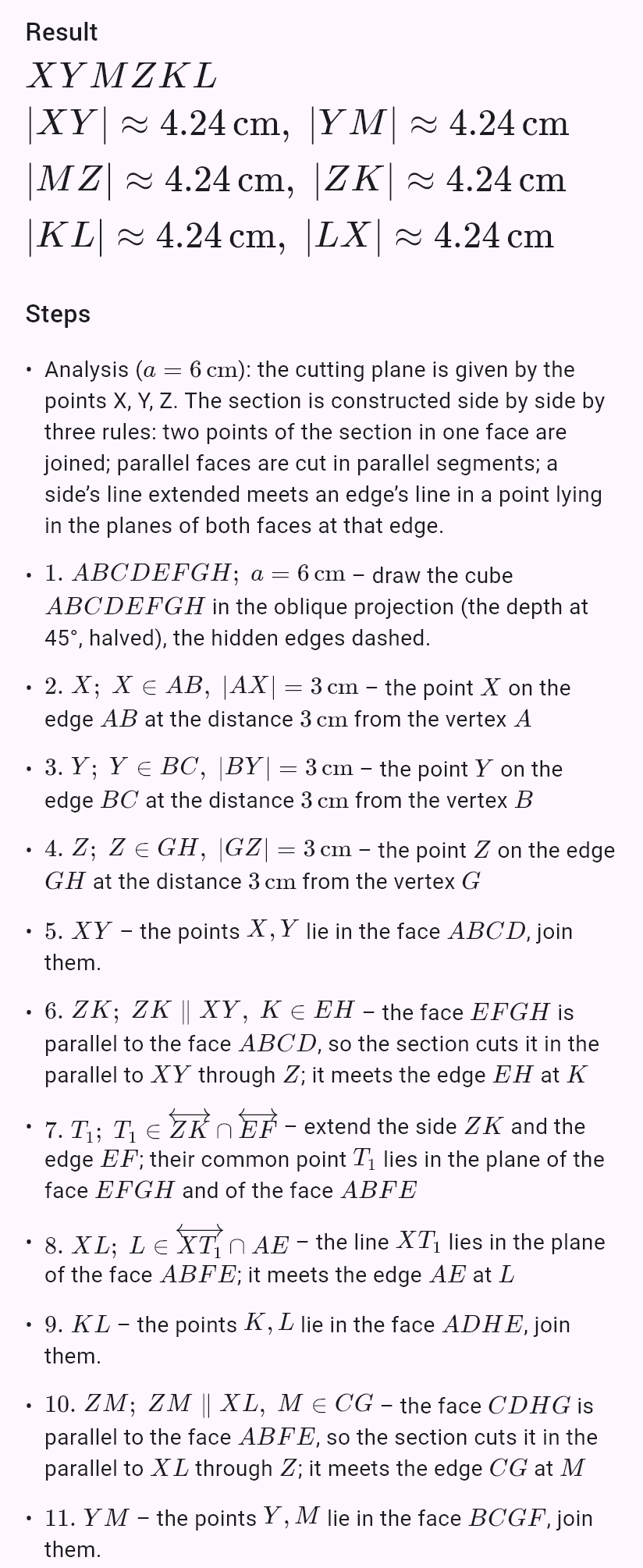
construction(cube_section; a=6; AB=3; BC=3; GH=3)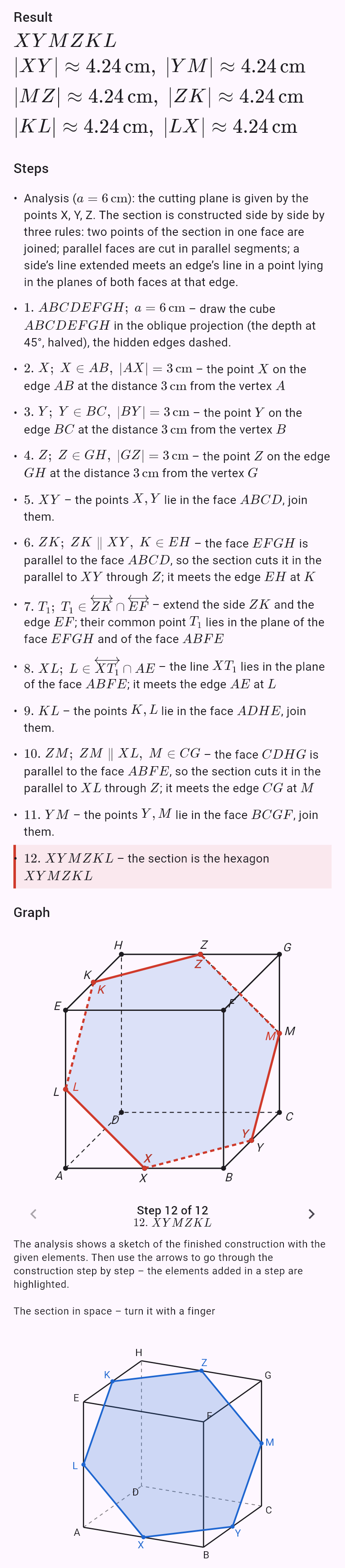
construction(pyramid_section; a=6; v=6; AB=3; BC=3; DV=4)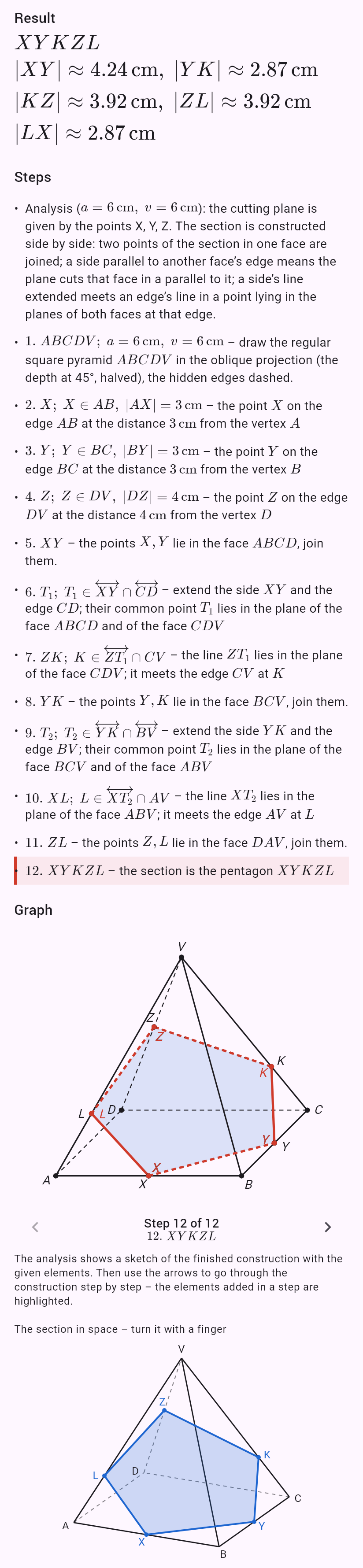
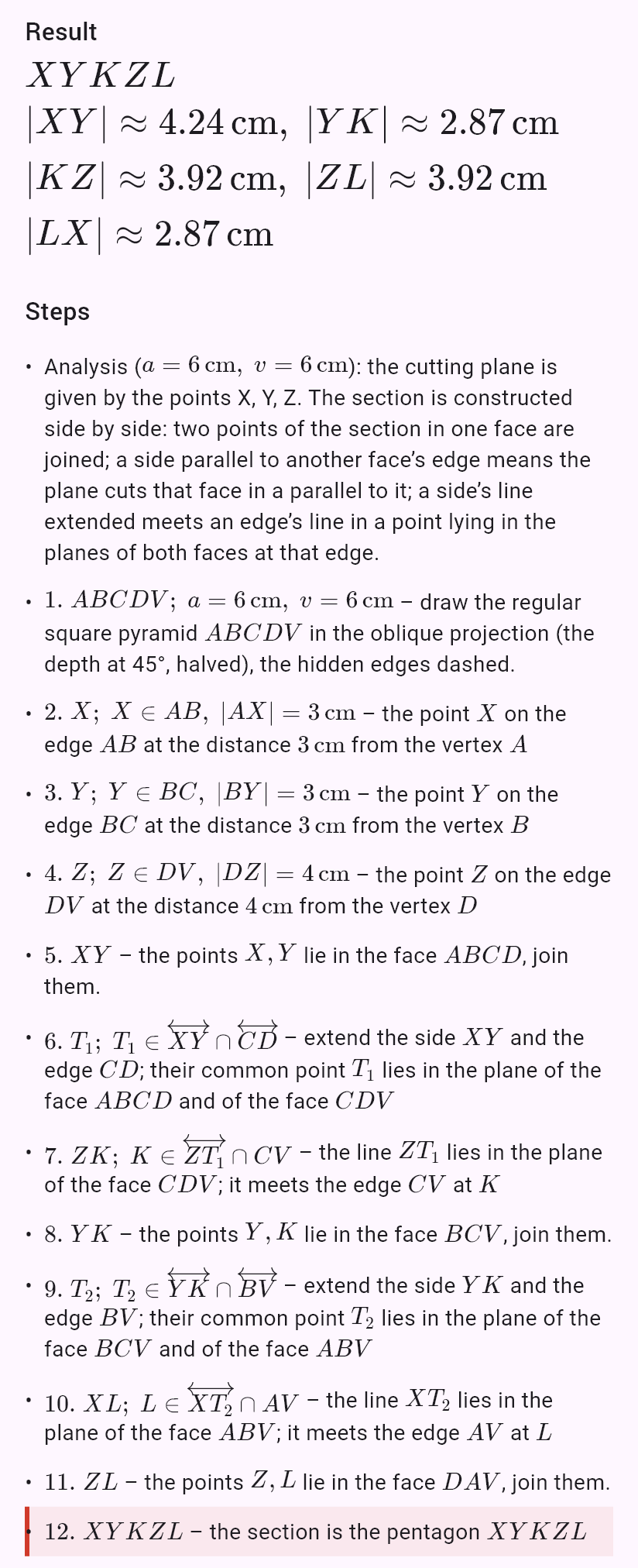
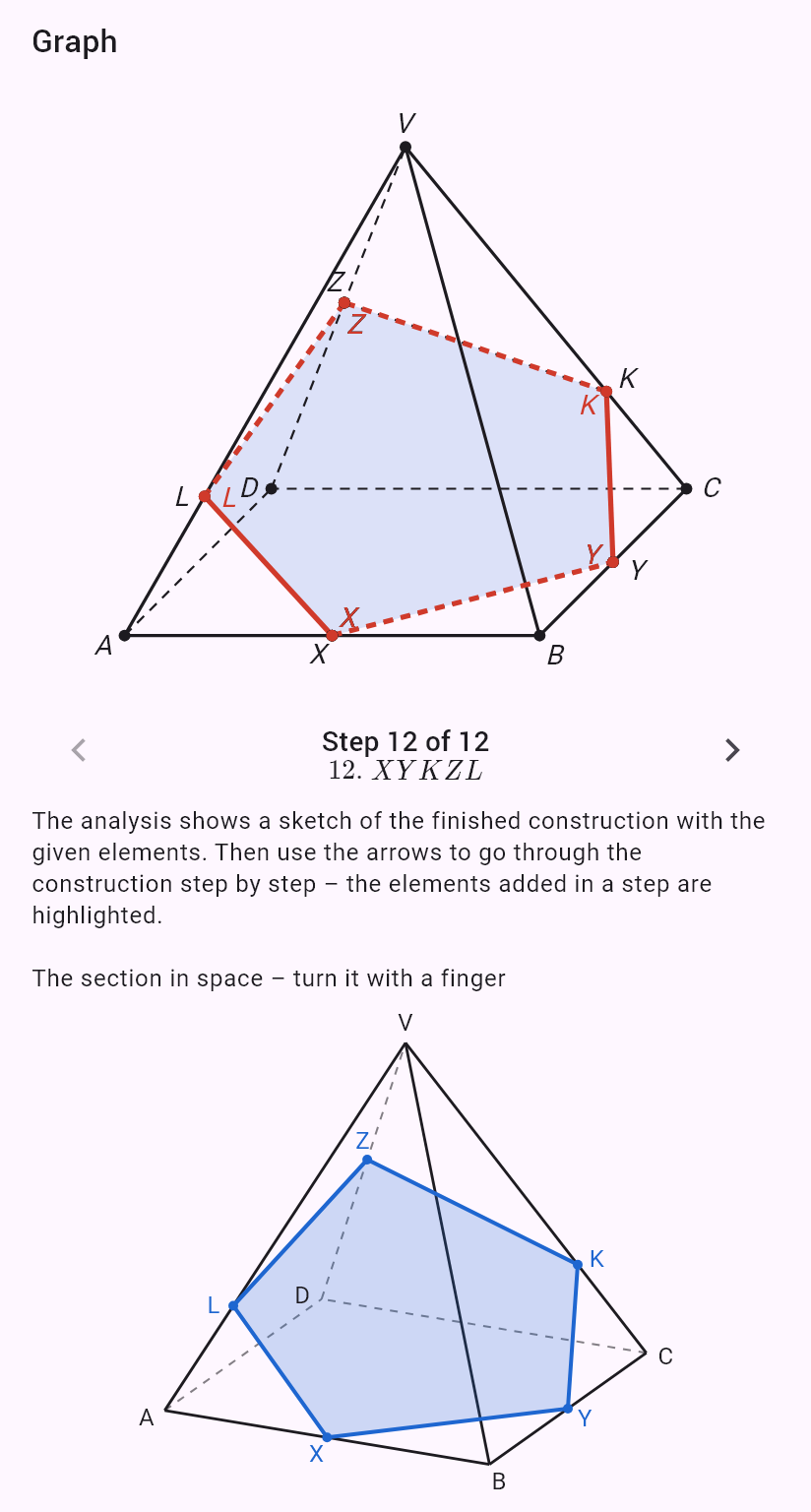
construction(pyramid_section; n=4; a=4; v=6; AV=1; AB=6; CD=2)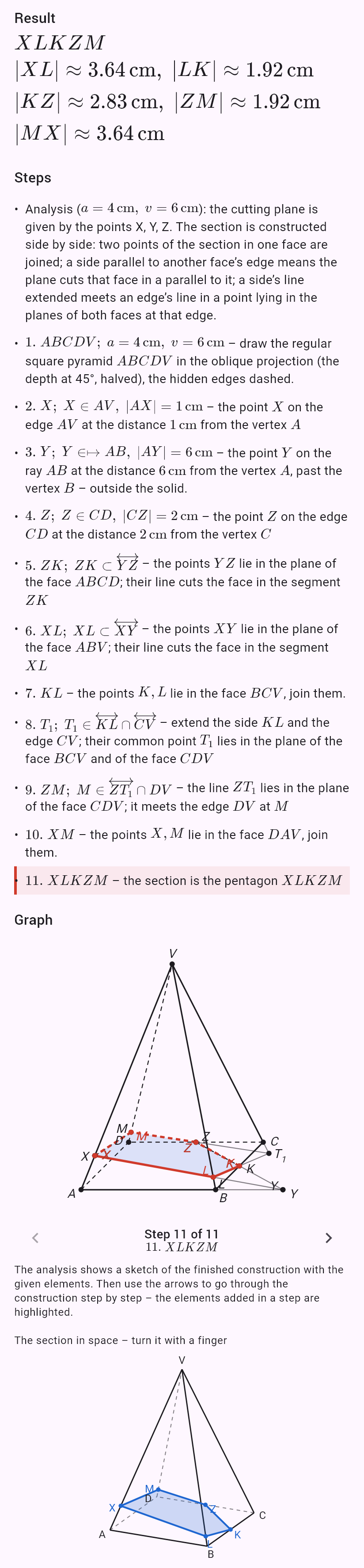
construction(cube_section; a=6; AG=5; BF=1; DH=2)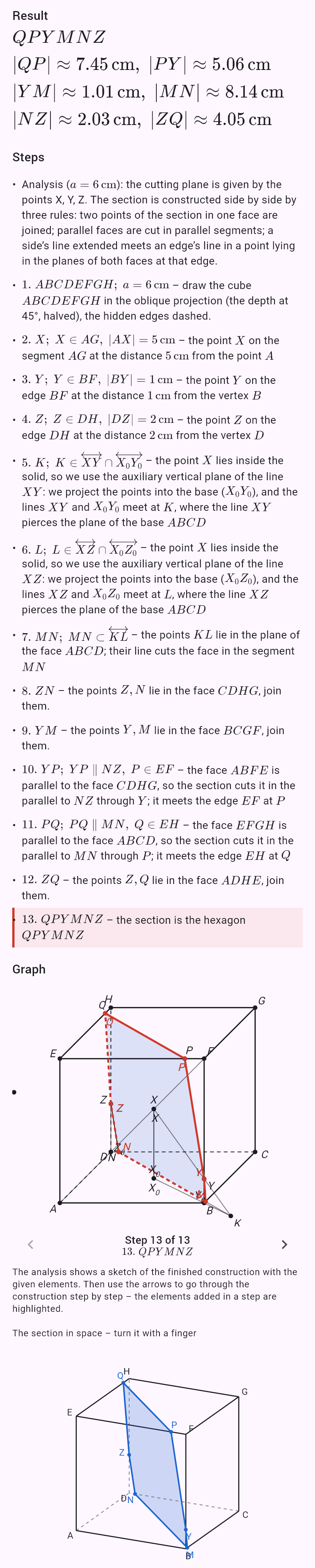
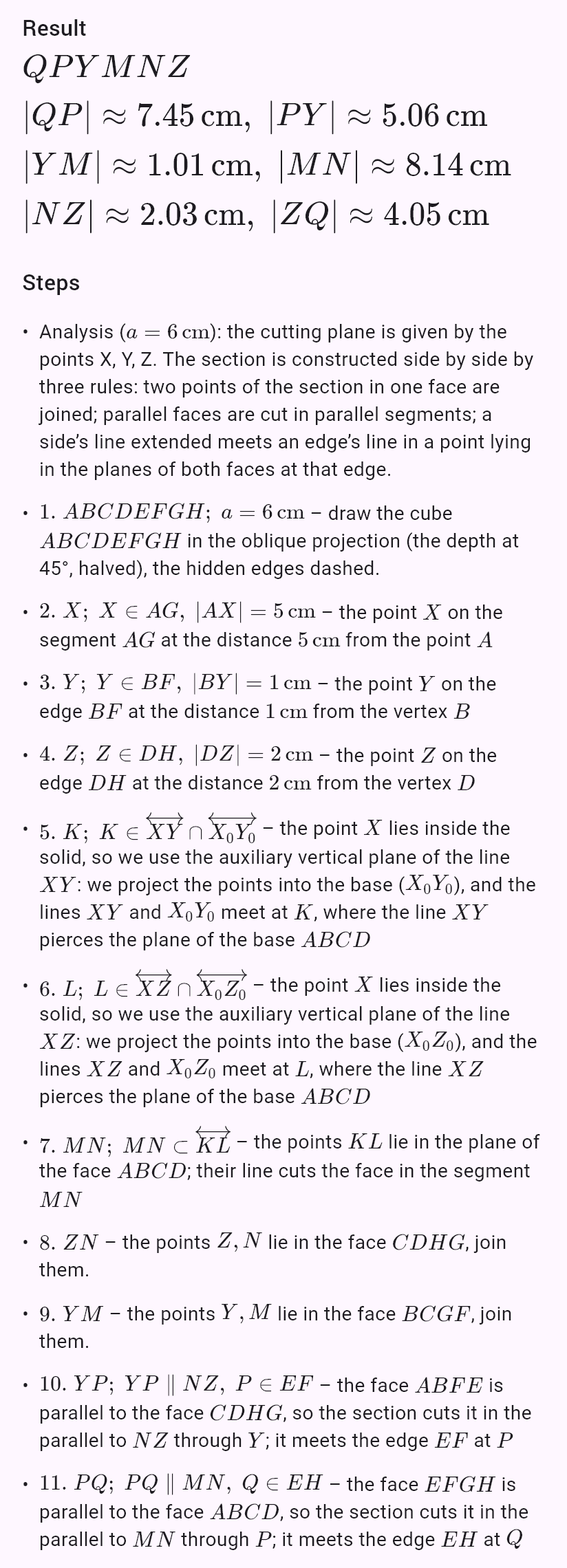
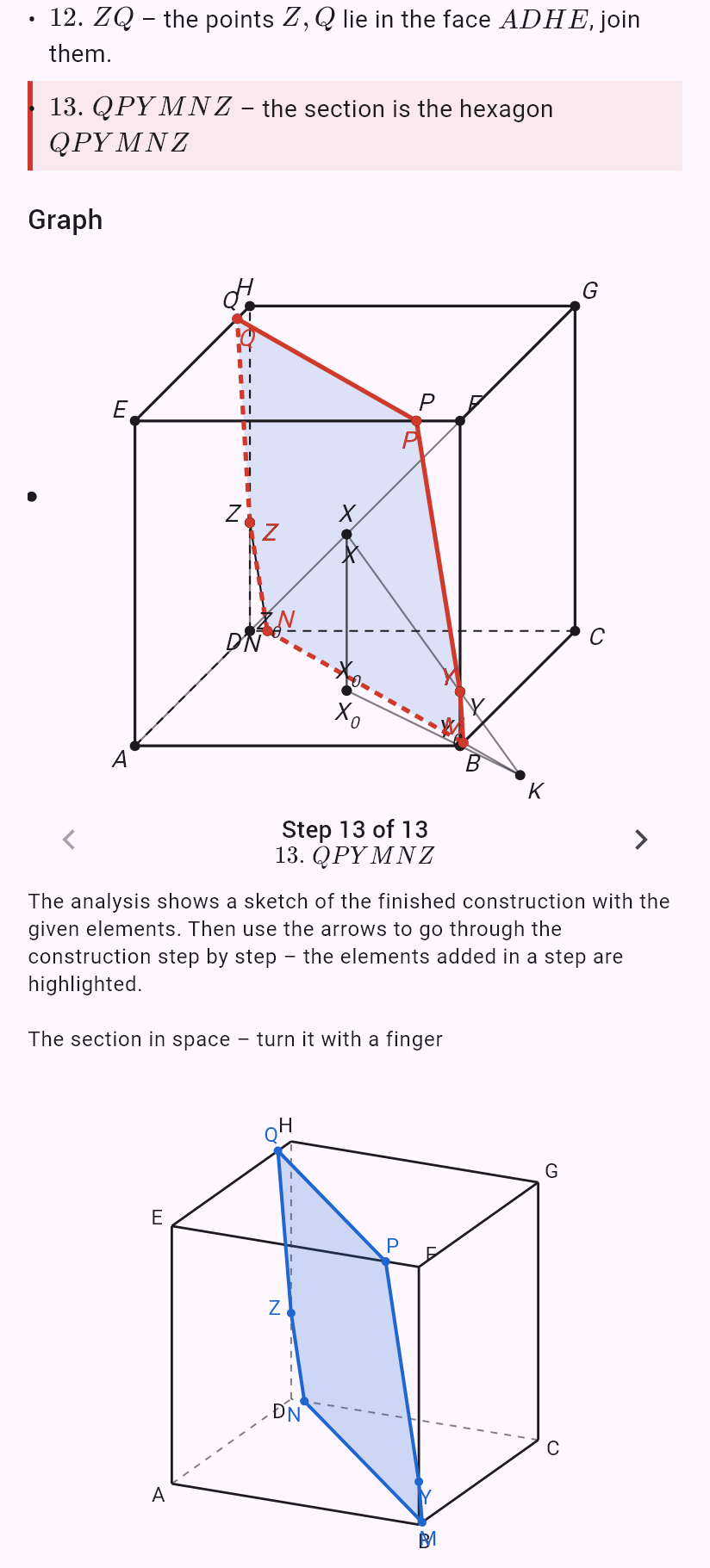
construction(cube_section; a=6; X: AB=1:2; BF=3; CG=4)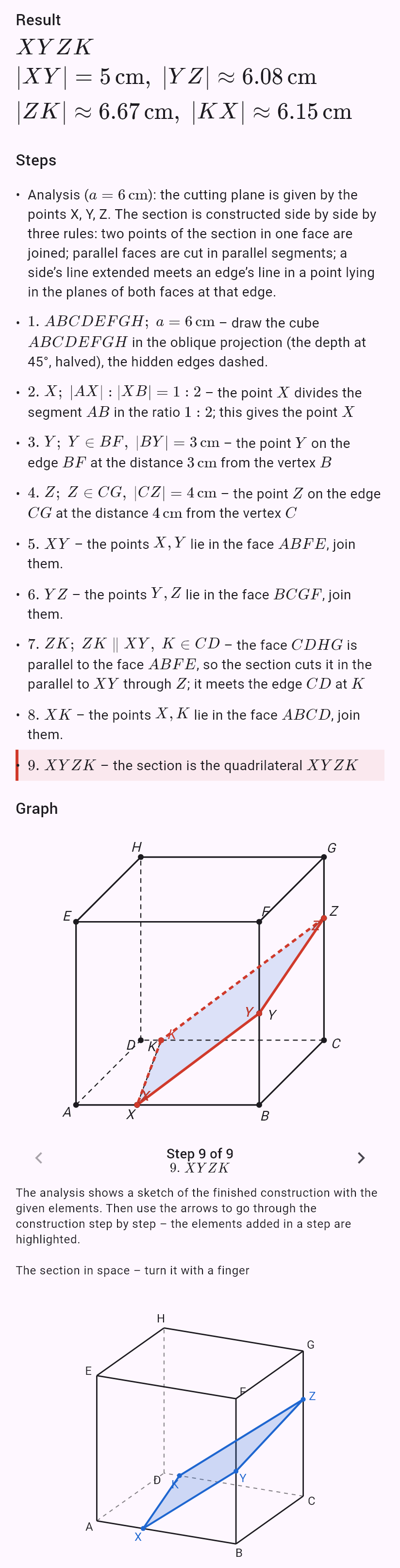
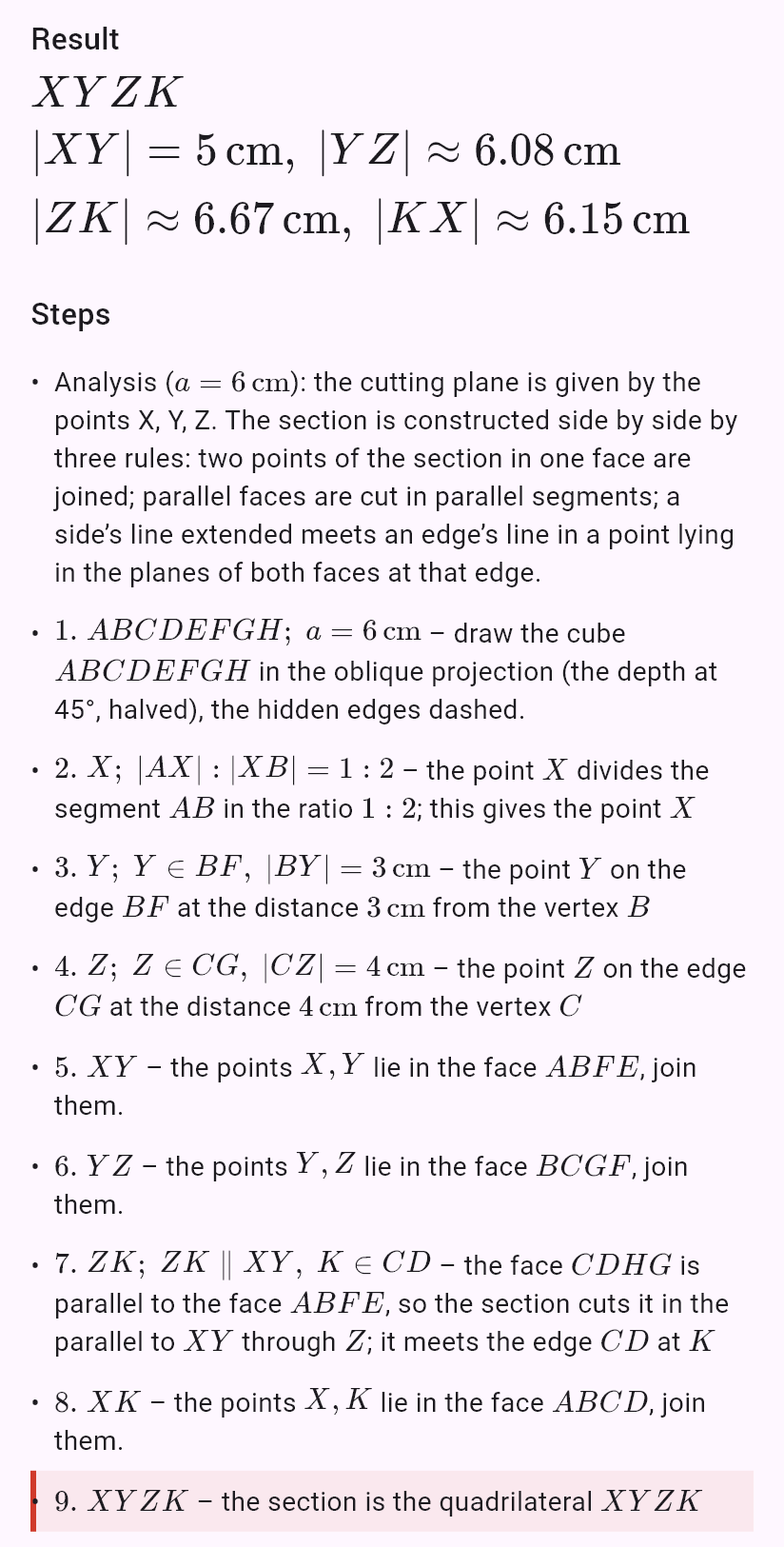
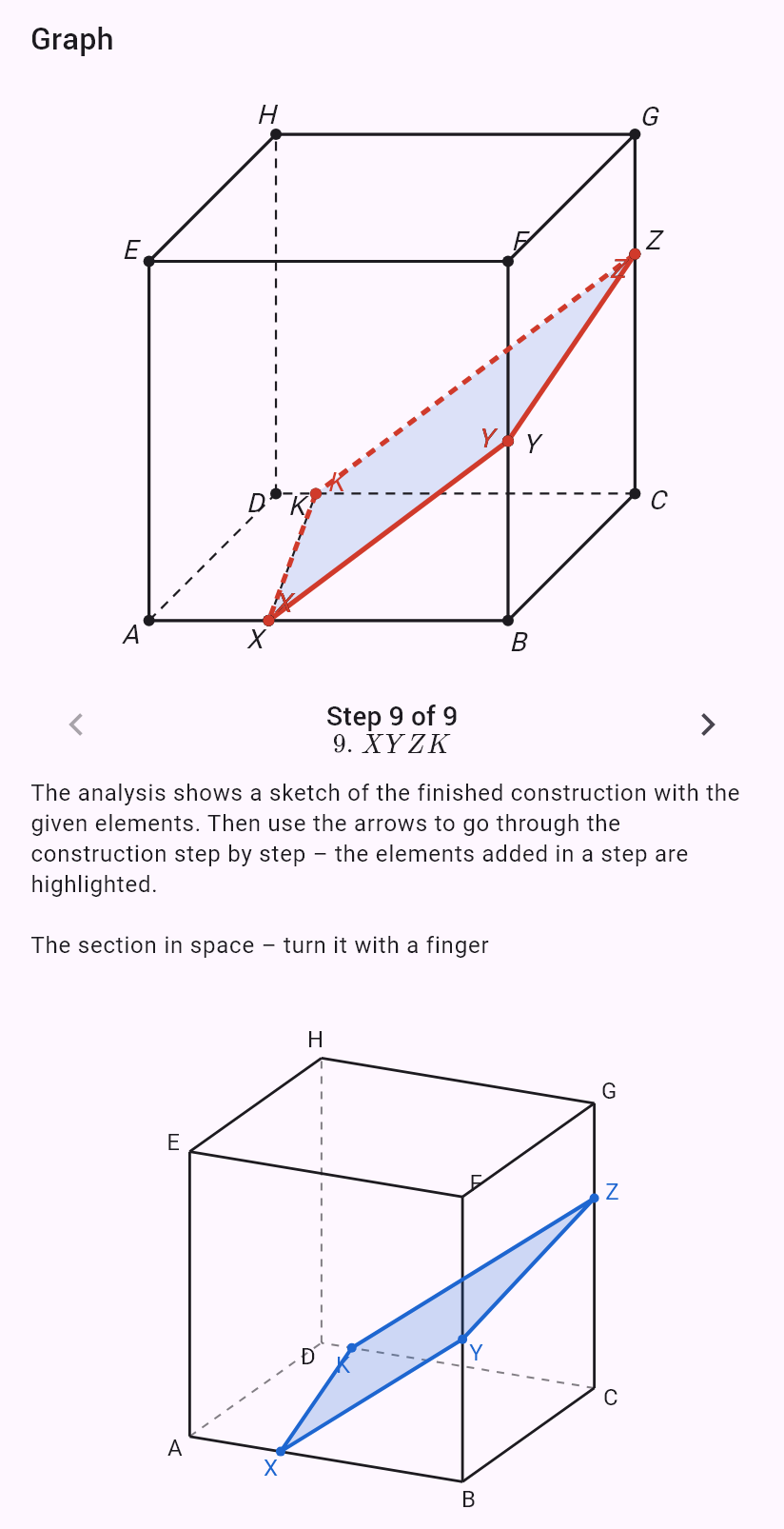
construction(prism_section; n=6; a=2; v=4; AA'=1; CC'=2; EE'=3)
construction(tetrahedron_section; a=4; AB=2; AC=2; AD=2)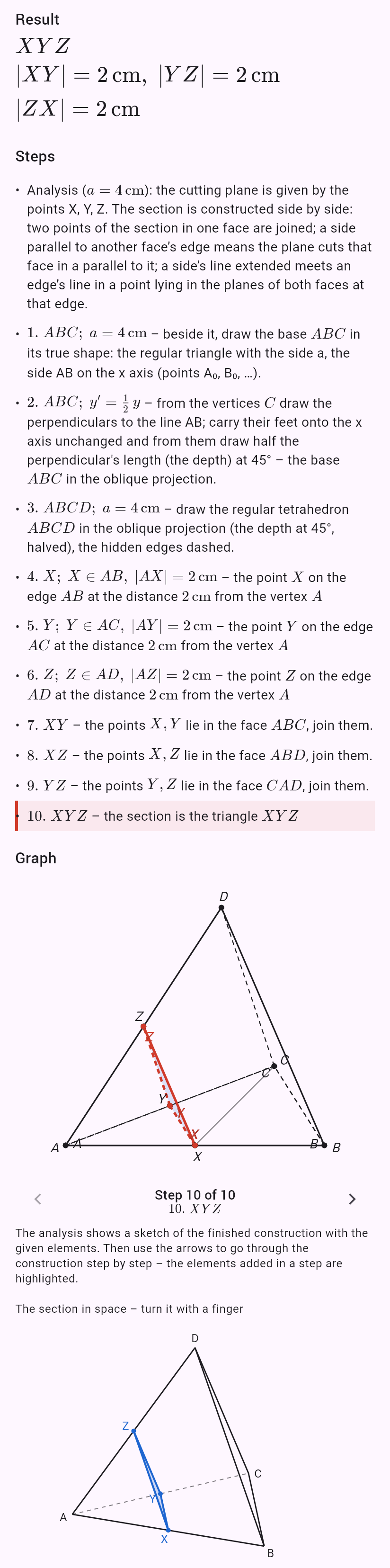
Known limitations
- So far a triangle (sides, angles, the altitude and median to the given side, the radii r and ϱ in the combinations above), four basic loci, five circle and tangent problems, quadrilaterals in the combinations of the form’s hint and sections of a cube, a cuboid, regular prisms and pyramids (a base of 3 to 6 sides) and the regular tetrahedron; a general quadrilateral, altitudes and medians to other sides and further solids will follow.
- Problems with relations take exactly two relations to one of the five given figures; relations among more points are given as general relations.
- General relations: at most 8 points and 10 relations, a construction only from the catalogue of moves; an analysis like “similar triangles” isn’t automated.
- Entered only in the form – not in words or from a photo.