Exponential and logarithmic equations and inequalities
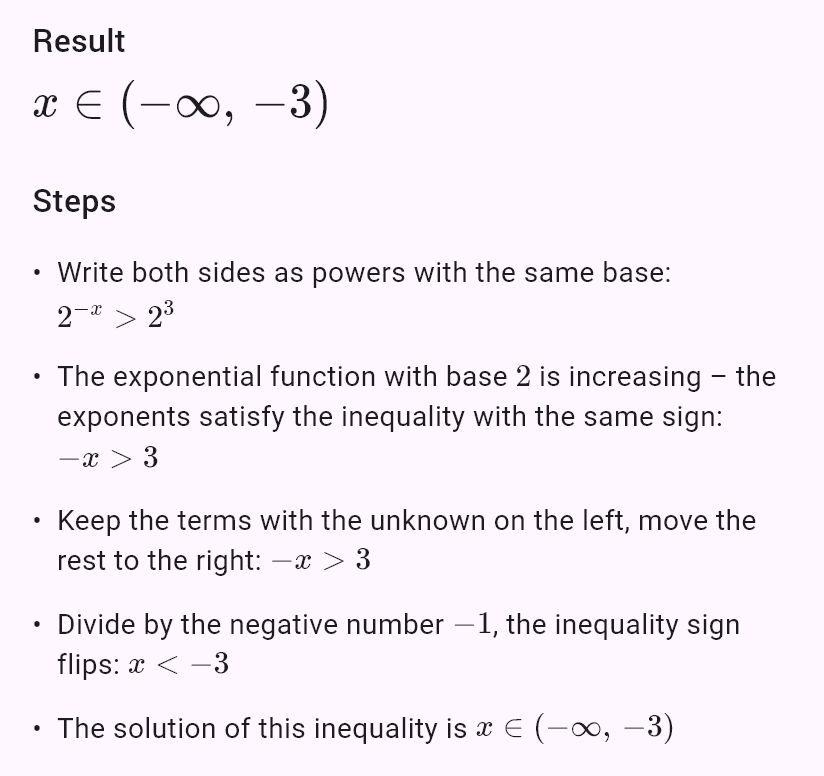
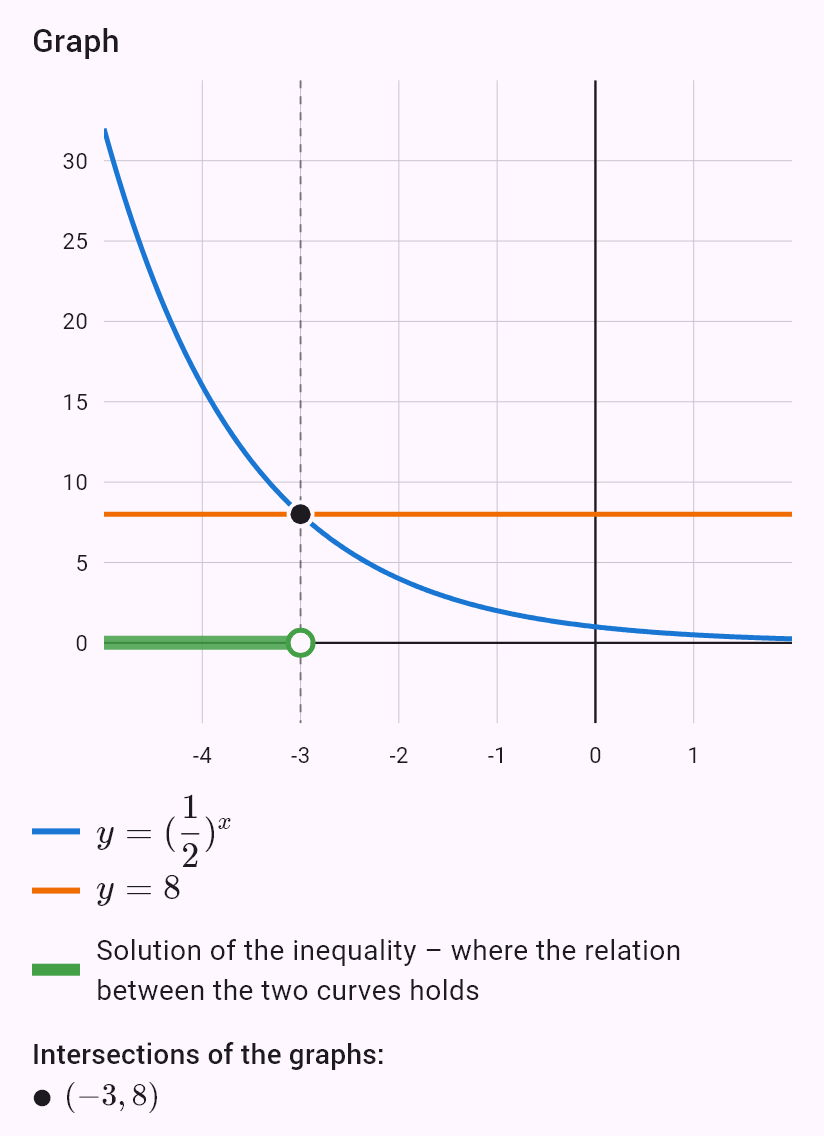
The app solves an exponential equation by converting to the same base, by taking logarithms or by substitution; a logarithmic one by combining the logarithms by the rules and removing the logarithm, always with the conditions. Inequalities are solved through monotonicity – for a base less than 1 the sign flips.
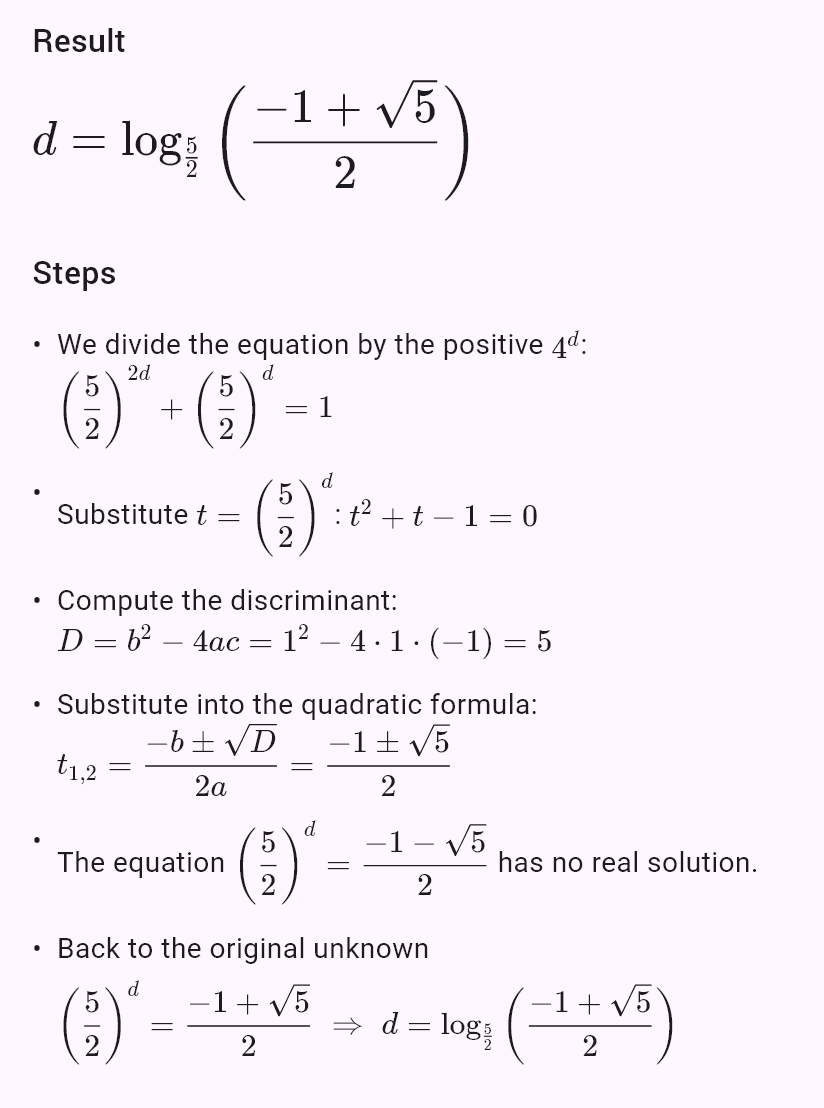
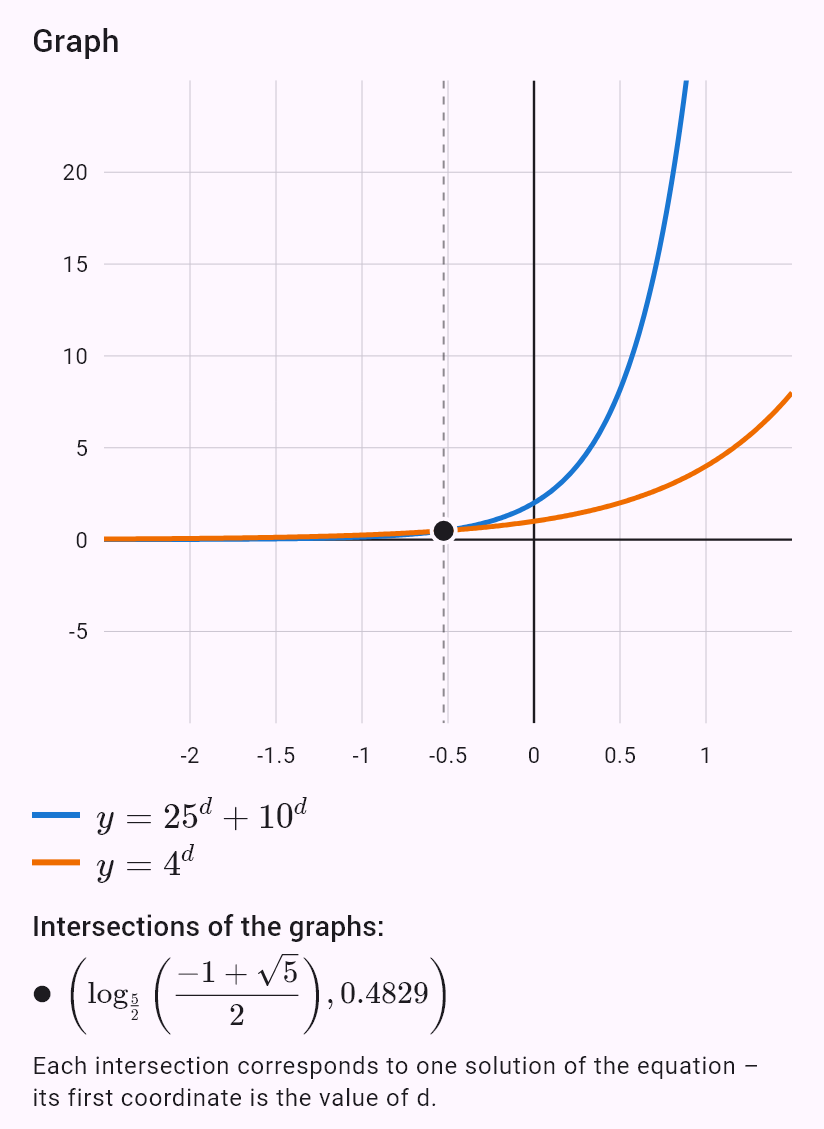
Equations with different bases: aˣ + bˣ = cˣ with bases from two primes (25ˣ + 10ˣ = 4ˣ) are divided by a power and turned quadratic by t = (5/2)ˣ; logarithms of different bases are converted to one (log₅ x = log₂ x / log₂ 5).
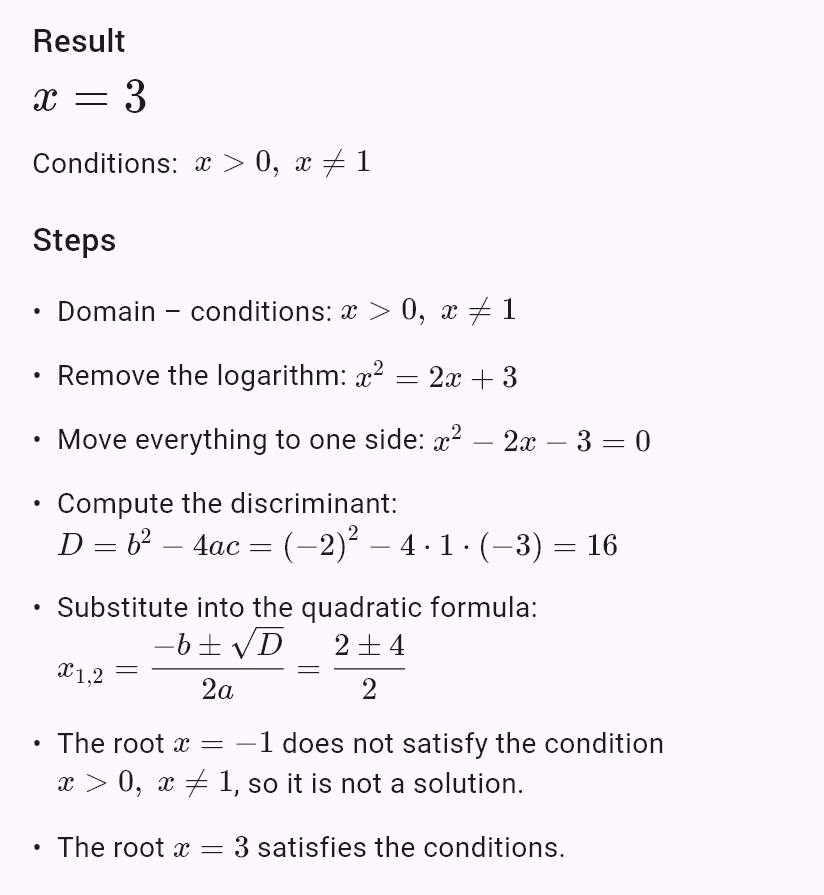
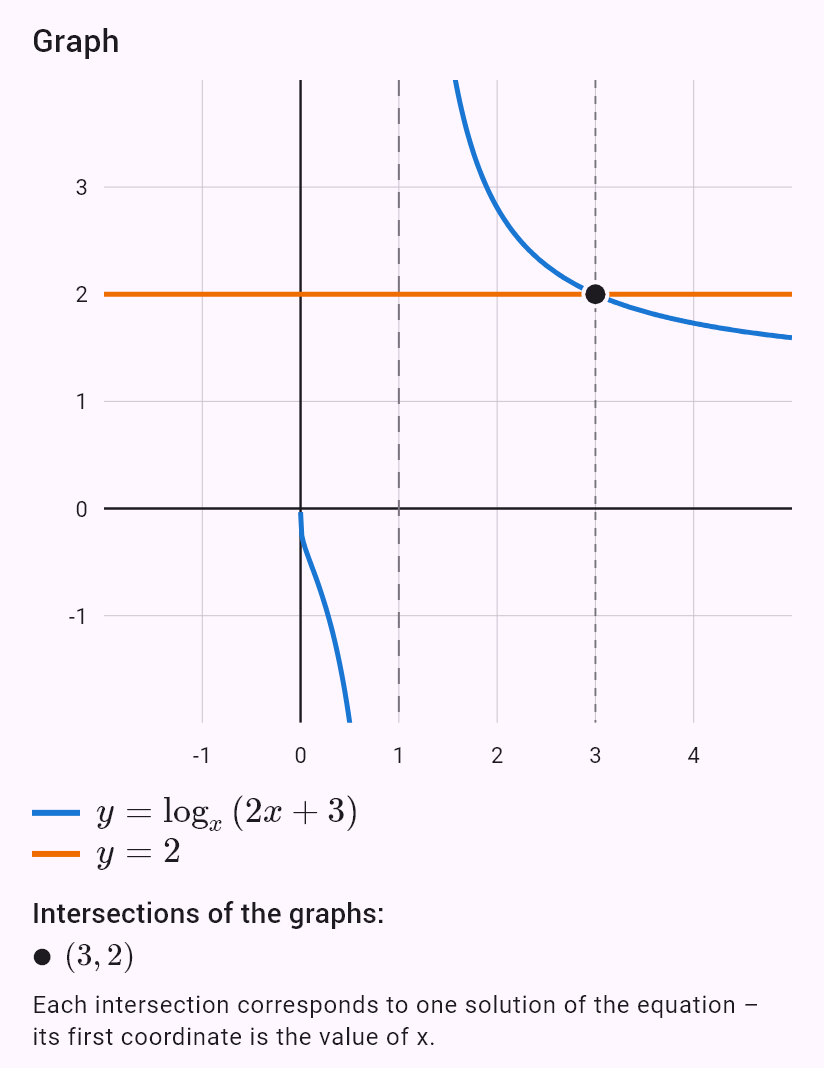
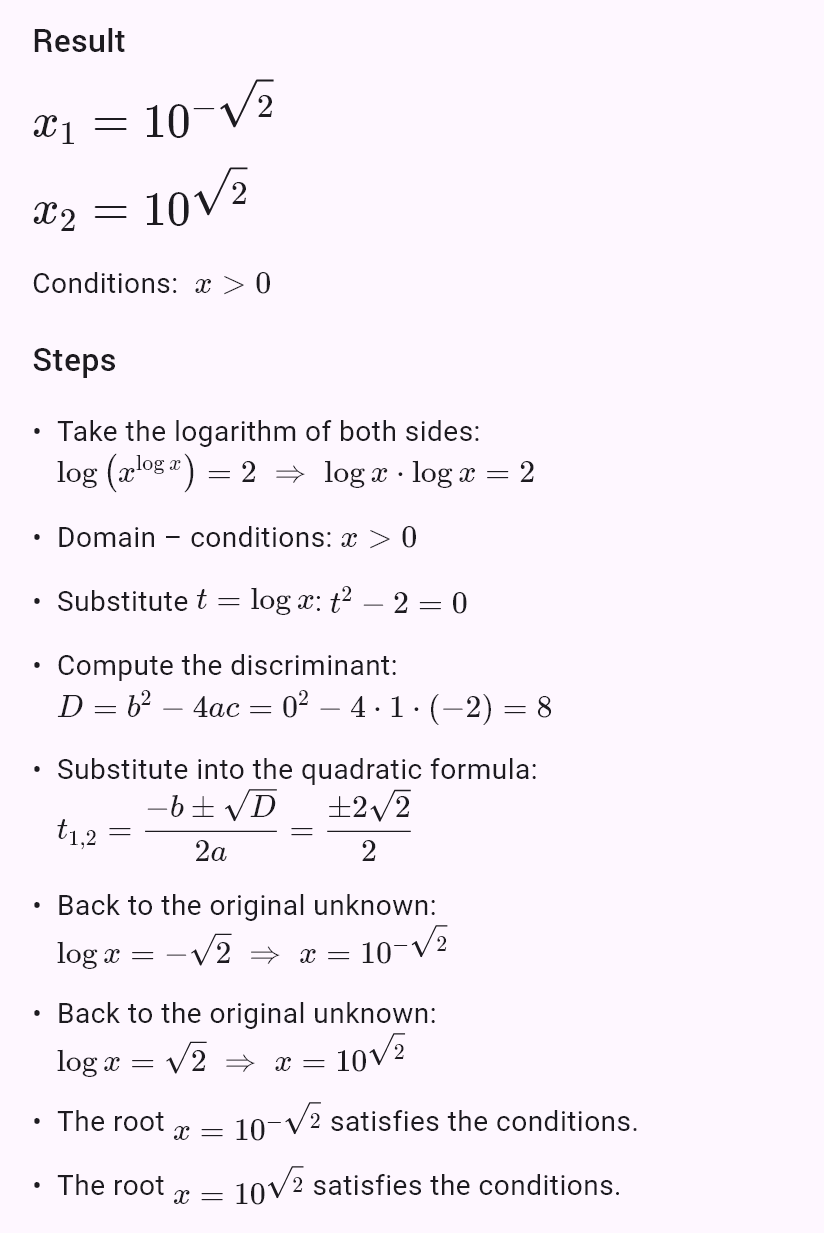
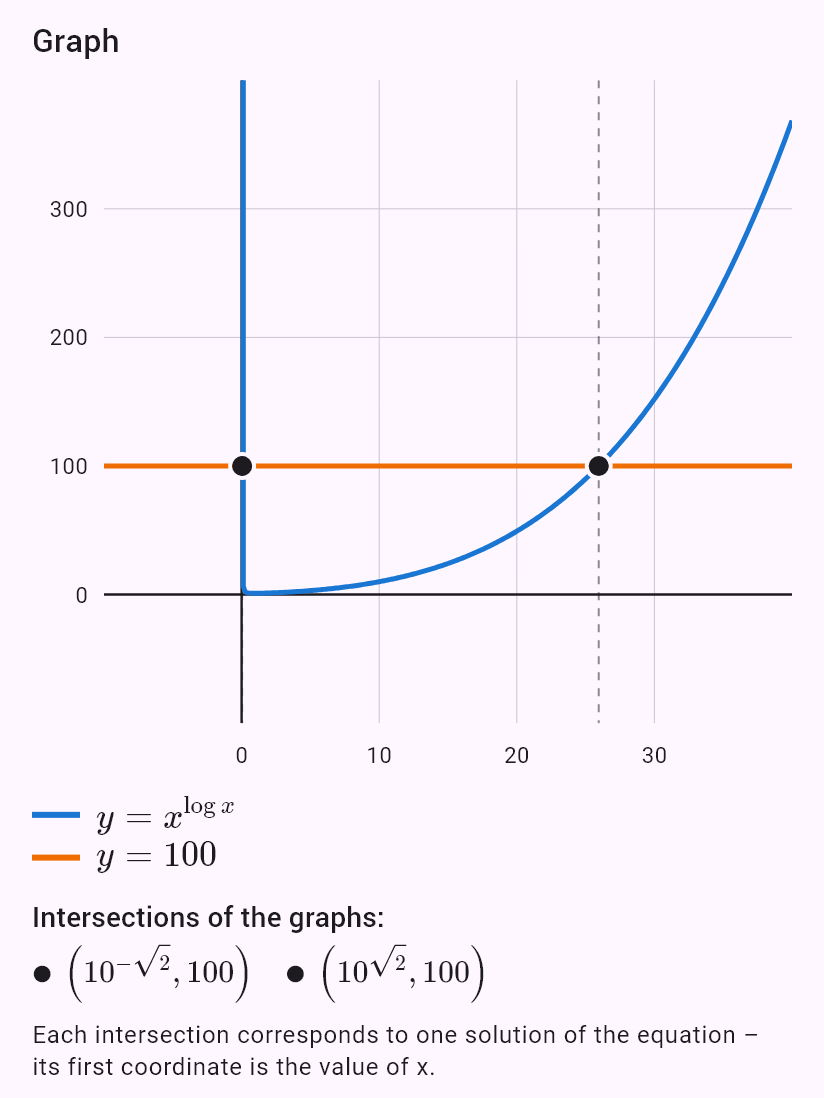
Logarithms whose bases are powers of one number (log₂ x + log₄(x + 2) = 2) are converted to one base (log₄ a = log₂ a / 2), the equation multiplied and the logarithms combined. A logarithm with the unknown in its base (logₓ 8 = 3) is removed by the definition (x³ = 8) with the conditions x > 0, x ≠ 1. An equation with the unknown in both the base and the exponent (x^(log x) = 100) is solved by taking logarithms and the substitution t = log x. Inequalities with the substitution t = log(x + 1) and systems of logarithmic and exponential inequalities are solved like single inequalities – through monotonicity.
Equations and inequalities with hyperbolic functions are rewritten by the definition (sinh x = (eˣ − e⁻ˣ)/2, …) as exponential ones and solved by the substitution t = eˣ; arsinh x = c is solved by the inverse function (x = sinh c).
Examples
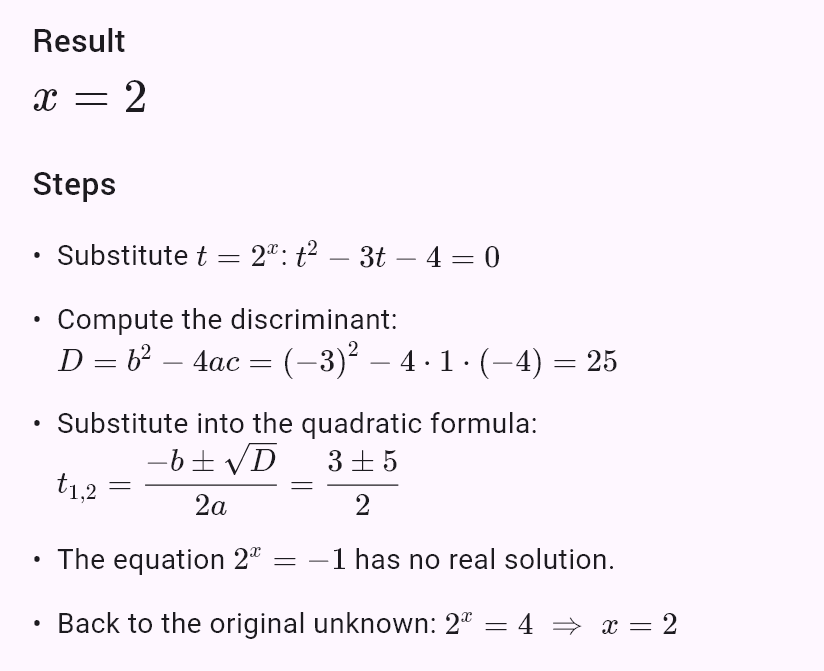
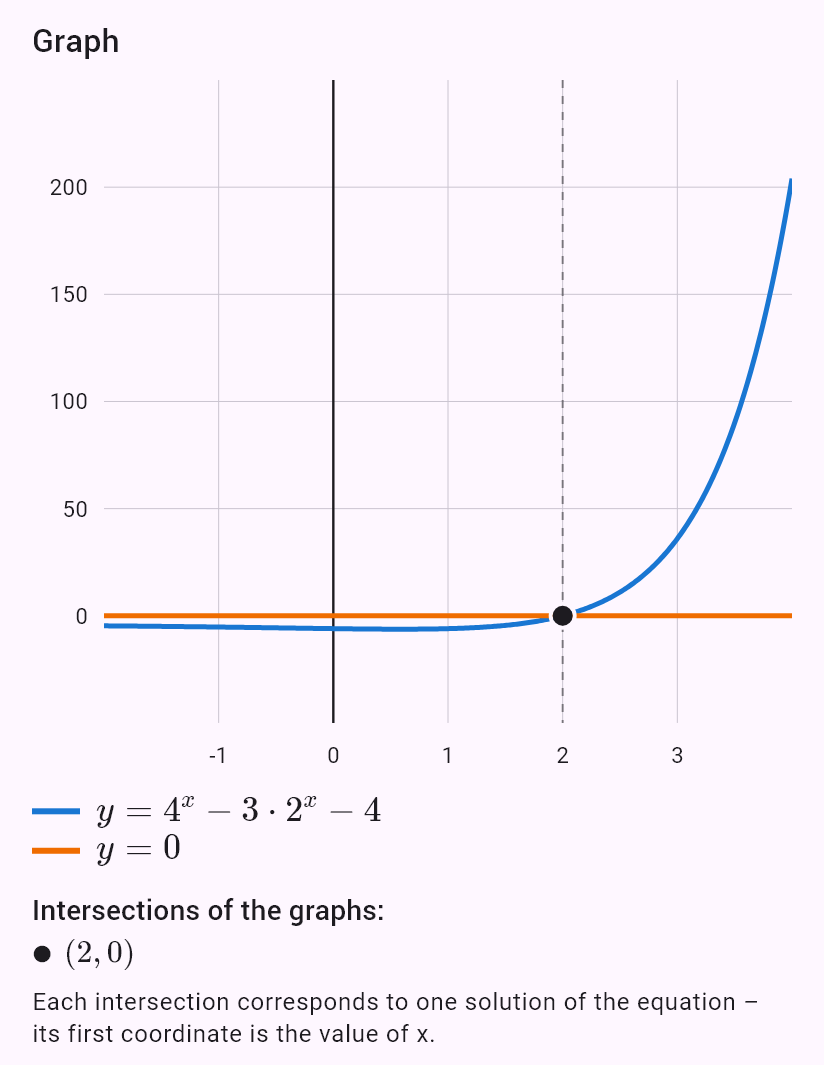
4^x - 3*2^x - 4 = 0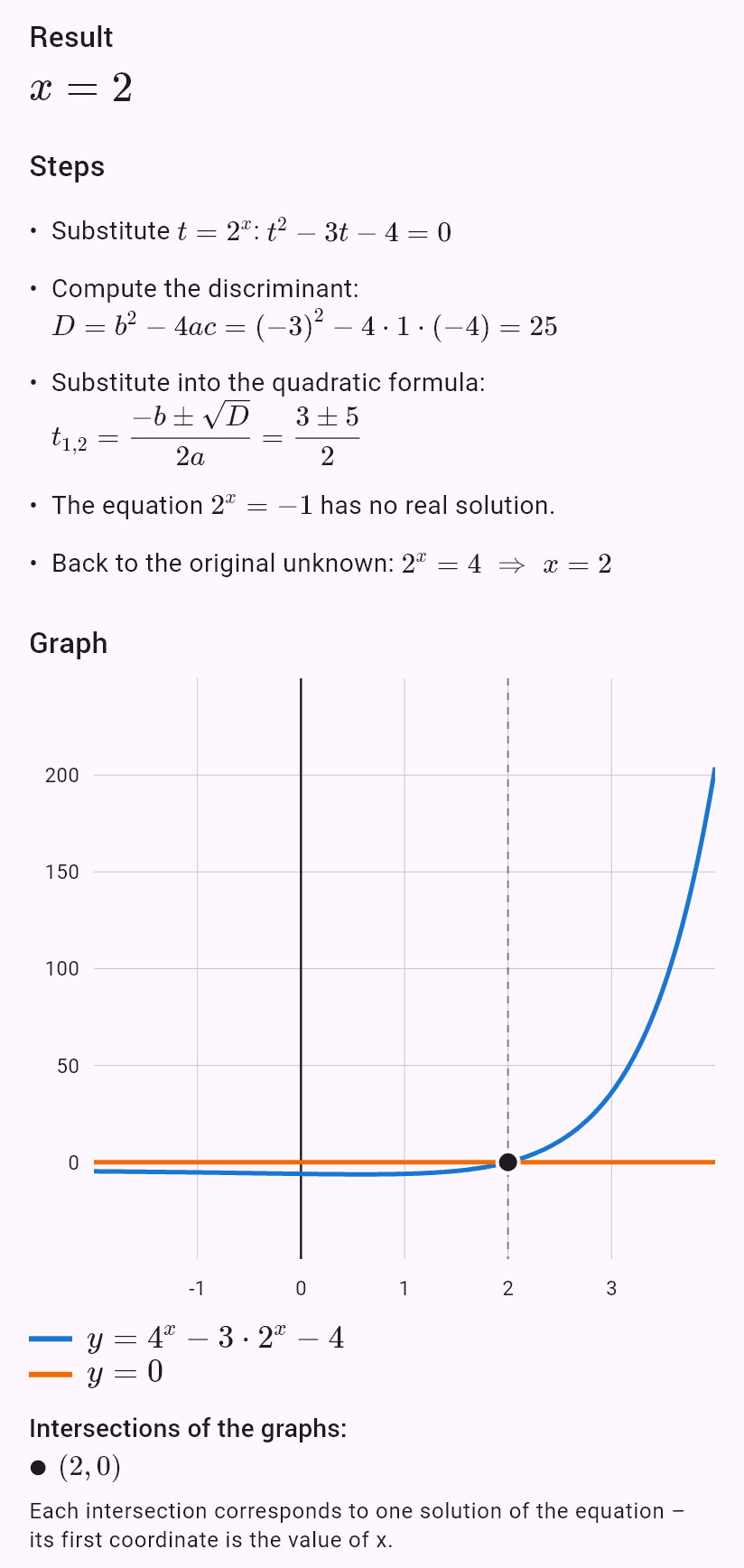
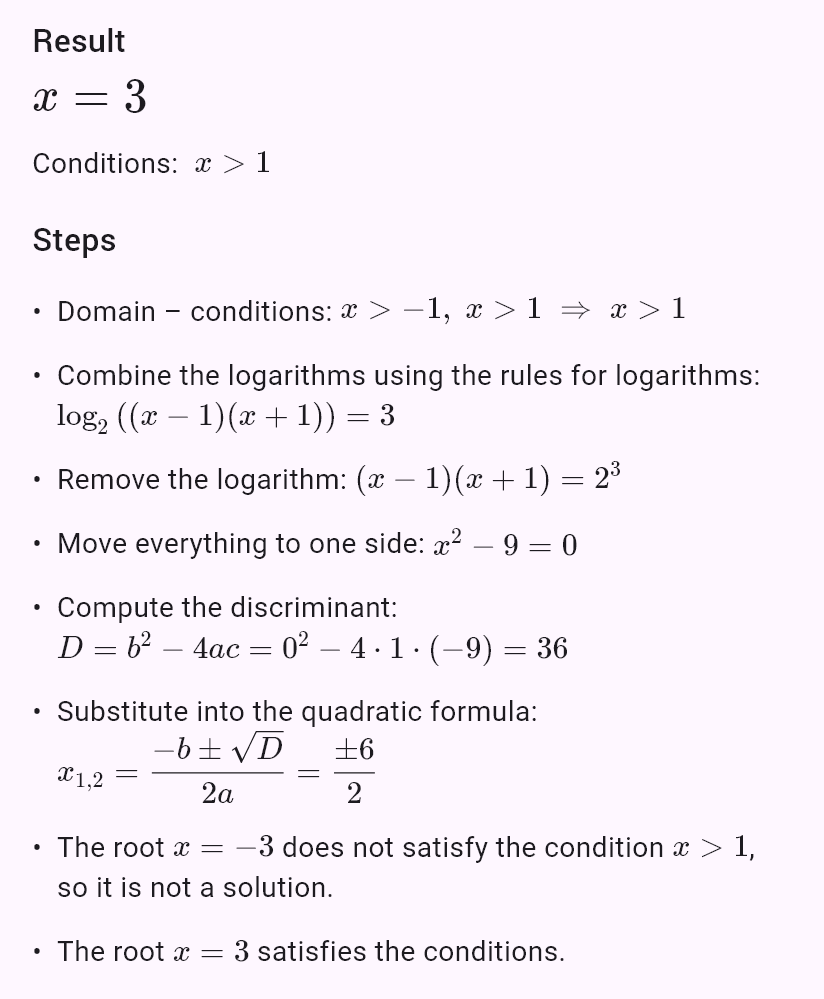
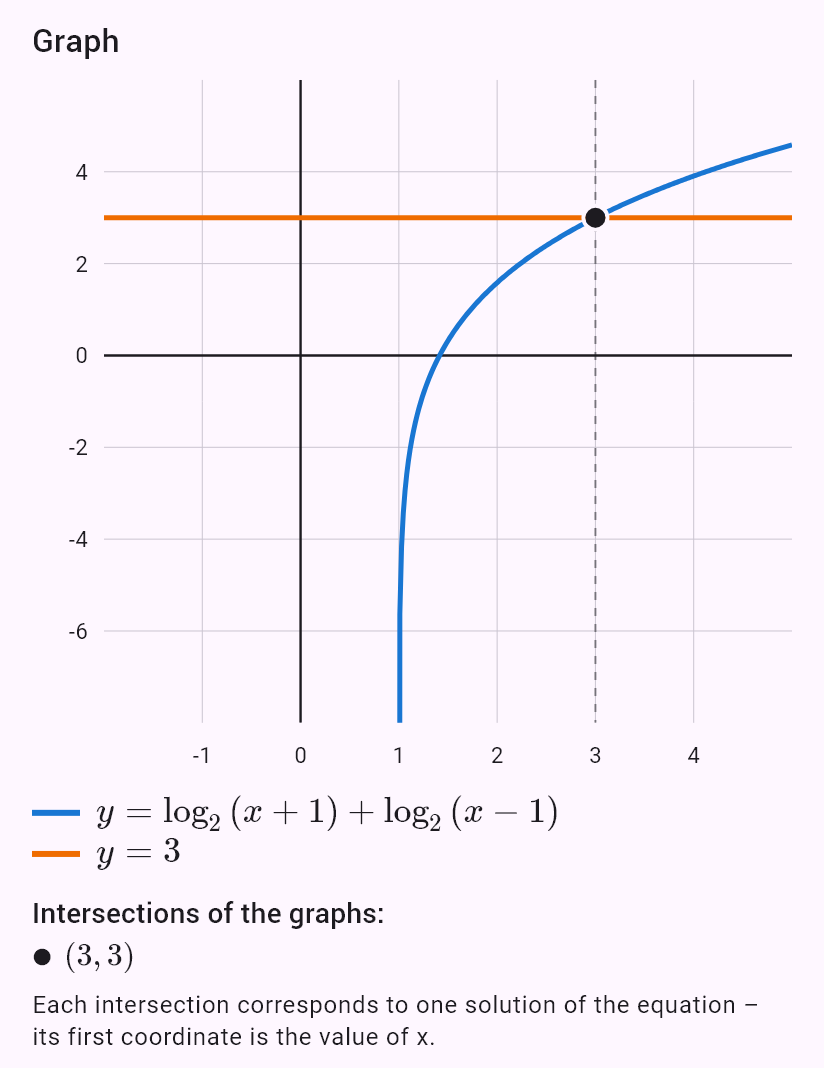
log_2(x+1) + log_2(x-1) = 3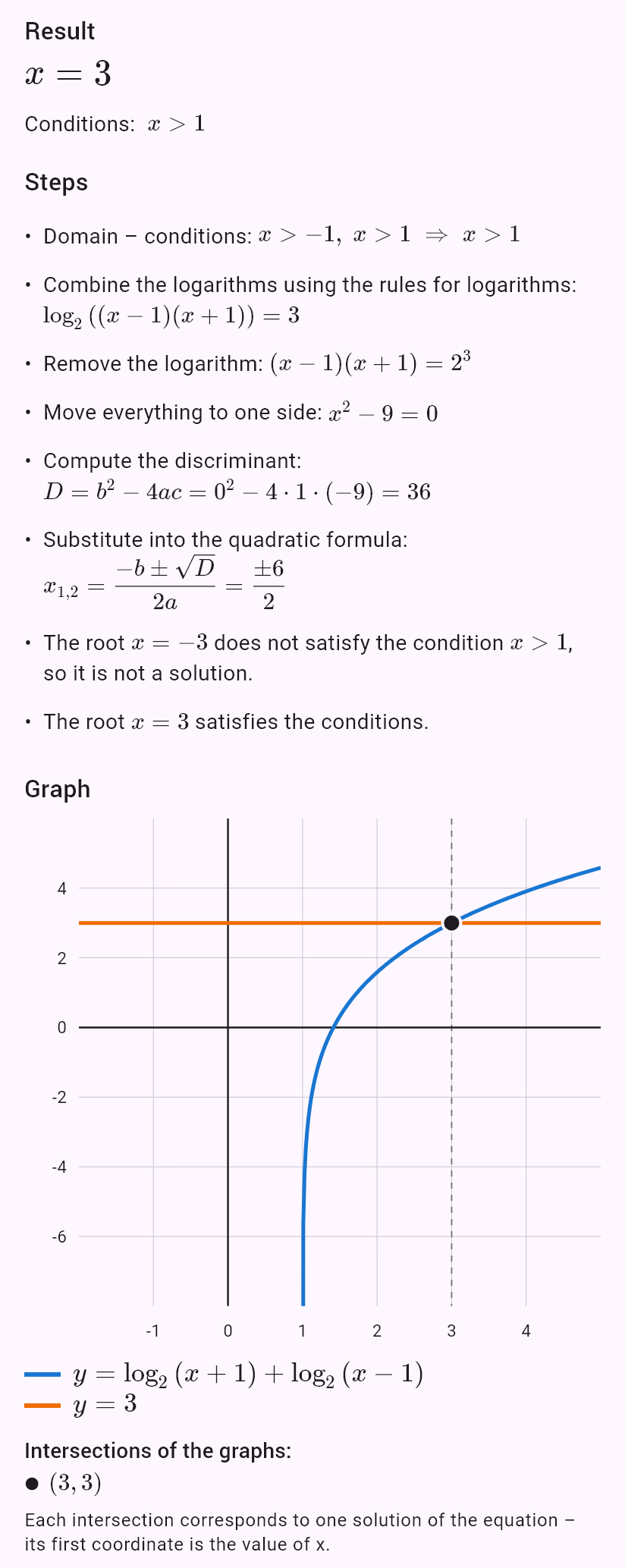
25^d + 10^d = 4^d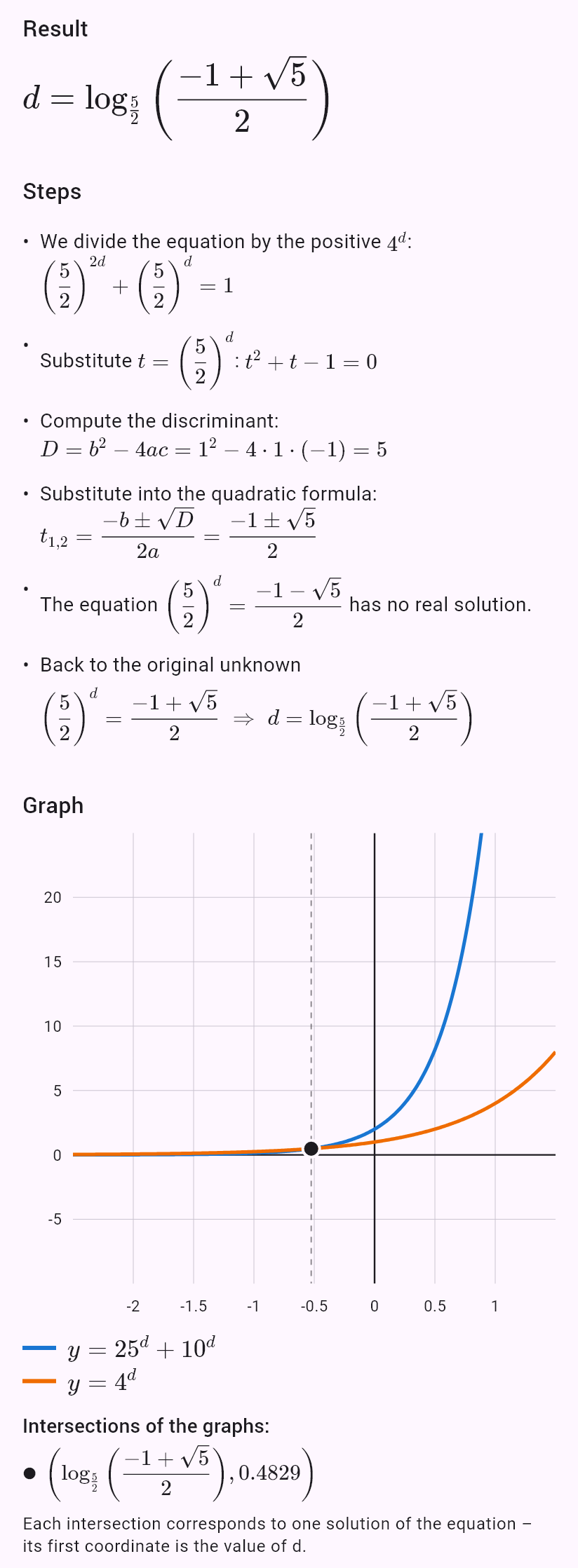
(1/2)^x > 8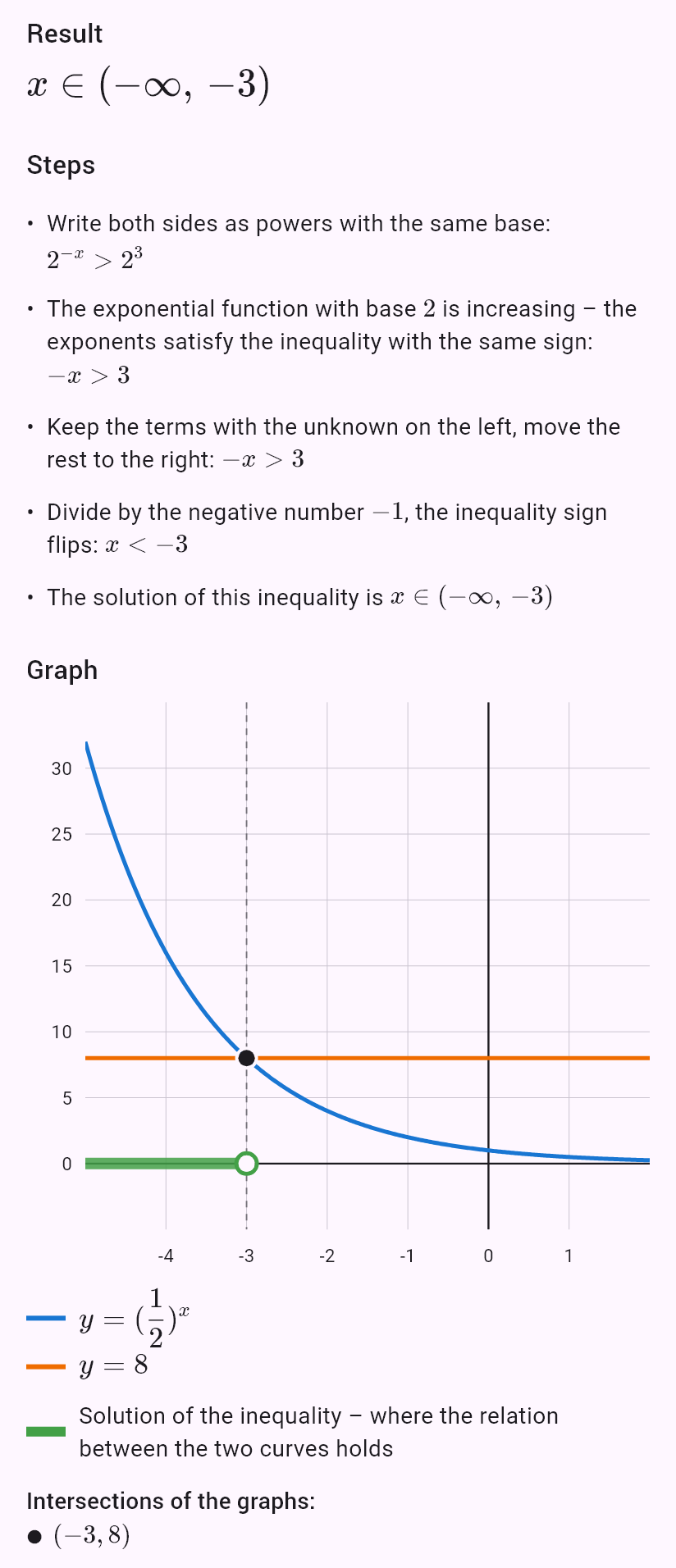
tanh x = 1/2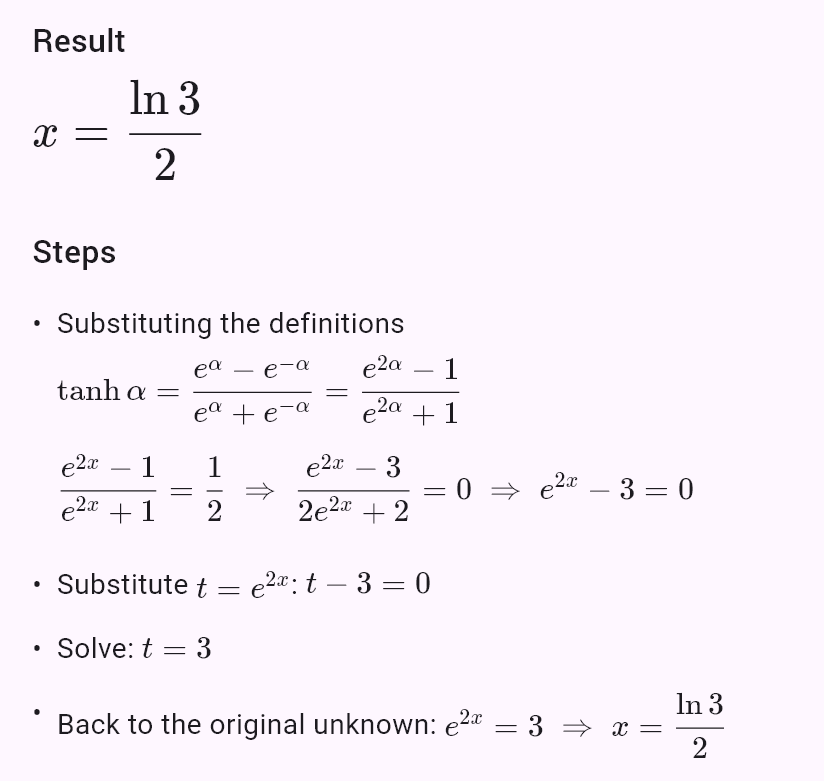
log_x (2x+3) = 2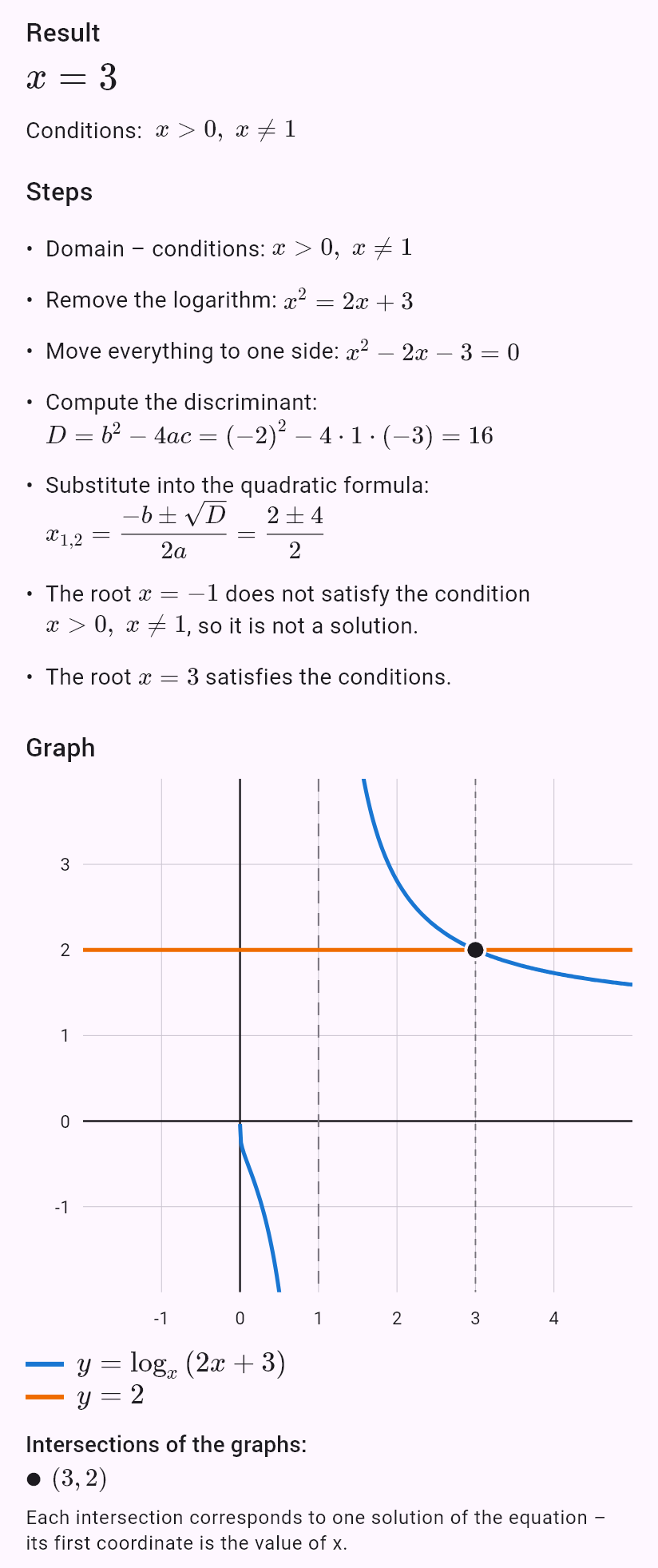
x^(log x) = 100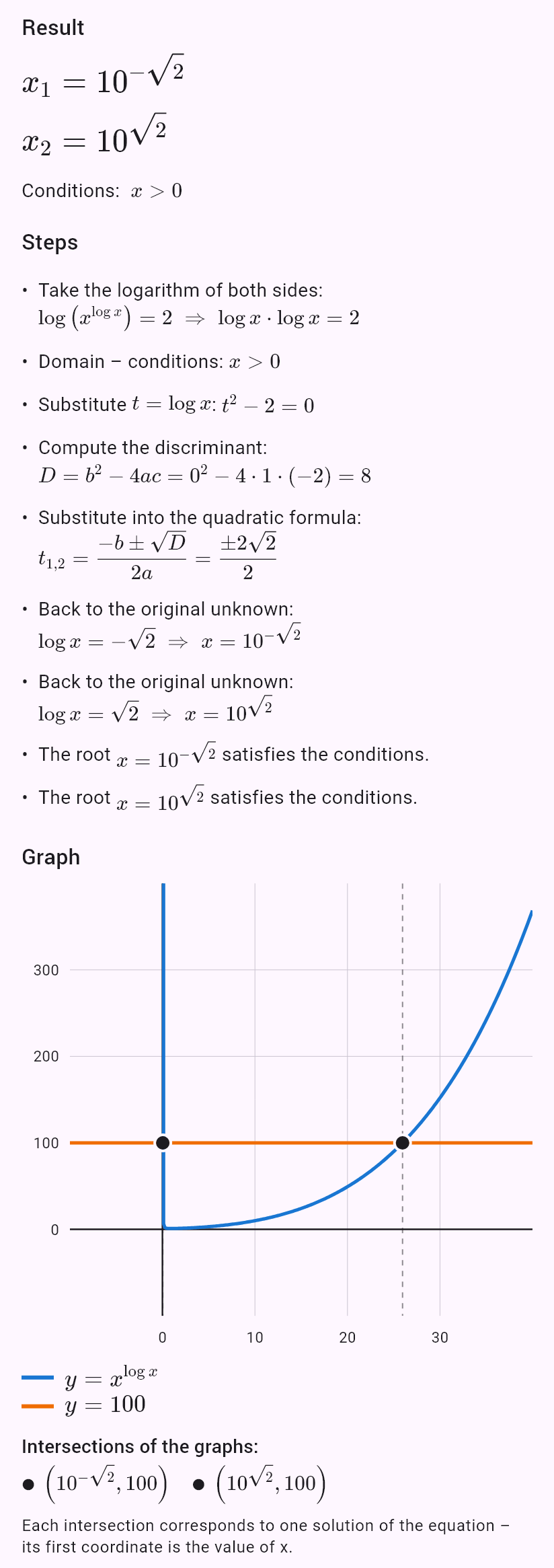
Known limitations
- Logarithms of different bases that aren’t powers of one number (log₂ x + log₃(x + 1) = 2) are solved only numerically.
- Hyperbolic equations leading to a 4th-degree equation in eˣ (cosh²x − 3 sinh x = 3) are solved only numerically; inequalities with inverse hyperbolic functions are not supported yet.